Vintage New Mexico Magazine: A Dated Cover Gallery, 1938–1962
By Josh Eldred · New Mexico Literacy Project ·
New Mexico Magazine is the one magazine I never treat like the rest of the stack. Ordinary old magazines — Life, Time, Look, the commemorative issues everyone saved — are so common that the honest answer about their value disappoints almost everyone who asks. The state magazine plays by different rules. It has been published continuously since 1923, longer than any other state magazine in the country; its early issues were printed in small numbers for a thinly populated state; and its pages are now a primary photographic record of a New Mexico that no longer exists — the trading posts, the ghost towns before final collapse, the two-lane highways before the interstates. Below is a run I photographed at my warehouse, issue by issue, spanning November 1938 to August 1962. If you are trying to date or evaluate copies of your own, the covers themselves do most of the talking.
Have a stack of these? Magazines ride along free with any book or media pickup in the Albuquerque metro — and issues like the ones on this page get pulled and flagged, never pulped. Text 505-250-3804 or use the pickup form.
The oldest state magazine in the country
The magazine started life in 1923 as the New Mexico Highway Journal, a state road-department bulletin that quickly discovered its readers cared as much about where the roads went as how they were built. In 1931 it absorbed the Game and Fish Department’s Conservationist and became simply New Mexico — the title you see on every cover below. The state published it to sell itself: to tourists, to health-seekers, to easterners with a romantic itch, and eventually to the whole country under the “Land of Enchantment” banner. Because the audience was small and the paper was cheap, survival rates for early issues are poor — which is exactly what separates this title from the national weeklies that printed in the millions.
Two things about the magazine’s content matter to anyone holding old copies. First, the writing was better than a state promotional organ had any right to be: the January 1942 number carried Ernie Pyle’s “Why Albuquerque?”, the much-reprinted essay in which the most-read newspaperman in America explained why, of all the places he had filed from, he built his one and only house on a dirt road on Albuquerque’s east mesa. Second, the magazine looked outward as much as inward — its long-running “One of Our Fifty Is Missing” department collected true stories of banks, agencies, and airline clerks who refused to believe New Mexico is a state, and it remains the funniest sustained argument for why the state needed a magazine at all.
What follows is the run as I photographed it, grouped the way the magazine itself changed: by price, by masthead, and by what the state was going through at the time.
Dating an issue at a glance
Every cover in this run carries its month and year, but plenty of surviving copies have lost covers, or turn up as bound years with the covers trimmed away. The masthead and the newsstand price will still get you close:
| Years | Masthead reads | Newsstand price | Quick tells |
|---|---|---|---|
| 1923–1931 | New Mexico Highway Journal | — | Road-department bulletin era. Genuinely scarce; handle as the prize of any lot. |
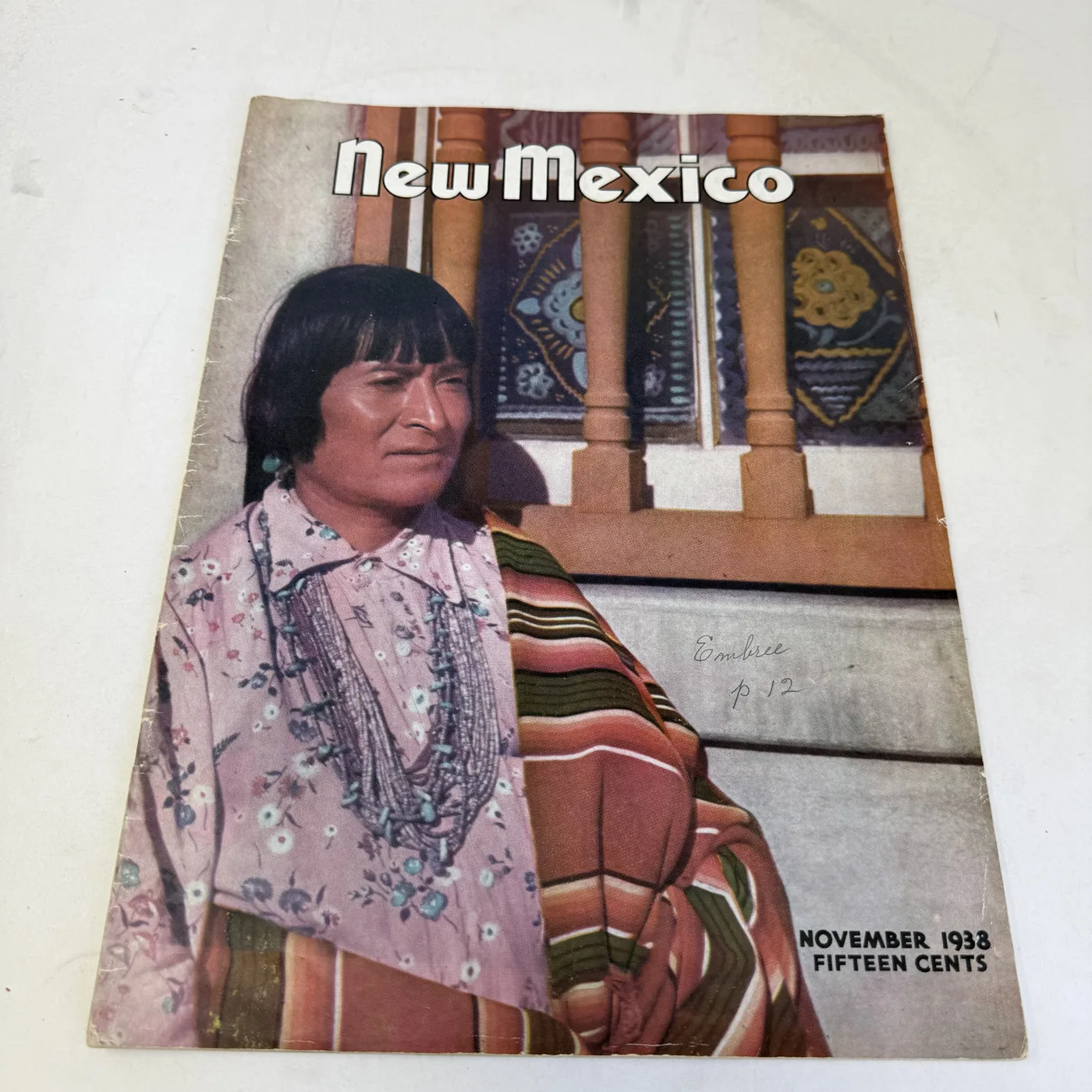
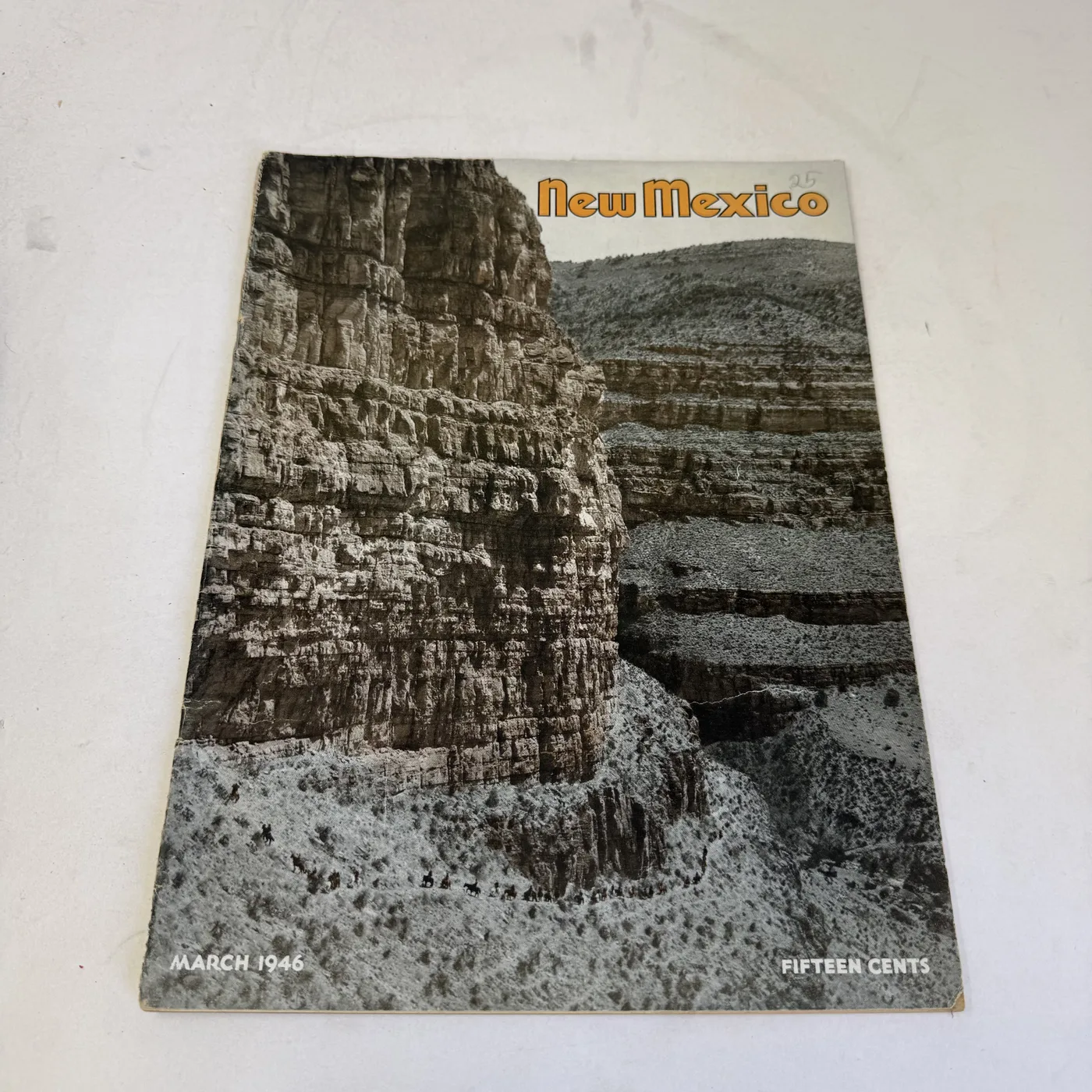
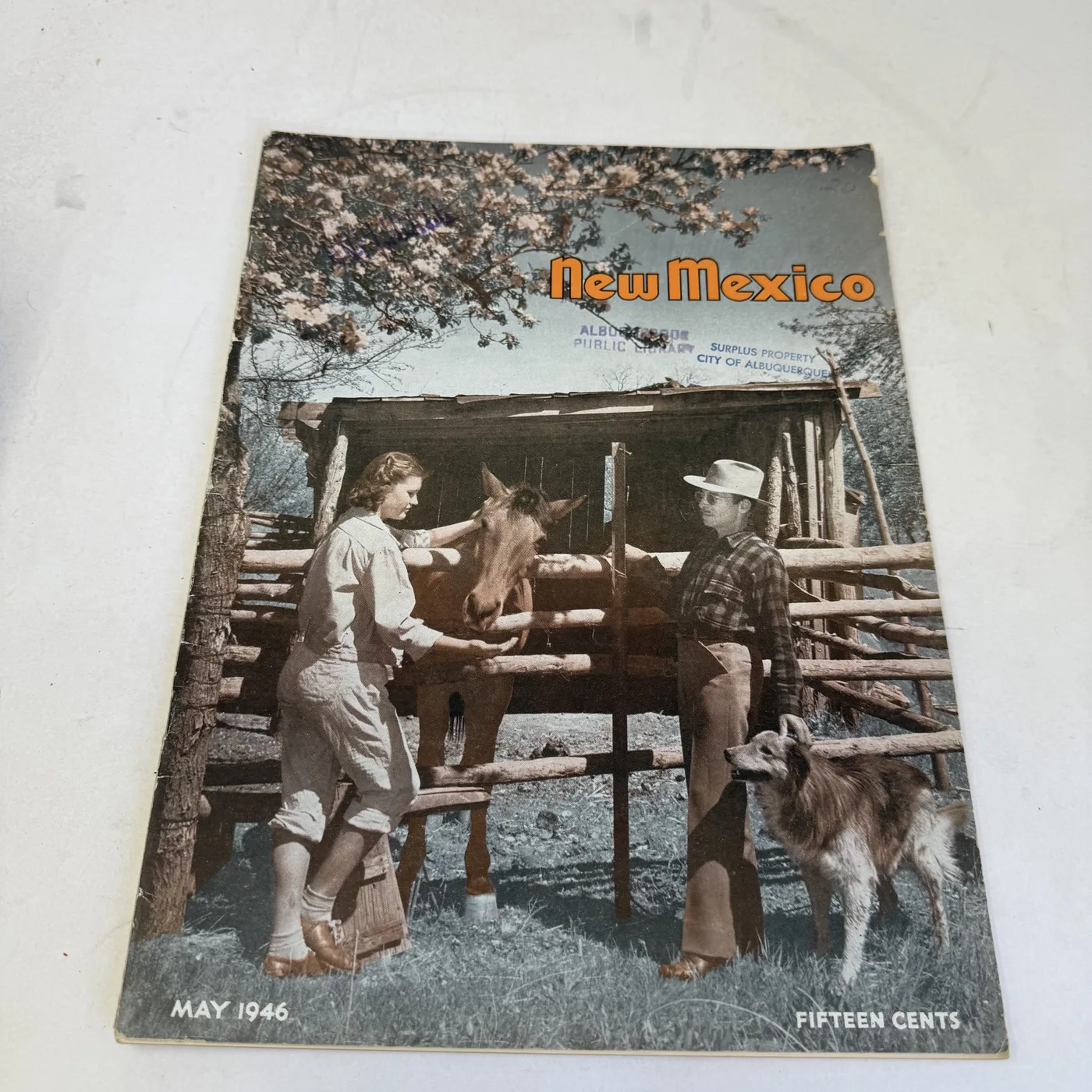
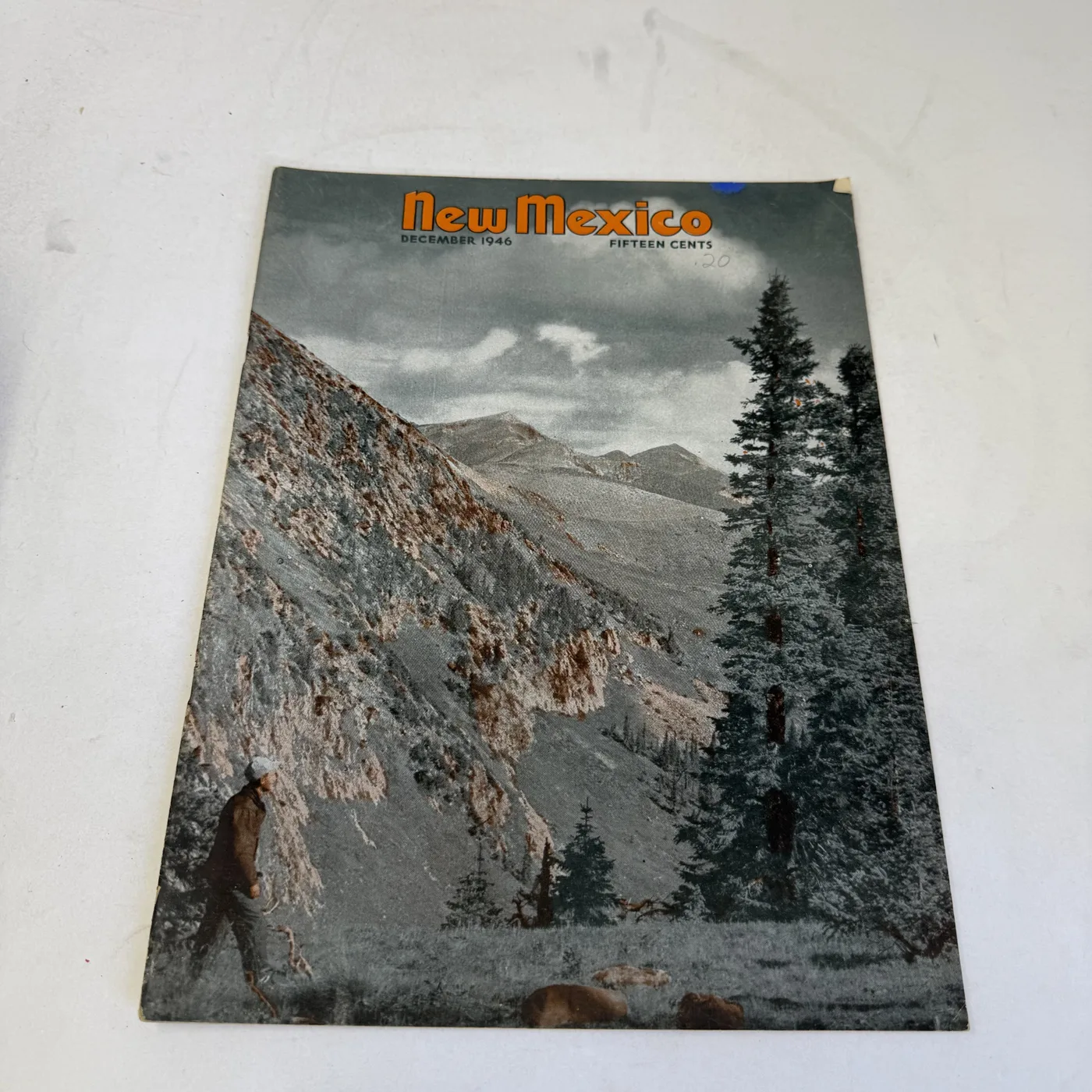
| 1931 – c. 1947 | New Mexico, script logo | Fifteen cents | Hand-tinted and duotone photographic covers; wartime issues run thinner. |
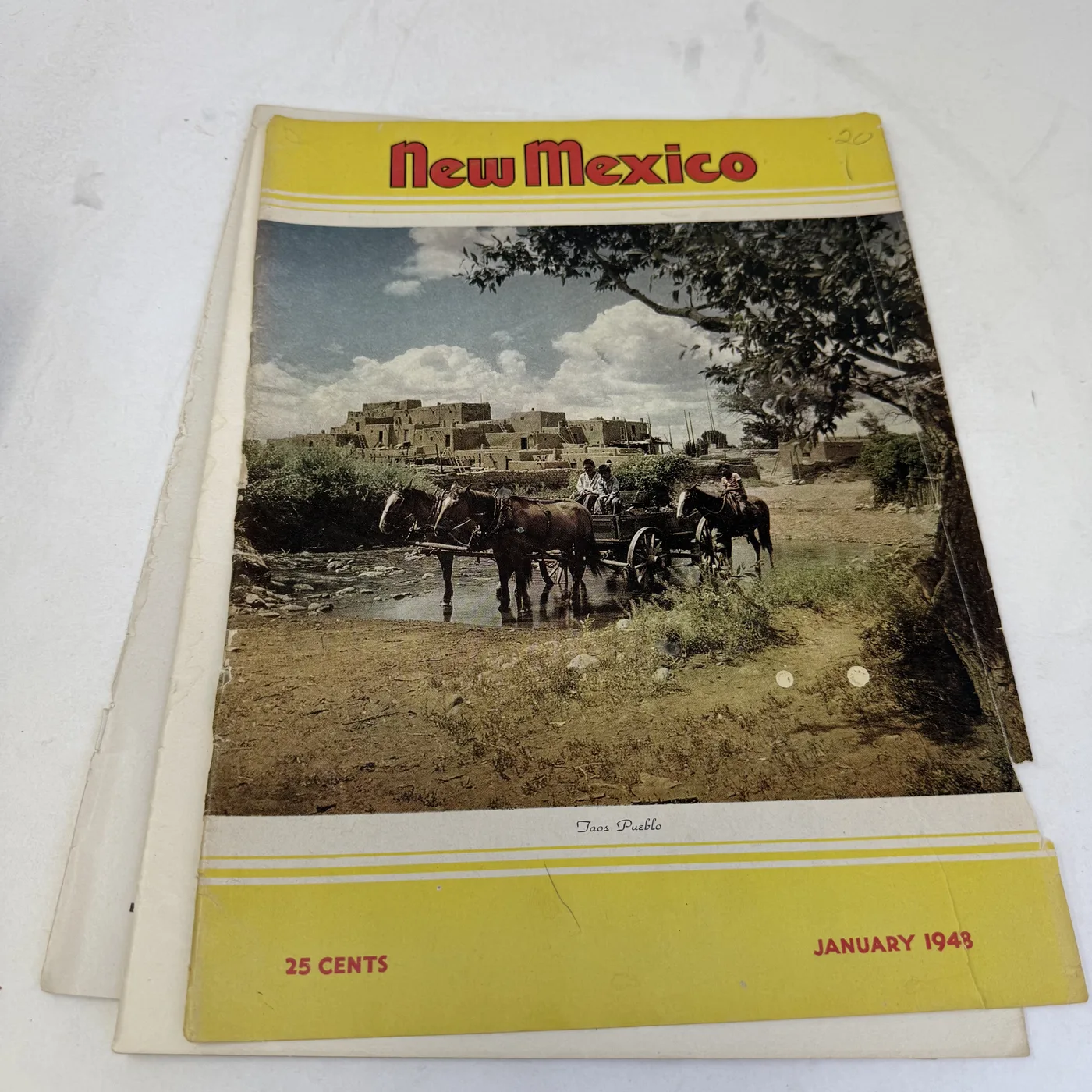
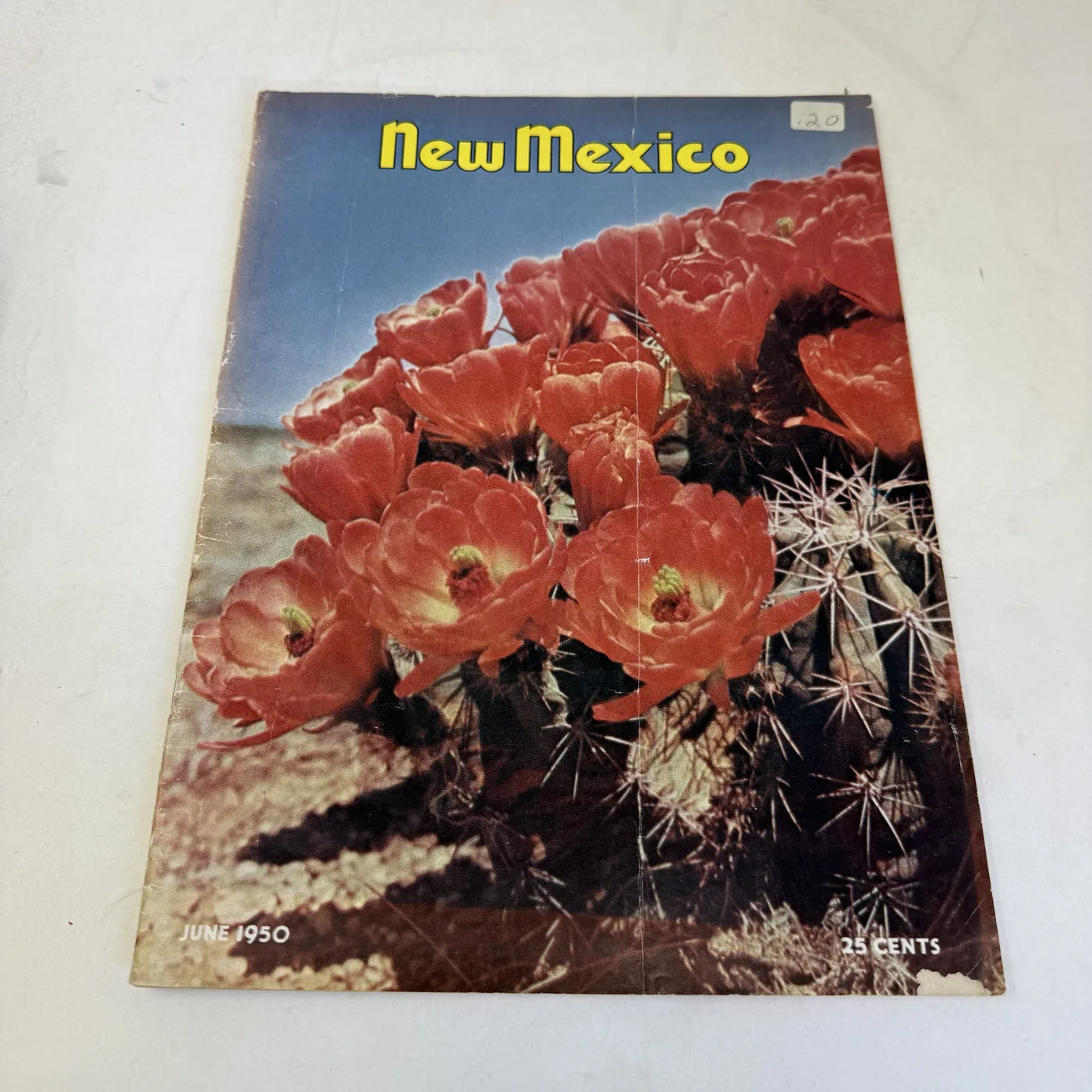
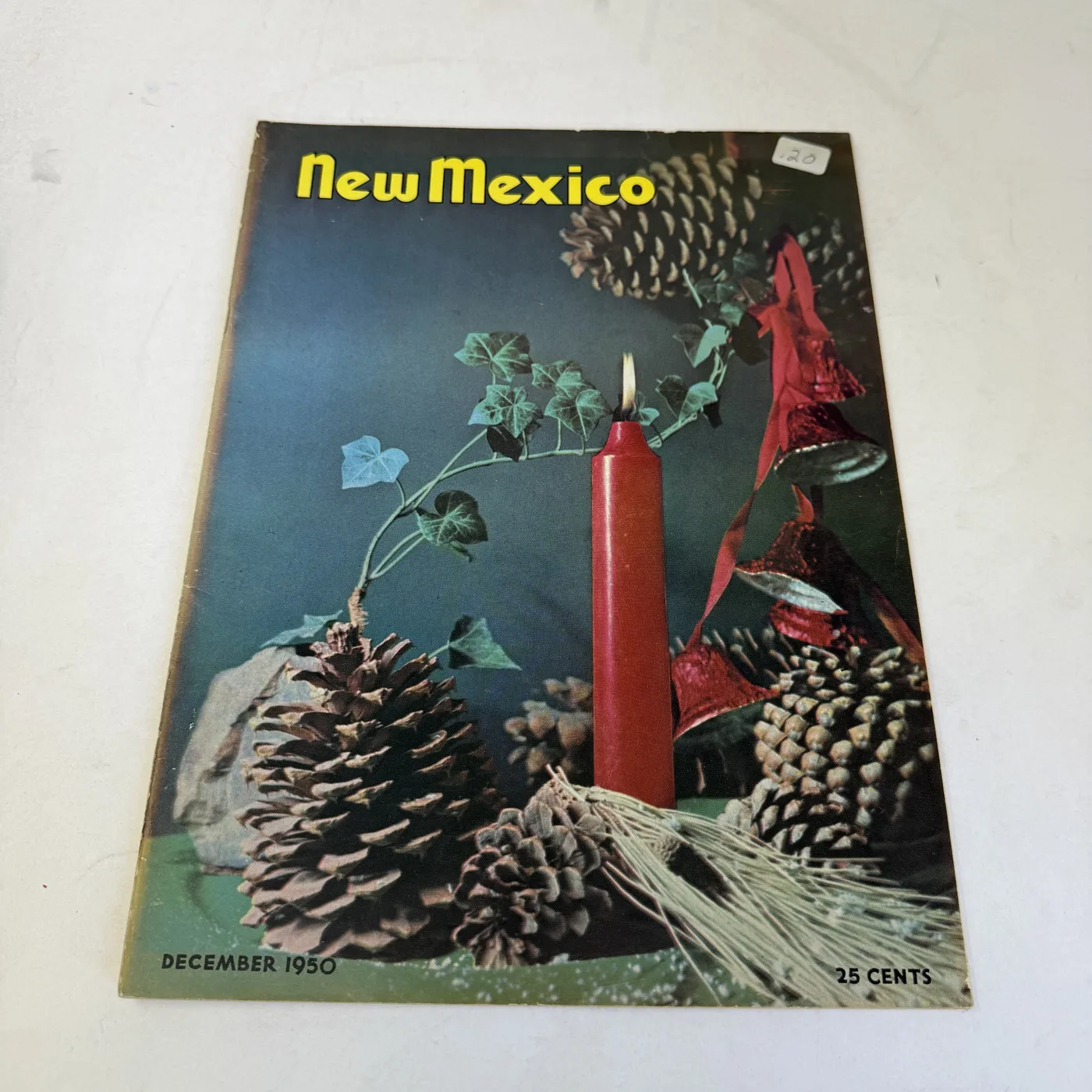
| 1948 – mid-1950s | New Mexico, script logo | Twenty-five cents | Full-color photographic covers; ski, fishing, and highway subjects multiply. |
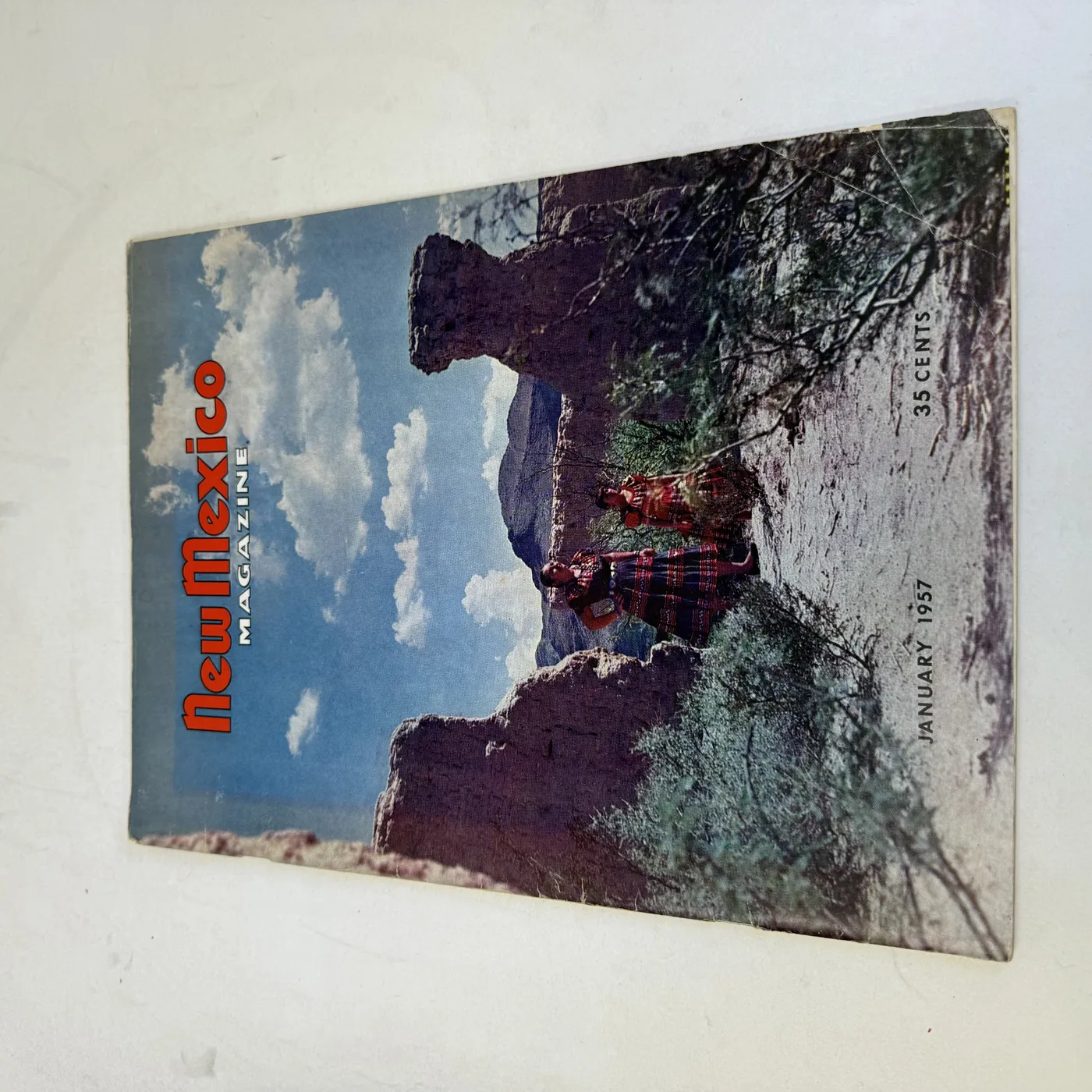
| c. 1956 onward | New Mexico Magazine / “The Land of Enchantment” | Thirty-five cents | “Magazine” joins the masthead; the state slogan appears as a cover subtitle. |
The price transitions are bracketed by the issues photographed here — still fifteen cents in January 1947, twenty-five by February 1948, thirty-five by January 1957 — so the exact switchover months fall between the copies shown. If you have an issue that pins a transition tighter, I would genuinely like to hear about it.
Before the war: fifteen cents
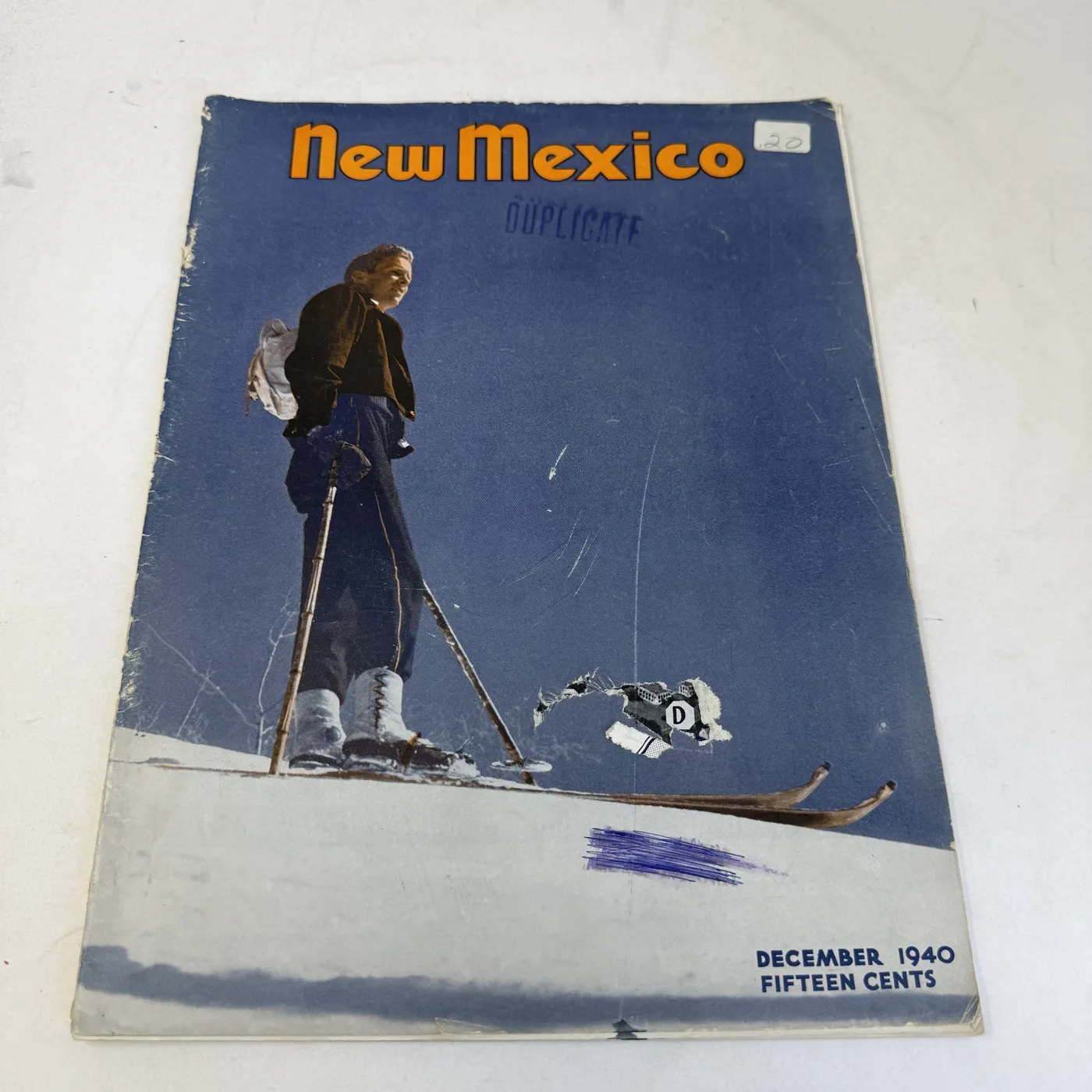
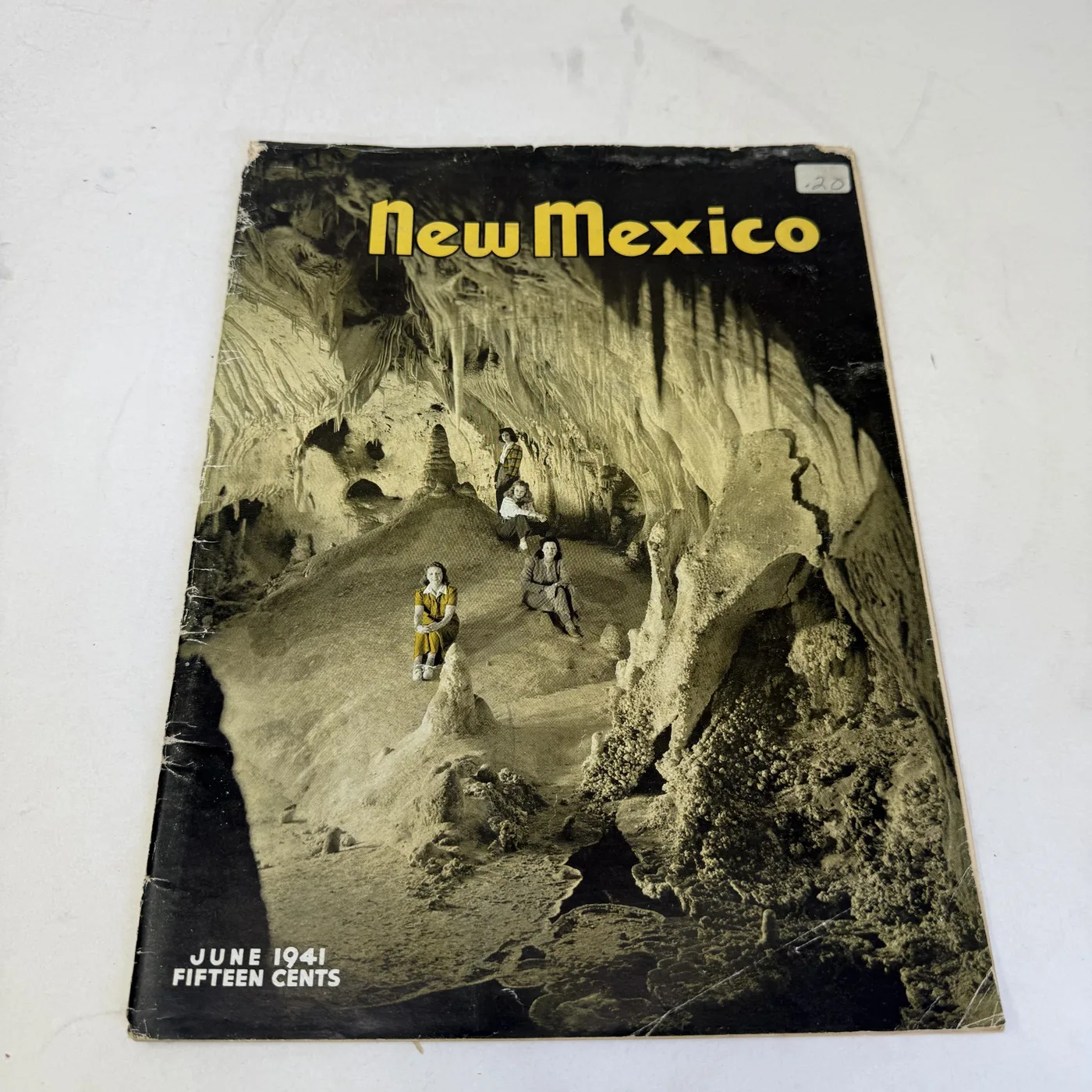
The late-1930s issues are the scarcest in this run. Color photography was not yet practical for a state monthly, so the covers of this era are black-and-white photographs tinted by hand — a look collectors recognize across the room.
The war years
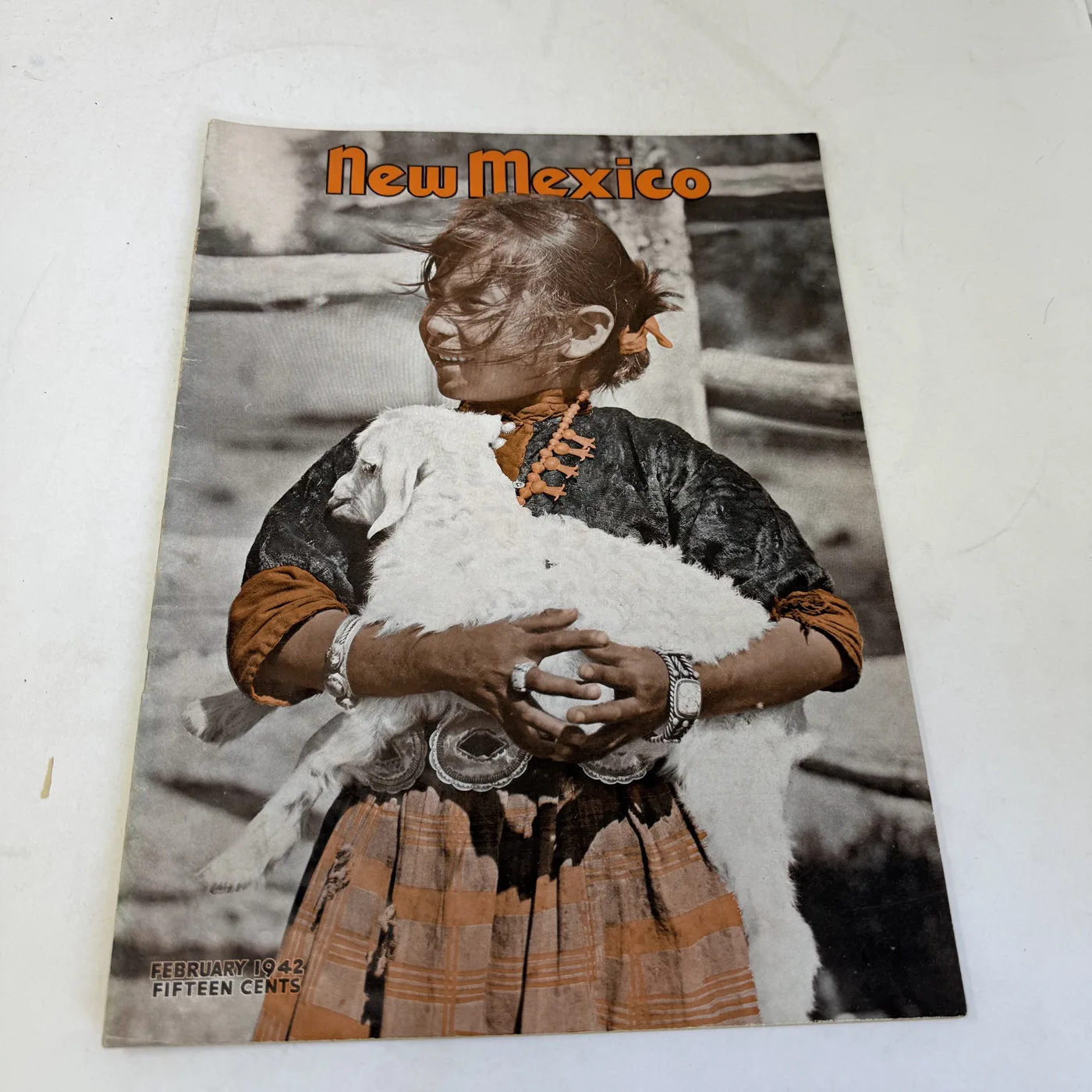
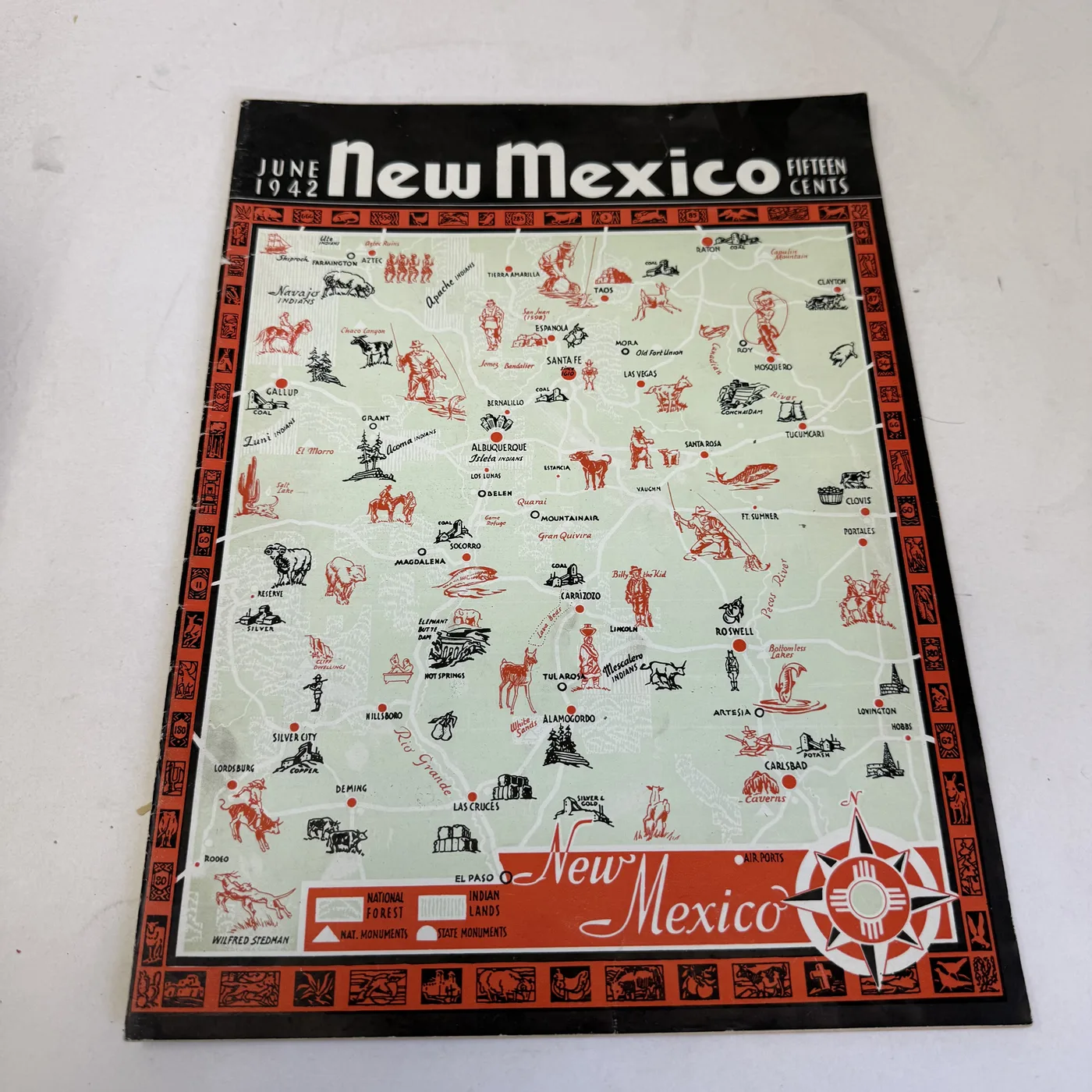
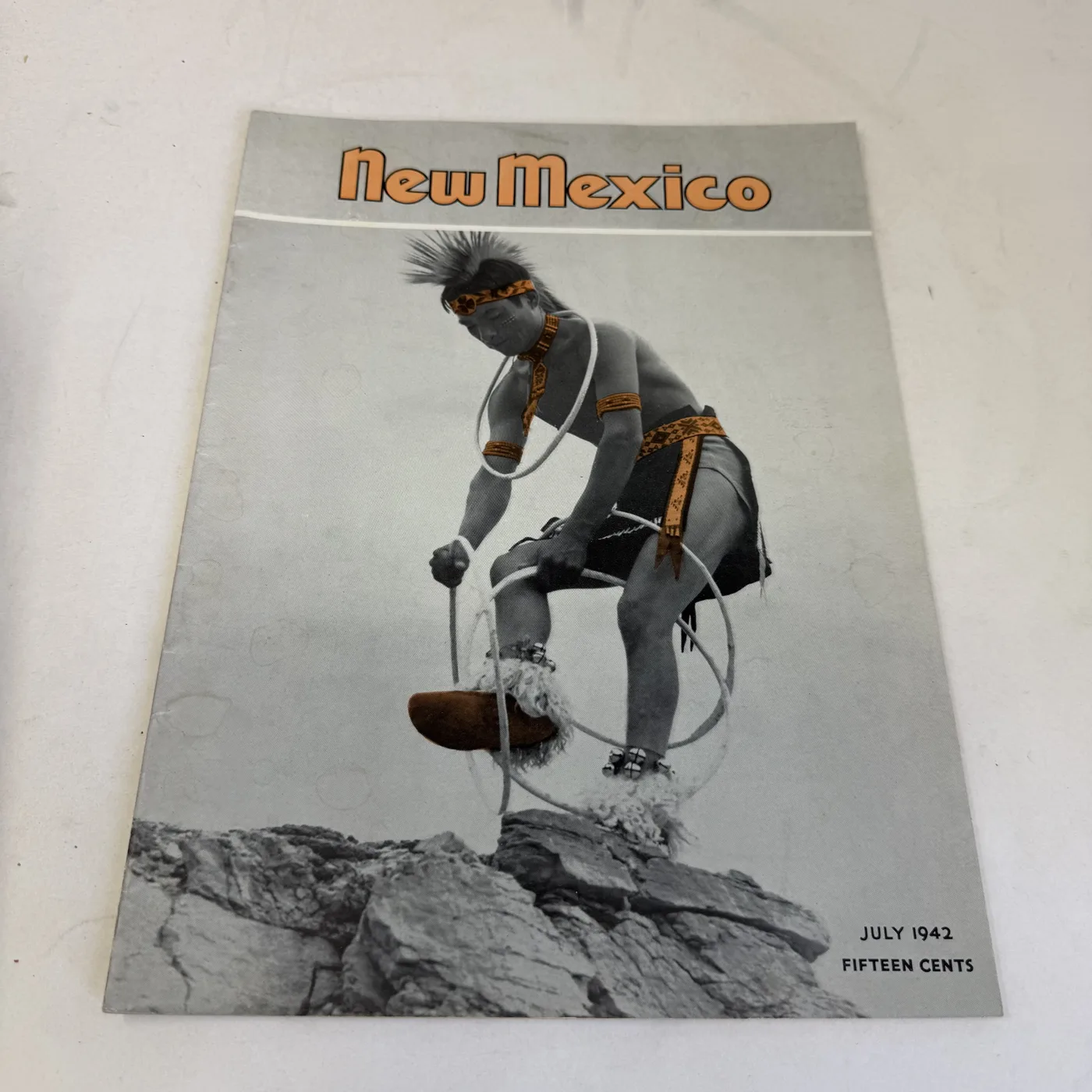
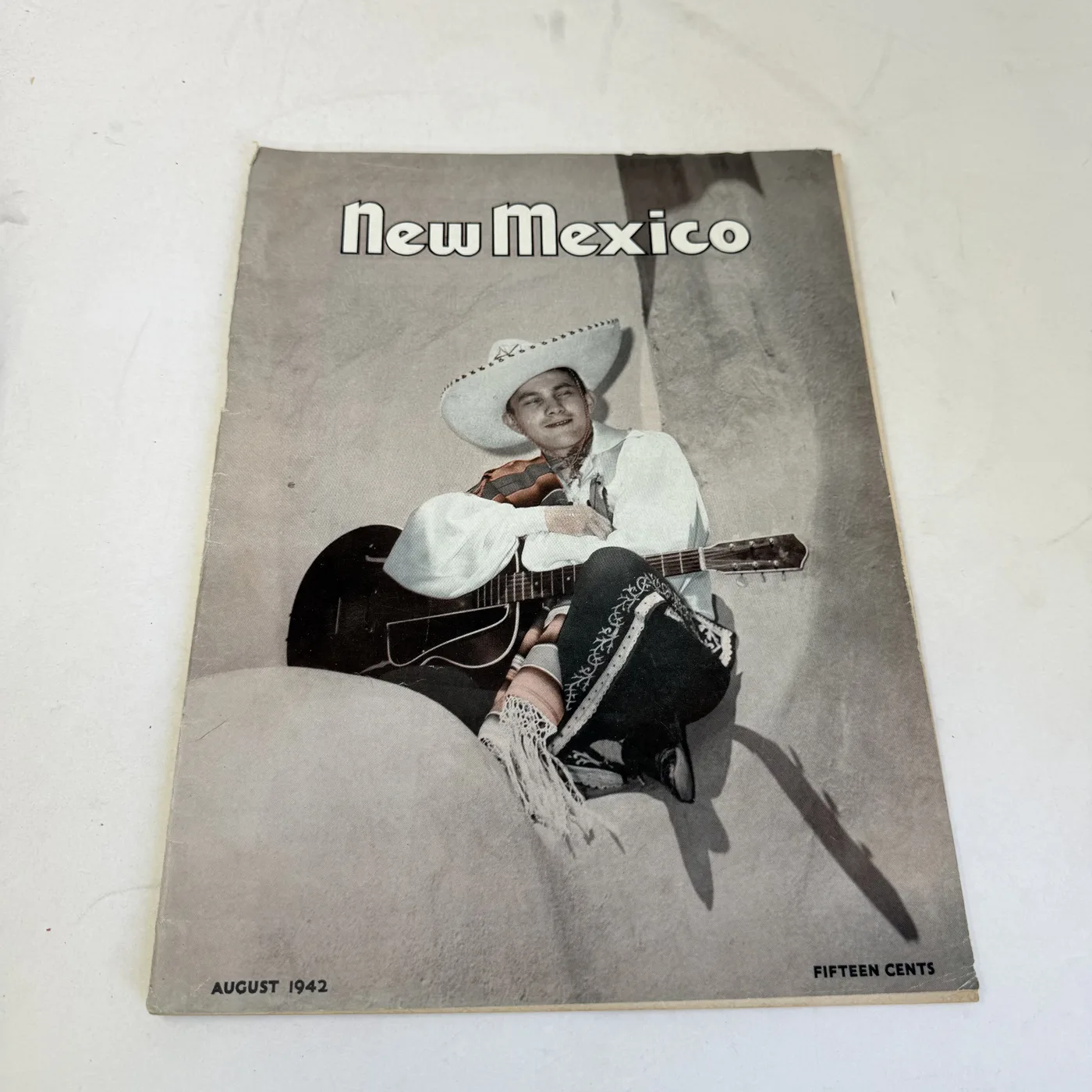
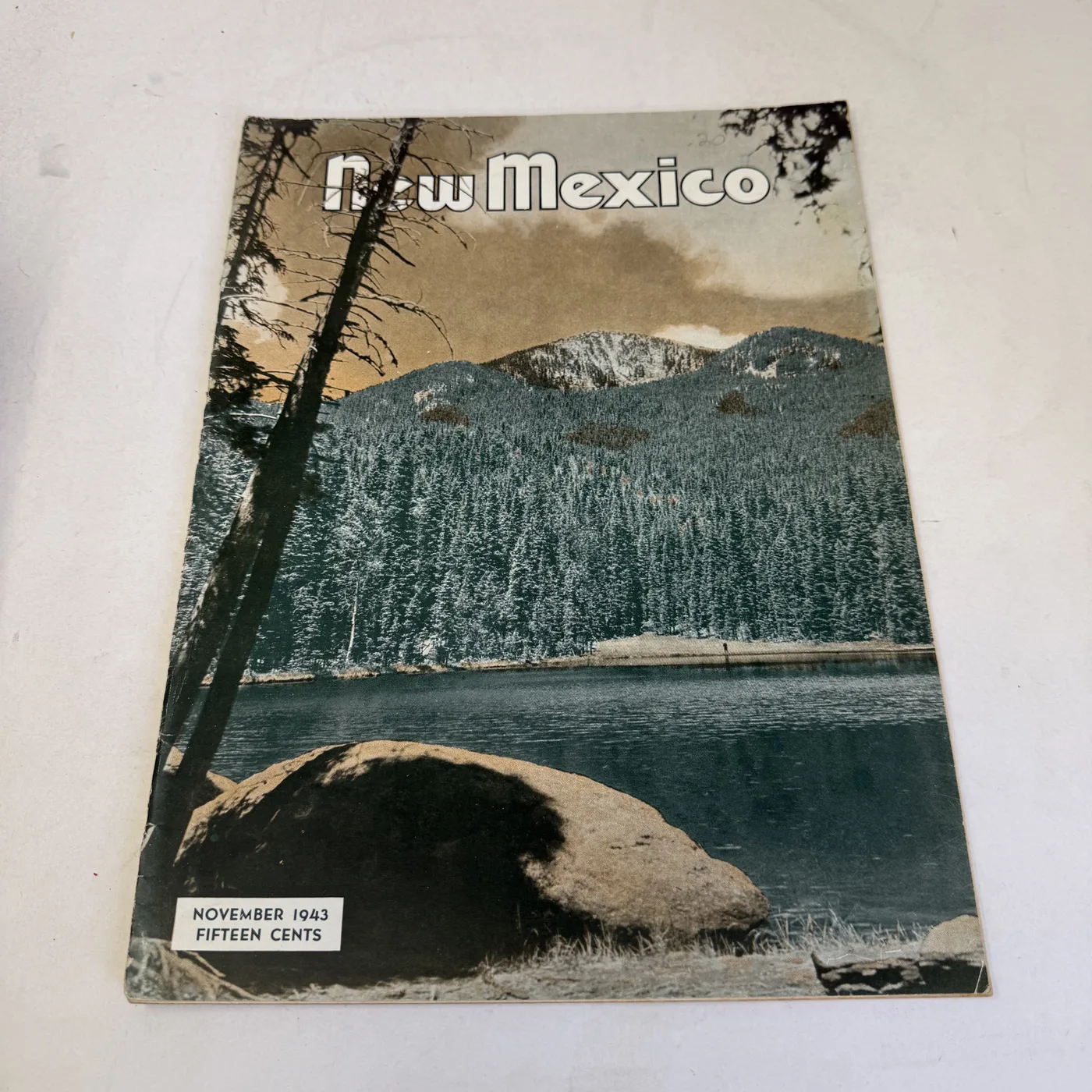
The 1942 and 1943 issues were printed while the state’s National Guard was in Japanese prison camps after Bataan and while Los Alamos was being fenced off under a name nobody was allowed to say. None of that appears on the covers. The magazine kept selling New Mexico — dancers, cowboys, trout lakes — on thinner wartime paper, and the contrast is part of what makes these issues interesting to hold.
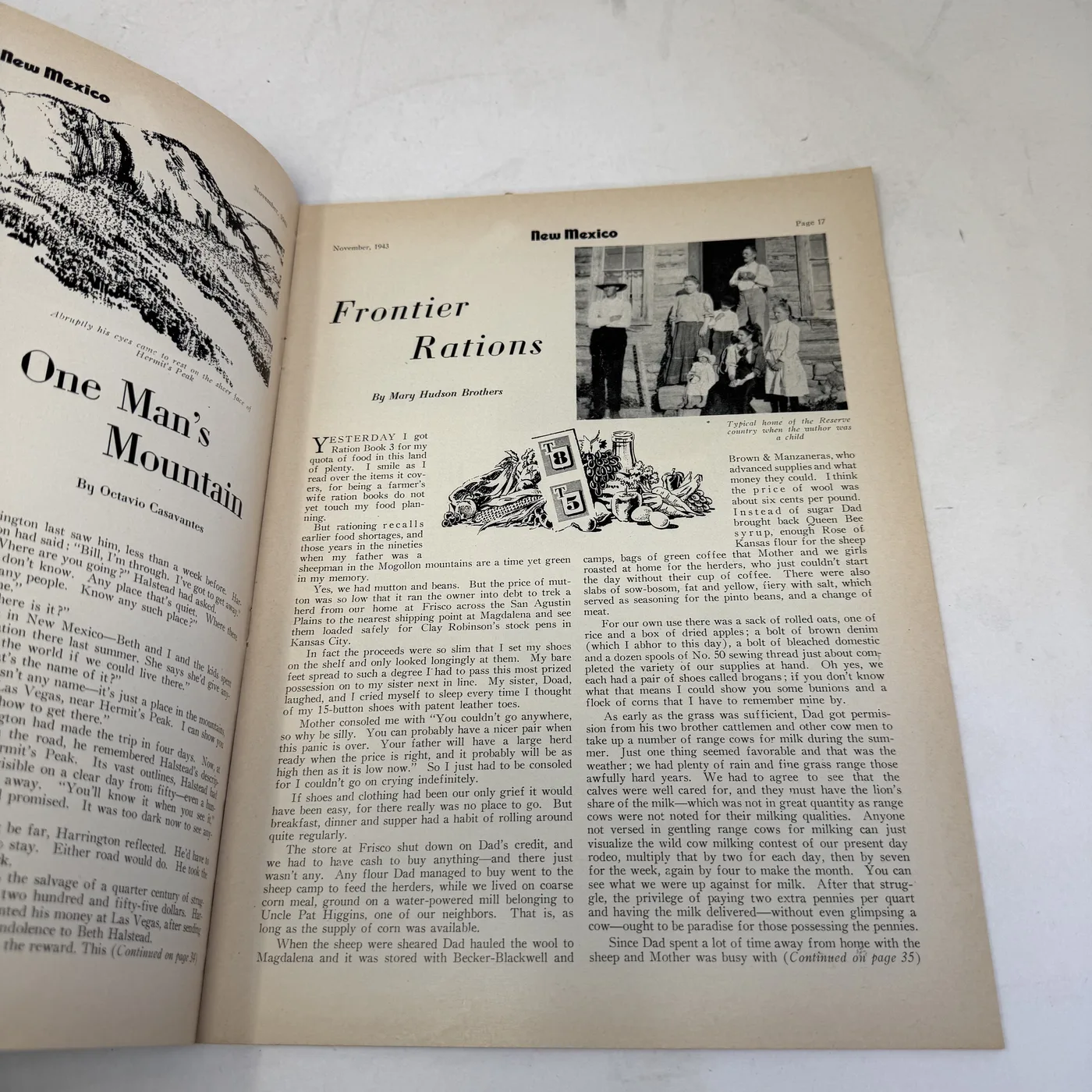
Postwar color: twenty-five cents
After the war the magazine moved to true color covers, and by 1948 the newsstand price jumped from fifteen to twenty-five cents — the single most useful quick-dating clue on the whole run. Tourism was booming, the ski areas were building their first lifts, and the covers show it.
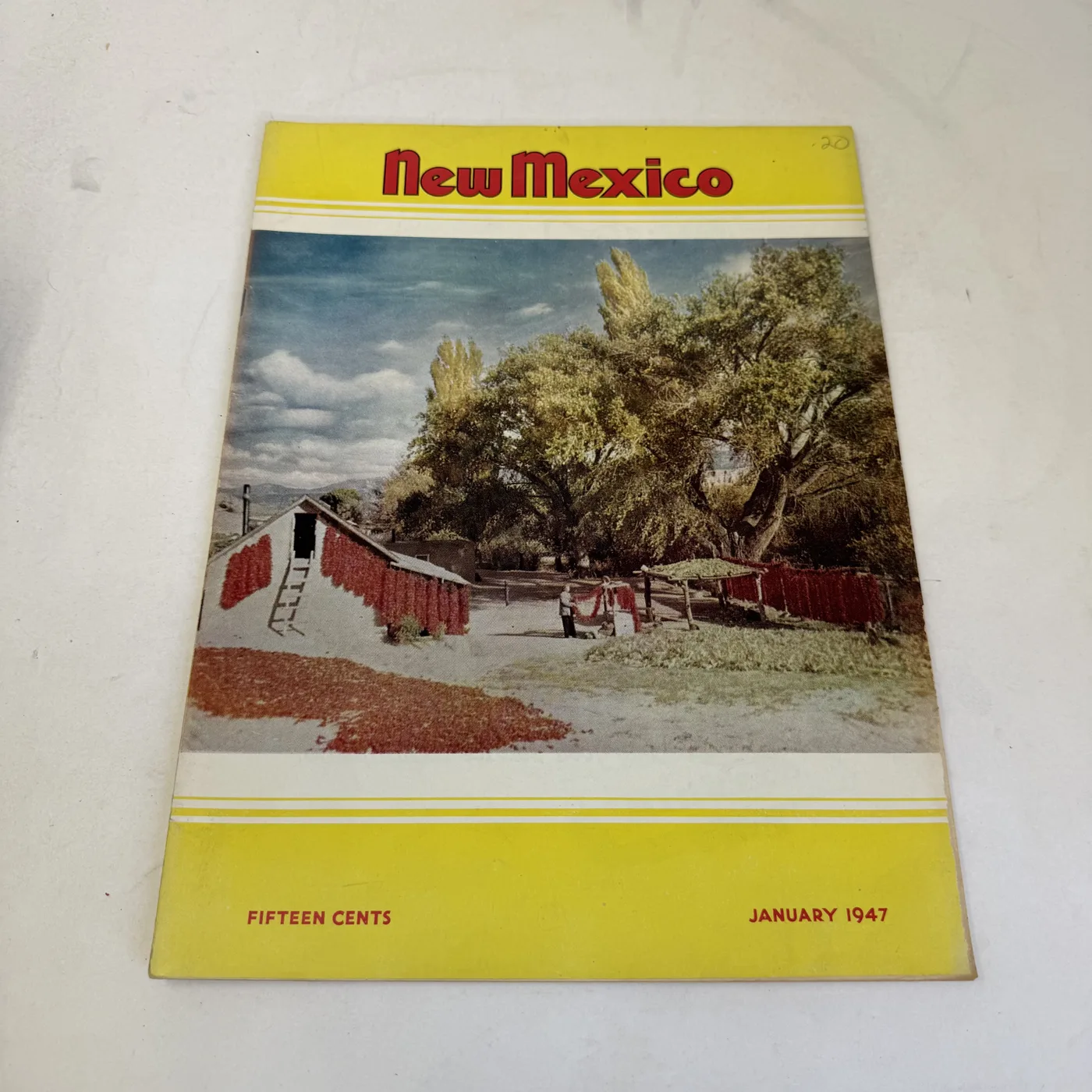
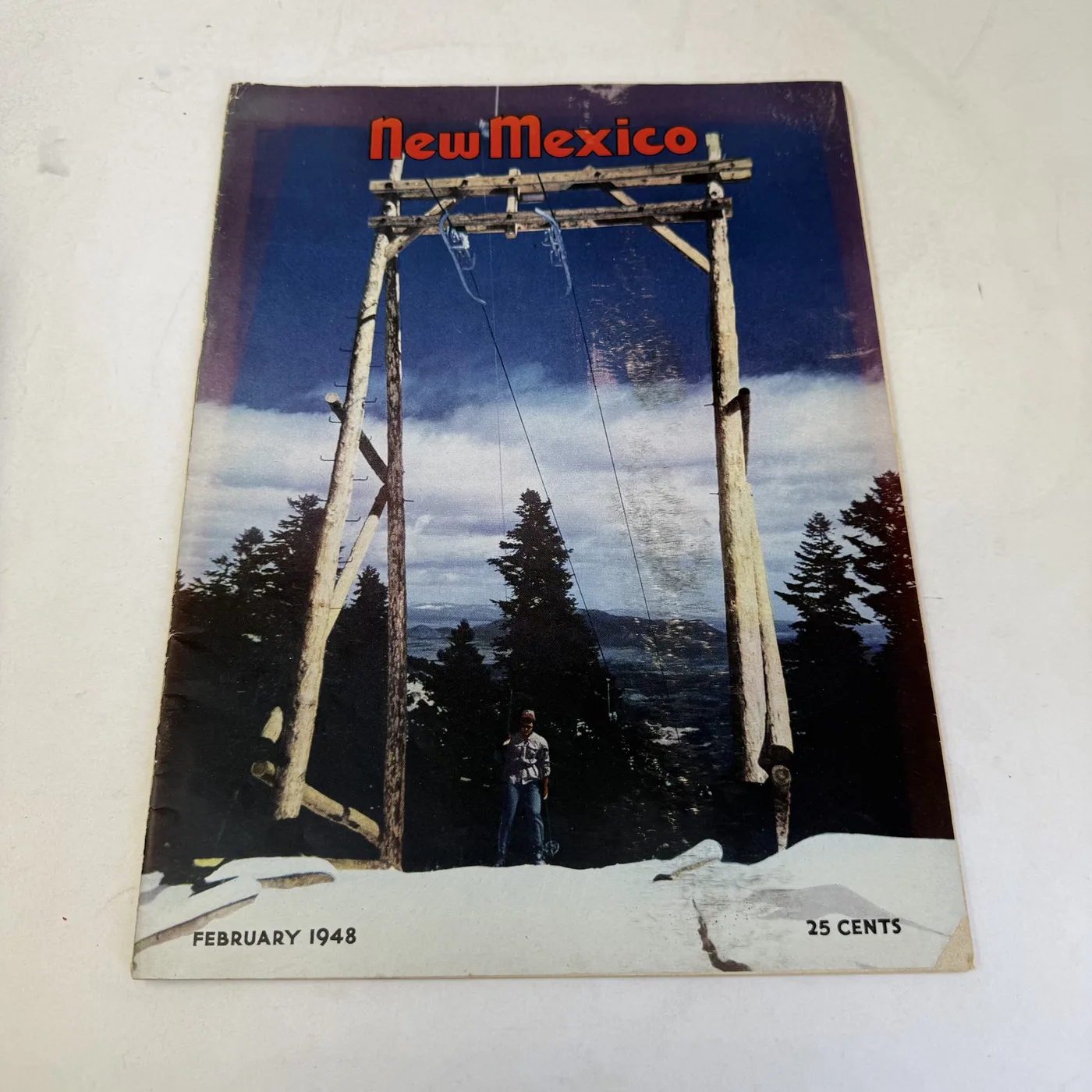
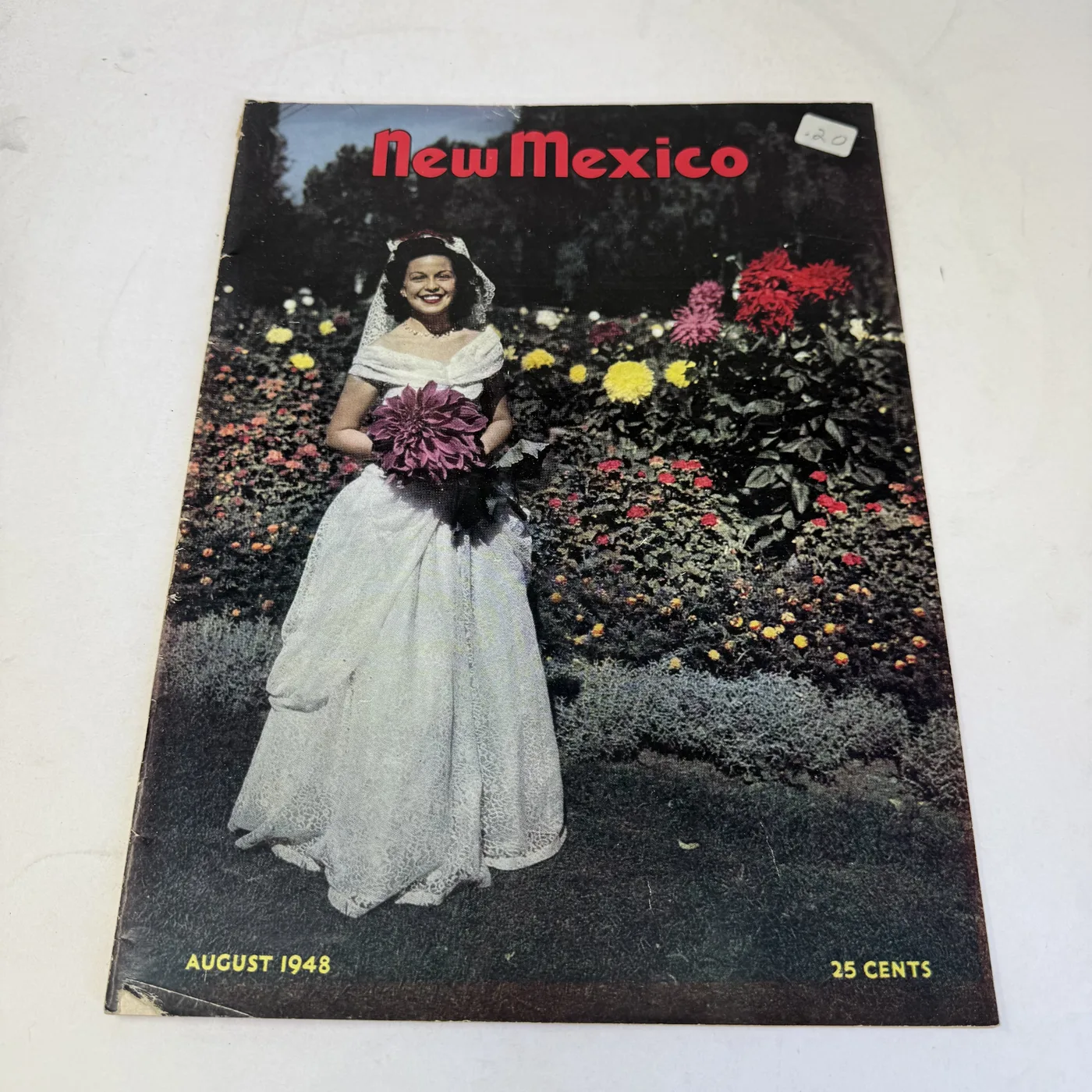
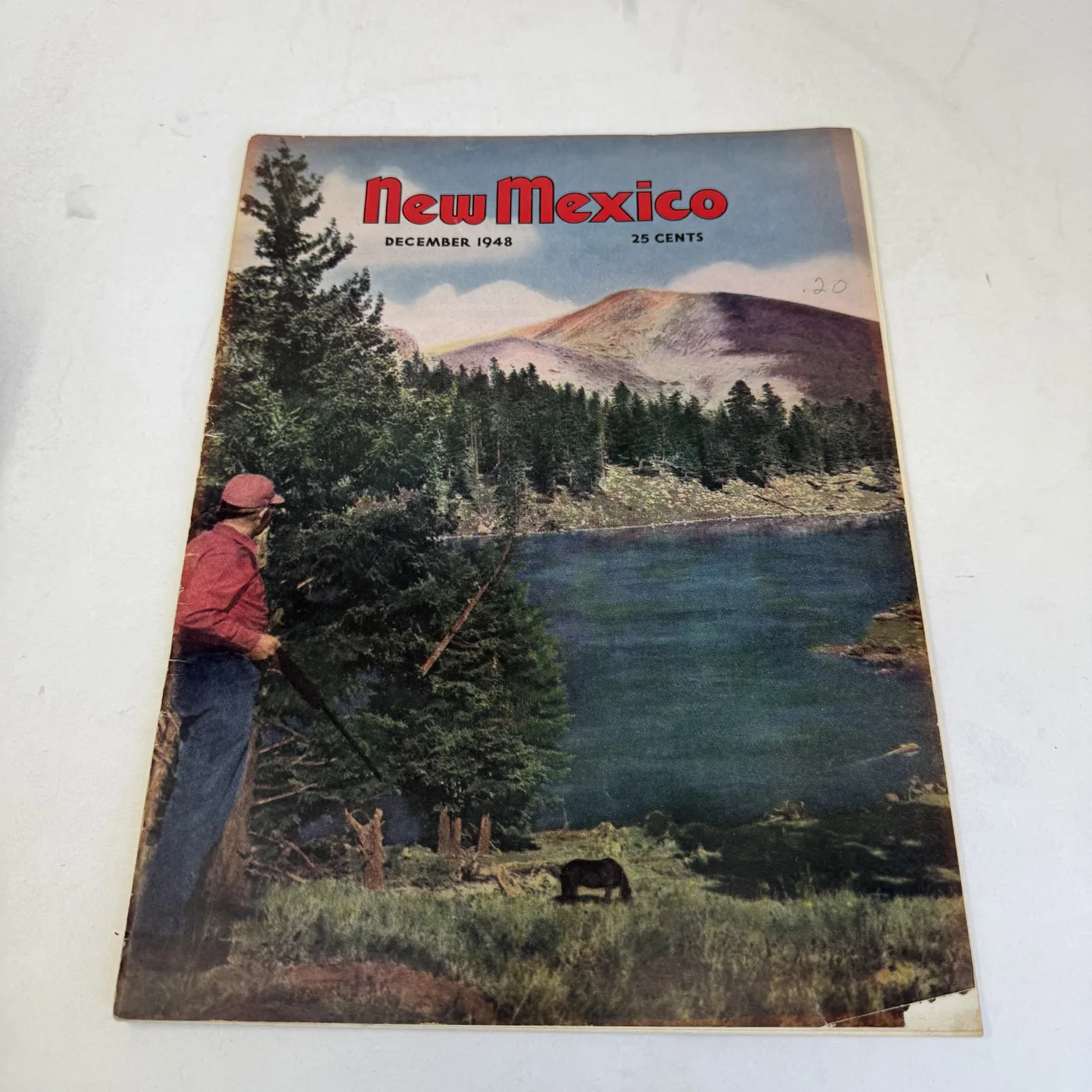
The Land of Enchantment years: thirty-five cents
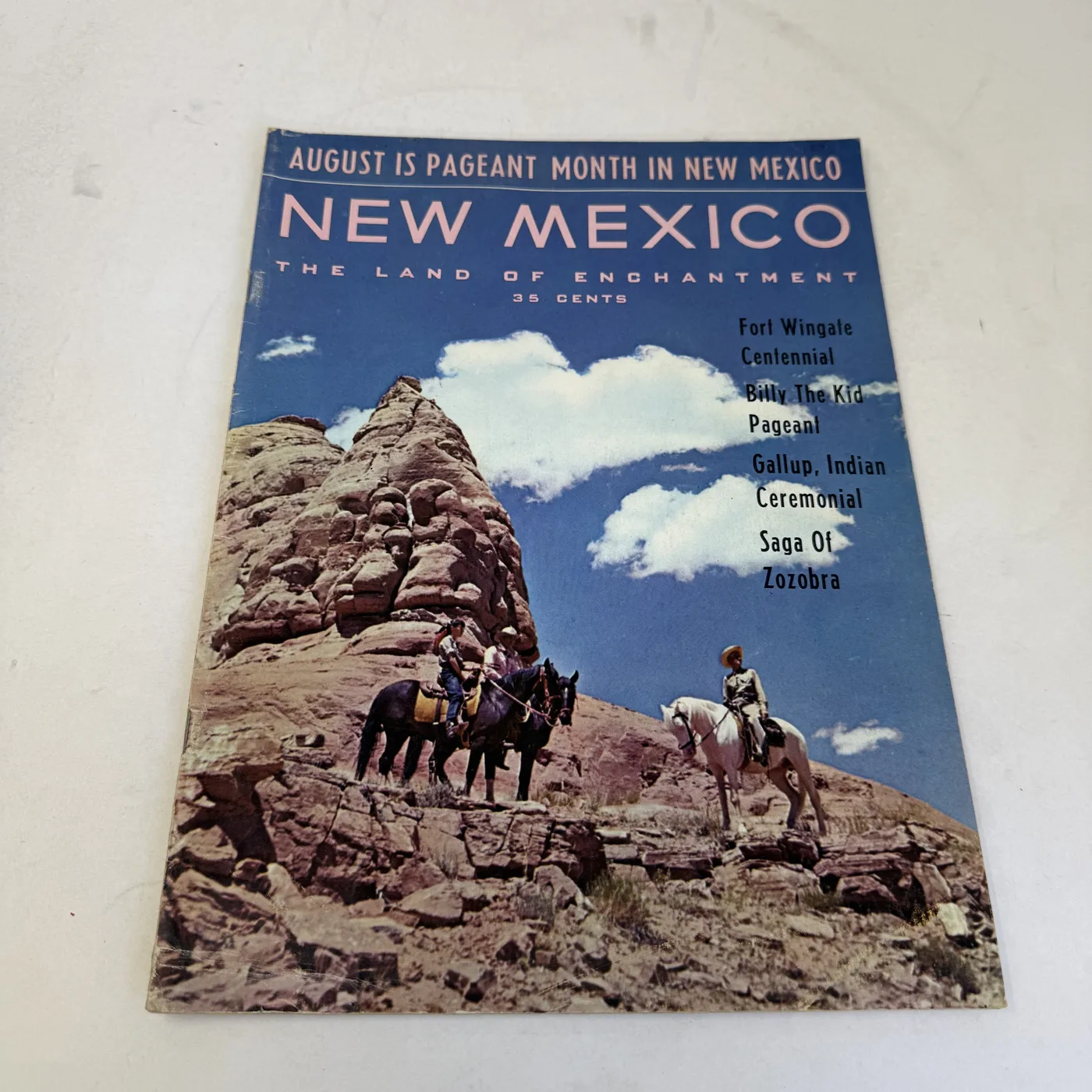
By the late 1950s the masthead had grown a “Magazine” and the price a dime. The state was selling itself harder than ever, and the August 1962 cover below is practically a syllabus of it: the Gallup Inter-Tribal Indian Ceremonial, running every summer since 1922; Will Shuster’s Zozobra, the groaning effigy Santa Fe has burned at Fiesta since 1924; a Billy the Kid pageant; and a centennial for a fort. Issues built around these events are the ones that leave the magazine-collecting world entirely — Fiesta collectors, Ceremonial collectors, and outlaw-history people all bid on the same copy.
The advertising is part of the record
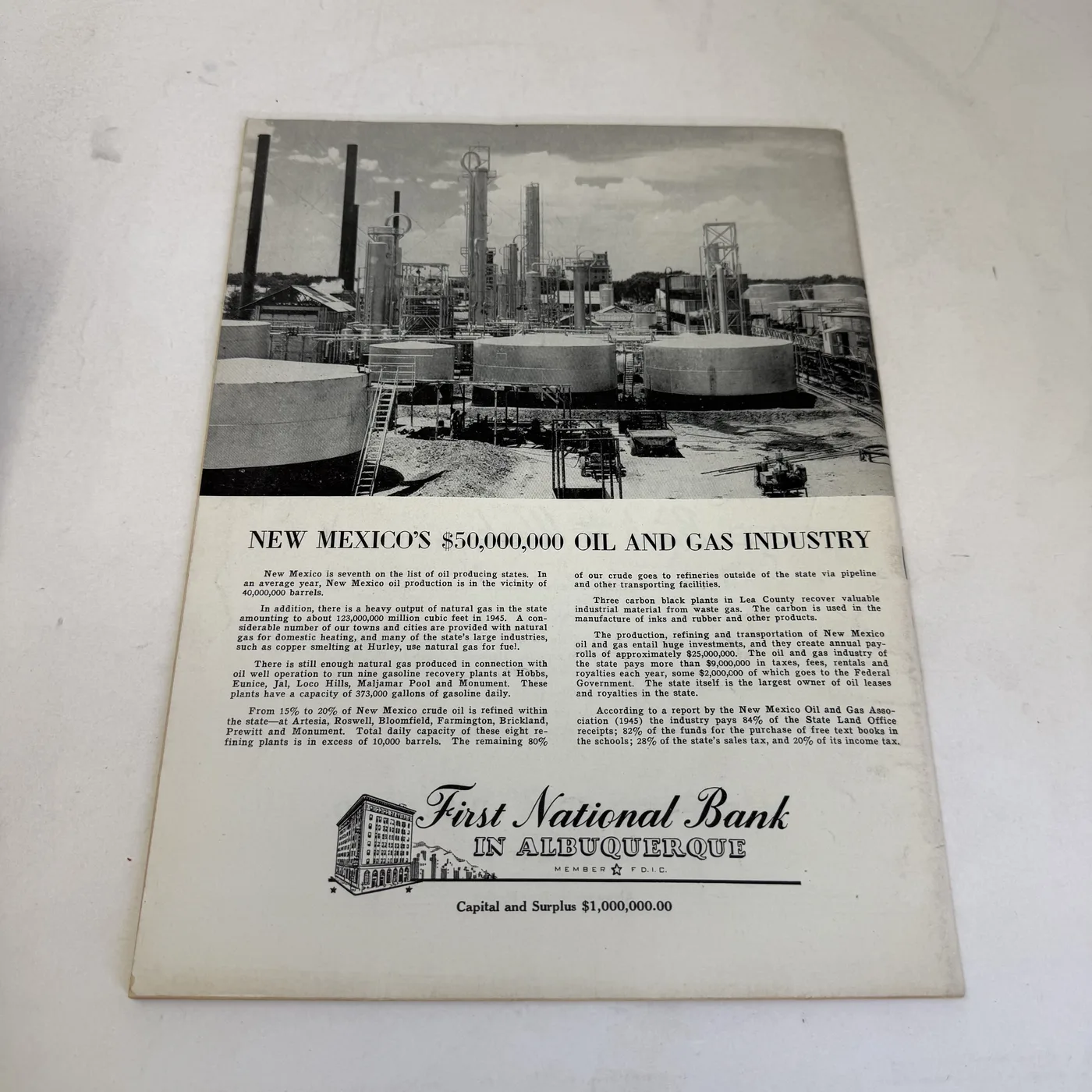
Do not skip the ads when you evaluate a run. Regional advertising — banks, railroads, trading posts, motor courts, curio shops — is often the only surviving visual record of businesses that left no other paper behind, and it is a real part of why researchers buy bound years of this magazine.
Reading a copy in hand
Mid-century monthlies like this one are saddle-stitched — folded sheets driven through with two wire staples — and the staples are where a copy’s condition story starts. Look for rust blooming at the wire (it stains the gutter of every leaf it touches), covers starting to detach at the staples, and spine roll from decades of being read flat. Then check completeness the way a bookseller would: flip for razored-out recipes and pictures (the chile and Christmas numbers suffered most), confirm any foldout or insert is still attached, and note whether the copy is a clean newsstand example or carries a subscription mailing label. None of these flaws kills a scarce early issue — the December 1940 copy above wears a DUPLICATE stamp and I photographed it anyway — but each one belongs in an honest description.
Storage is the other half. Old pulp paper is acidic and brittle at the edges; the kindest treatment for a run like this is upright storage in magazine files, or flat stacking in shallow piles, out of the sun that fades those tinted covers. The same handling rules in my preservation and storage guide apply, just more urgently, because magazine paper was never meant to live eighty years.
What actually matters when you find a stack
Date first. The price is the fastest clue — fifteen cents runs through the mid-1940s, twenty-five cents from 1948, thirty-five cents by the late 1950s — and the masthead style narrows it further, as the gallery above shows. Anything from the 1920s Highway Journal era is genuinely scarce and should be handled as such.
Subject covers cross-collect. A ski-lift cover sells to ski-history people, a Zozobra issue to Fiesta collectors, a Stedman map cover to map people, a Carlsbad cover to caverns ephemera collectors. The buyer is often not a magazine collector at all — which is the healthiest kind of demand a paper item can have.
Condition and markings. Mailing labels, DUPLICATE stamps, dealer pencil, chips and scribbles all matter, but for a state monthly with modest survival rates they are not disqualifying the way they are for the national weeklies — a marked early issue still beats no issue at all. Record the markings honestly and let the buyer decide.
Runs beat strays. Bound years and long unbroken runs are worth more than the sum of their issues, because researchers use them as a photographic archive — of ghost towns before collapse, trading posts, pre-interstate highways, and roadside businesses that survive nowhere else on paper. If you have inherited a long run, please do not break it up or recycle it before someone who knows the title has looked at it.
If a run like this is sitting in your garage
Most of the stacks I meet on pickups are the common national titles, and I am honest with people about those: they are wonderful and they are not valuable. But when a box turns out to hold the state magazine going back before the war — like the run on this page — that is a box I am glad somebody did not recycle. In the Albuquerque metro I pick up free: books, magazines, and all media in one stop, any quantity, no sorting, with a 24/7 drop box at the warehouse for small loads. Early and notable issues get pulled, flagged, and found a proper home. Text 505-250-3804 and tell me what you have.
Old New Mexico Magazines to clear out?
Free pickup across the Albuquerque metro, any quantity, no sorting. Early issues get flagged, never pulped.
Call or Text 505-250-3804Frequently asked questions
Are old New Mexico Magazine issues worth anything?
Which issues do collectors and researchers actually want?
Do you pick up old magazines along with books?
How do I date a New Mexico Magazine issue with no visible date?
Should I break up a bound run or sell issues one at a time?
Related on this site
- Vintage NM Travel & Tourism Books — the WPA guide, Fred Harvey, railroad literature, and the rest of the paper this magazine lived alongside.
- Are Old Magazines Worth Anything? — the honest baseline for Life, Time, and the commemorative stacks.
- Are Old National Geographics Worth Anything? — the yellow-spined version of the same question.
- NM Mining History & Ghost Towns — why researchers buy bound runs of this magazine as a photographic archive.
- NM Chile Culture & Agriculture — where the magazine’s food coverage fits the bigger literature.
- Free Book & Media Pickup in Albuquerque — how the pickup works when the magazines come with bookcases attached.
Cite This Guide
Eldred, J. (August 2026). Vintage New Mexico Magazine: A Dated Cover Gallery, 1938–1962. New Mexico Literacy Project.
https://newmexicoliteracyproject.org/vintage-new-mexico-magazine-back-issues-collecting
Content and photography are original documentation by Josh Eldred. Licensed under CC BY 4.0. Cite with attribution.