Archive entry · Acoma autobiography, told and drawn by its author · 1932 first edition in the pictorial jacket · Gallup trading-post association copy
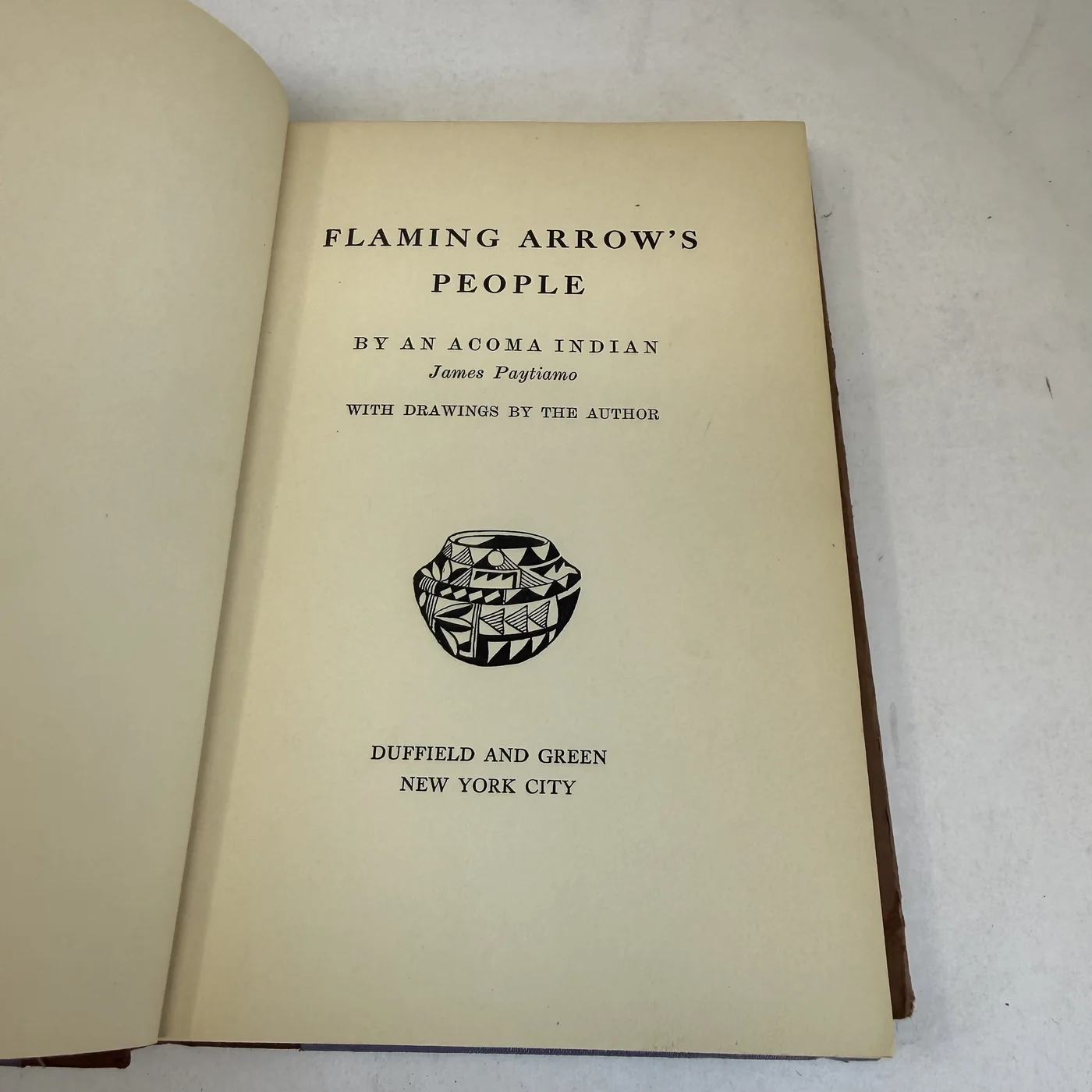
Flaming Arrow's People — “By An Acoma Indian” (James Paytiamo), Duffield & Green, New York, 1932
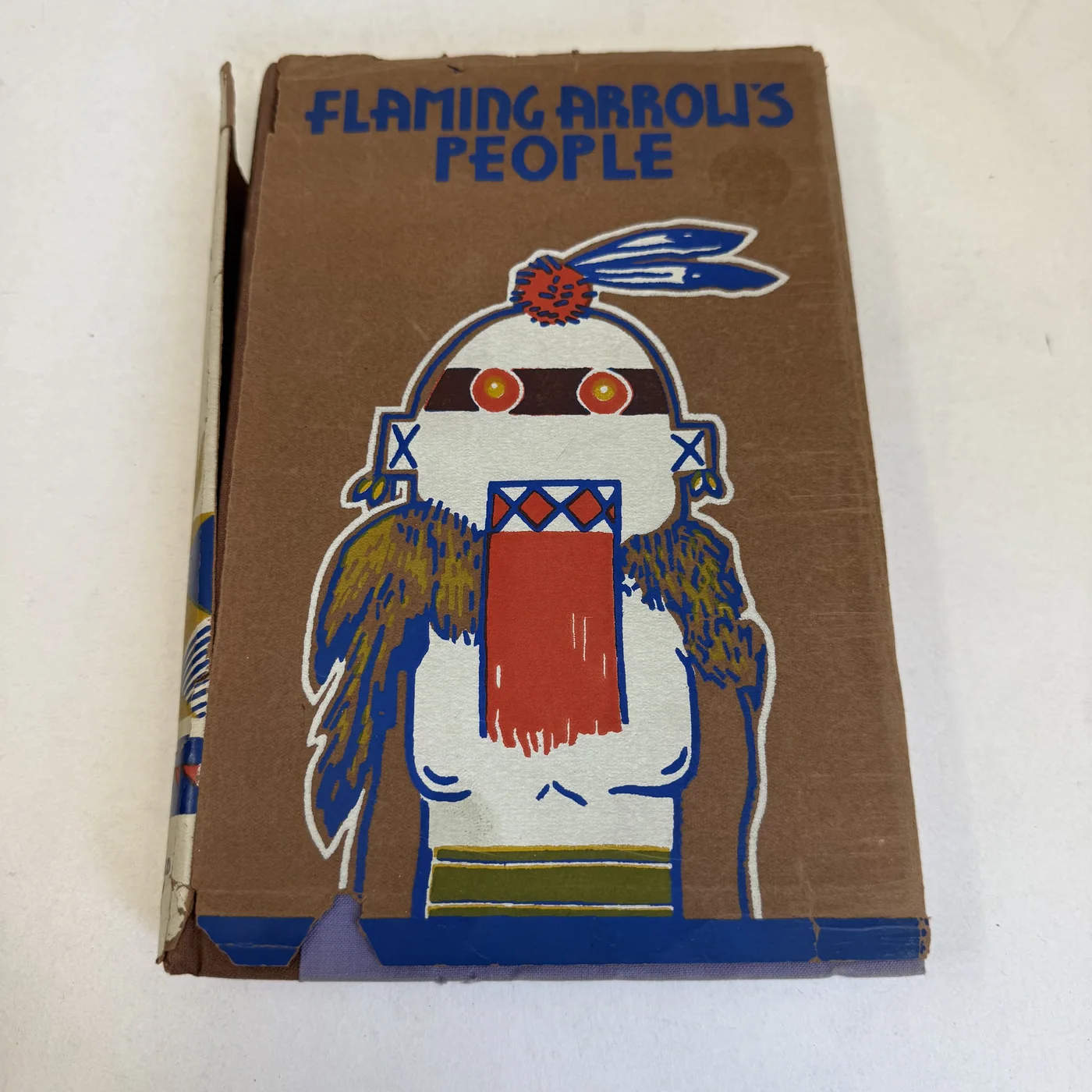
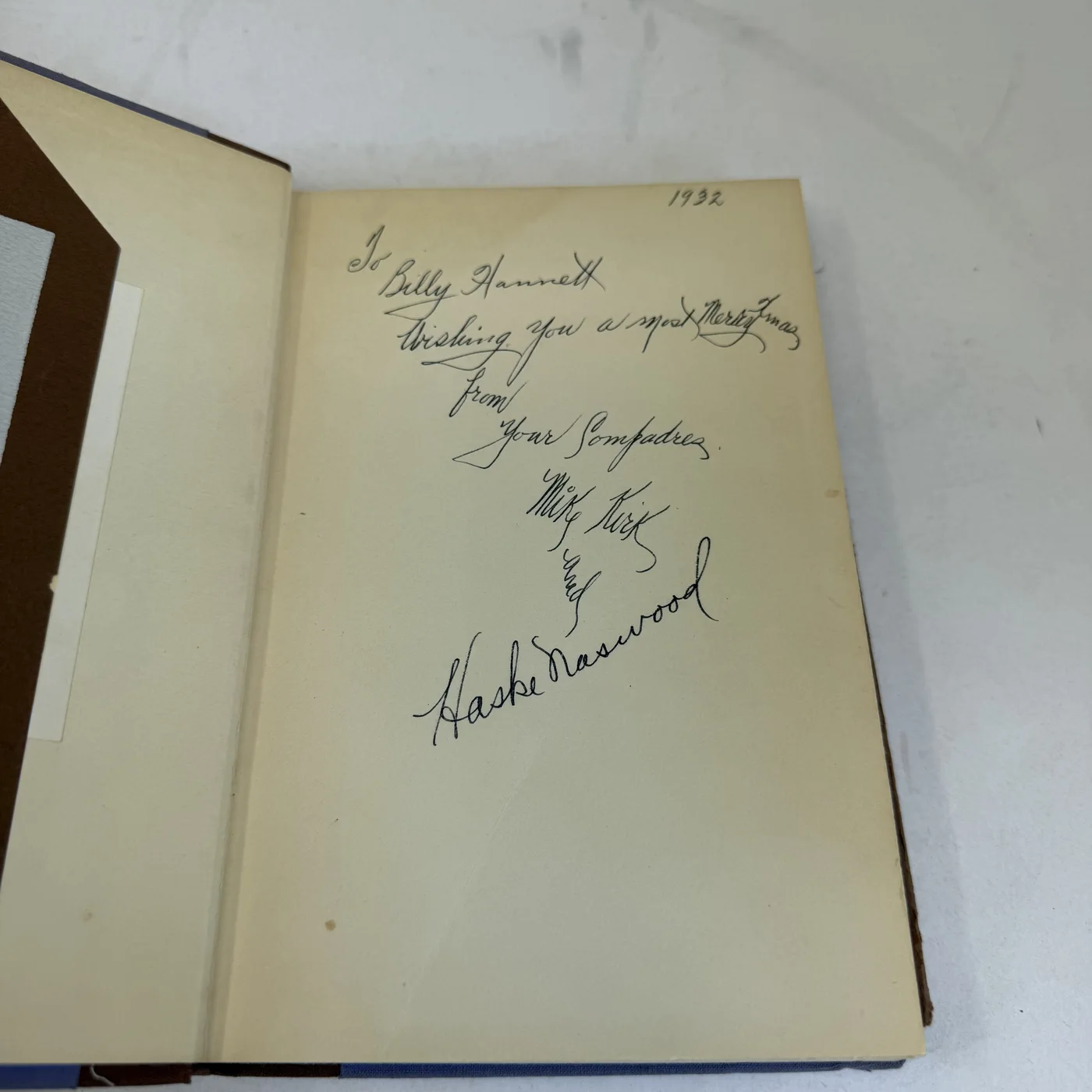
The 1932 first edition — the only printing — of James Paytiamo’s account of Acoma life, published under the byline “By An Acoma Indian” and illustrated throughout with the author’s own color drawings, in the scarce pictorial dust jacket built from his cover art. This copy carries something better than a signature: a Christmas 1932 association inscription — the Gallup Indian trader Mike Kirk and Haske Naswood, signing together as “your Compadres,” presenting the book to Billy Hannett in the year it was published.
Catalog
What this book is
Flaming Arrow’s People is generally cited as the first book-length, self-told account of Acoma life by an Acoma author published for a general trade audience. It appeared in 1932 from Duffield and Green of New York — a decade before Sun Chief (1942) made the as-told-to Native autobiography a fixture of university lists, and in a different register entirely: Paytiamo wrote his own text and drew his own pictures. The title page says so plainly — with drawings by the author — and the byline the publisher chose, “By An Acoma Indian,” tells you exactly how the New York trade framed a Pueblo author in 1932. His name appears beneath it in smaller type.
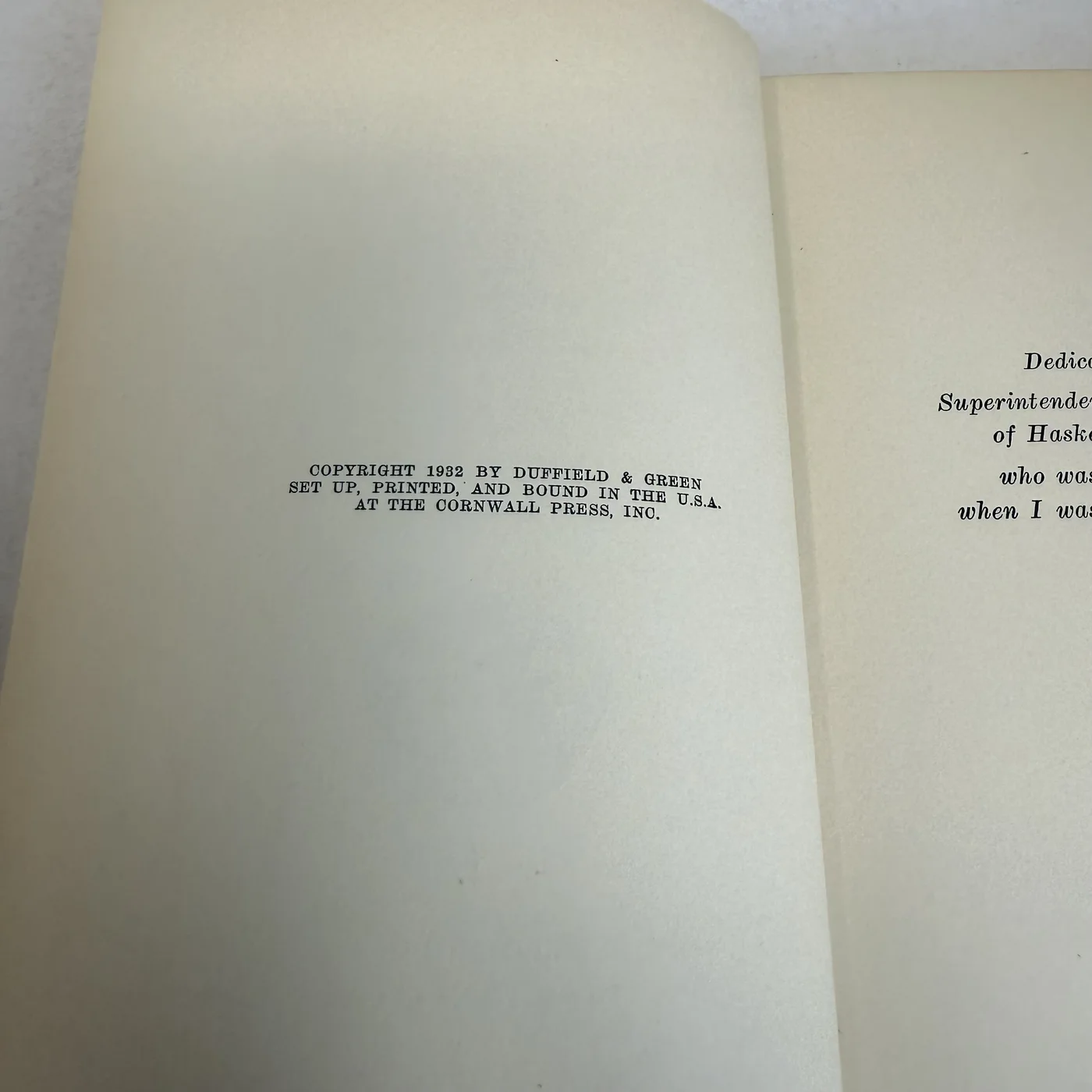
Paytiamo’s chapters move between boyhood at Acoma — the Sky City mesa, the fields below it, the ceremonial calendar — and the off-reservation world of the federal boarding school. The printed dedication is to a superintendent of Haskell Institute, the Indian boarding school in Lawrence, Kansas, where Paytiamo had been a student; the book is, among other things, one of the earliest published Pueblo accounts of that system written by someone who went through it.
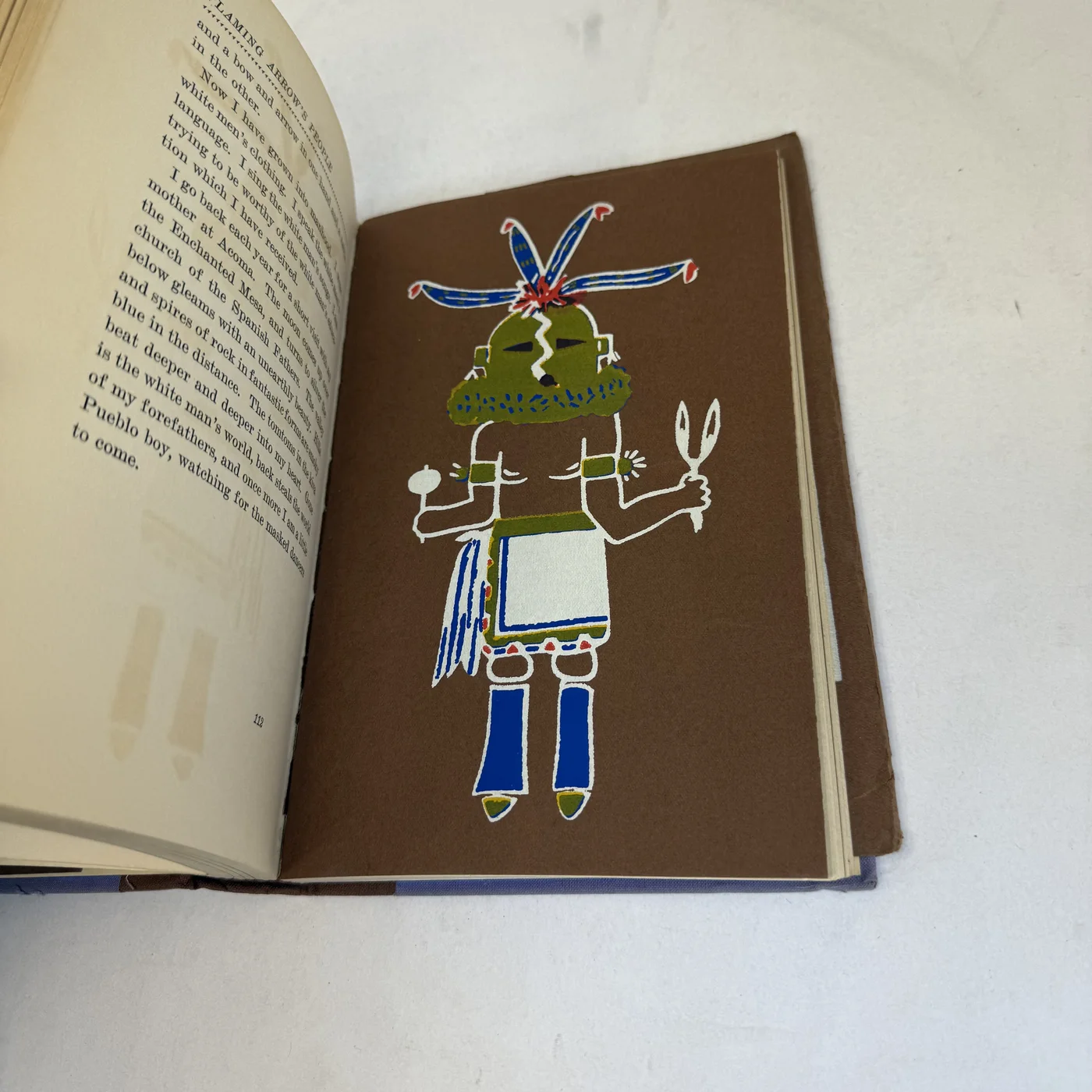
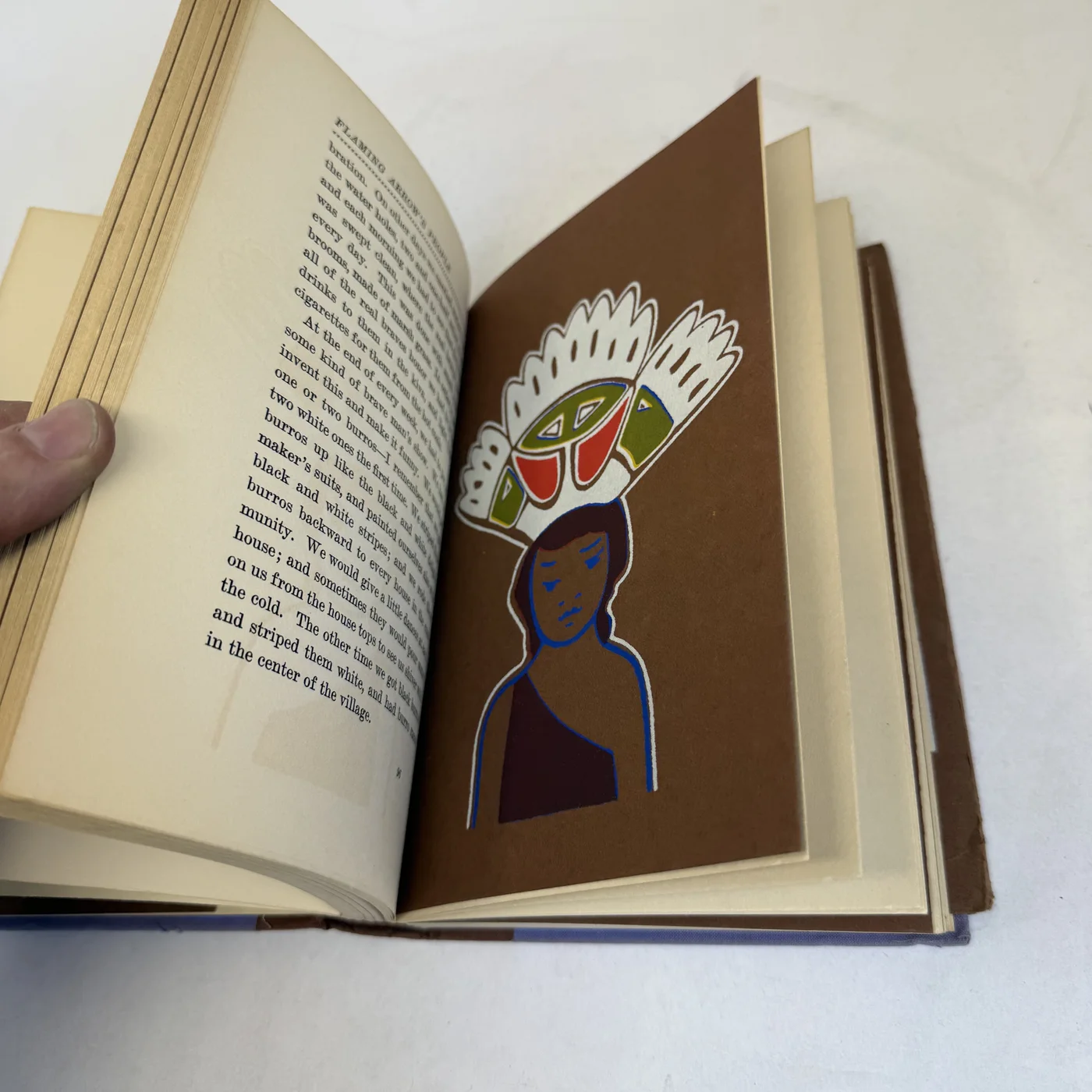
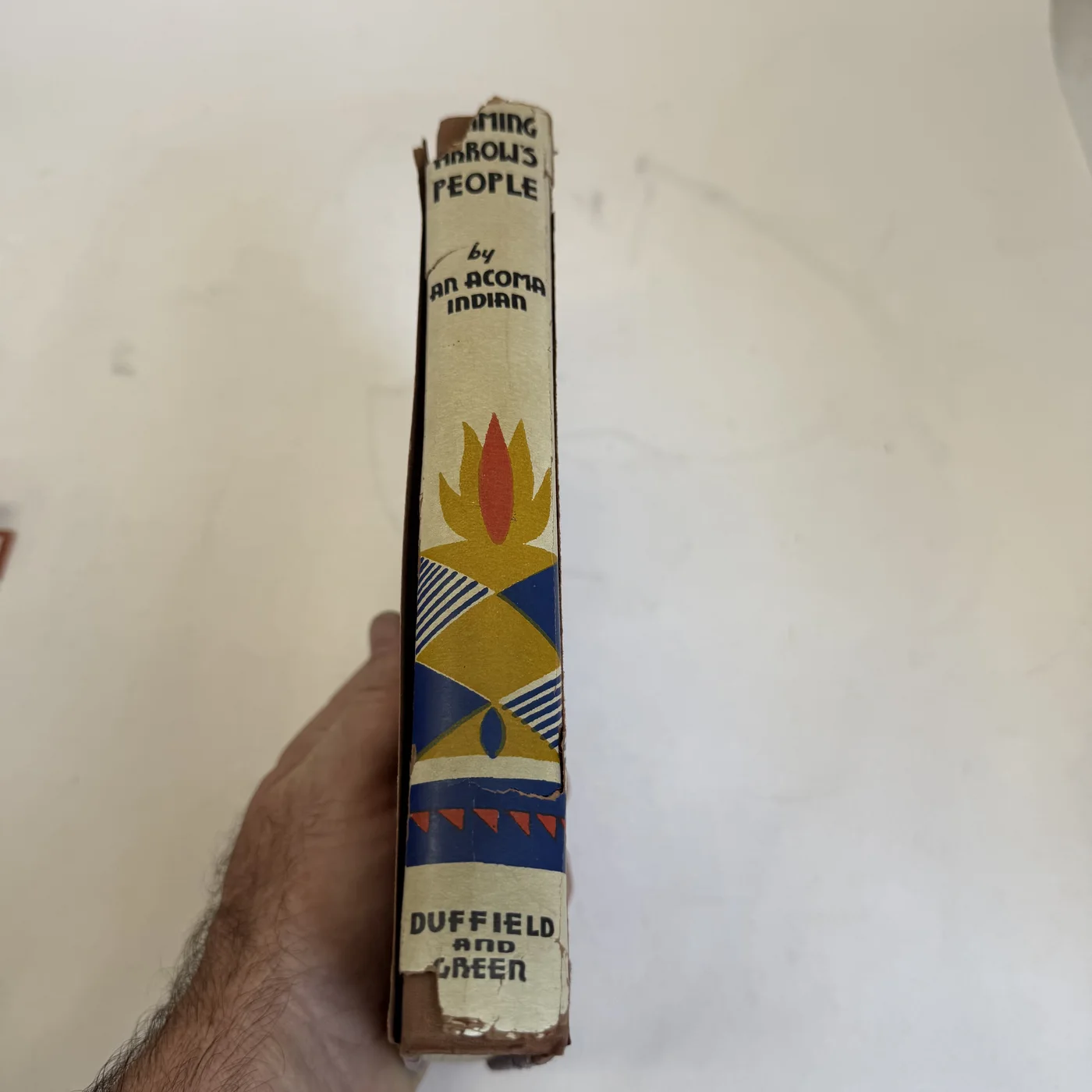
The color drawings are the book’s second signature. Reproduced on warm brown grounds, they show dancers and ceremonial figures in flat, confident color — closer to the San Ildefonso and Kiowa watercolor movements of the same years than to any New York illustration convention. When the jacket survives, it carries one more of them: the pictorial front panel is Paytiamo’s own design, which is why jacketed copies are the ones collectors and institutions chase.
The inscription: Christmas 1932, in the trading-post world
On the front free endpaper, dated 1932 — the year of publication — two men signed a Christmas present together:
To Billy Hannett — Wishing you a most Merry Xmas — from Your Compadres — Mike Kirk and Haske Naswood
Mike Kirk was a Gallup Indian trader — one of the trading-post men through whose stores the economic life of the Navajo and Pueblo country moved in the 1920s and 30s. Haske Naswood was Navajo. That pairing is the point: a book by an Acoma author, chosen as a Christmas gift by an Anglo trader and a Navajo man signing together as compadres, in the Gallup world where those three cultures did business with each other every day. The inscription is not an author’s signature — it is something scarcer for a book like this: contemporary evidence of who actually bought, gave, and read it in the country it describes, within months of publication.
Points and condition
Identification is simple because the publishing history is simple: one printing, 1932, Duffield & Green, manufactured at the Cornwall Press — the copyright page shown below is the whole story. There is no later printing to confuse with the first. Condition on this copy is honest: the jacket is chipped at the spine ends and folds with the image complete; the cloth beneath is sound. The scarce state for this title has always been the jacket — most surviving copies lost it decades ago.
Where it sits on the shelf
For the collector, this book connects three shelves at once. It belongs with Native-authored New Mexico literature, where it stands near the head of the line chronologically. It belongs to the trading-post literature through this copy’s inscription — the Gallup trader world is written on its endpaper. And it belongs with the small 1930s group of Pueblo-authored and Pueblo-illustrated books that institutional collections now compete for. Copies in any jacket are scarce; association copies tied to the trading-post community are the kind of object that comes through an Albuquerque sorting desk once.
Like everything in the Donation Archive, this entry exists to document the object — what it is, how it is identified, and where it came from — photographed at the New Mexico Literacy Project in Albuquerque. If books like this are sitting in a house you are clearing, the pickup is free and copies like this one are identified rather than lost.