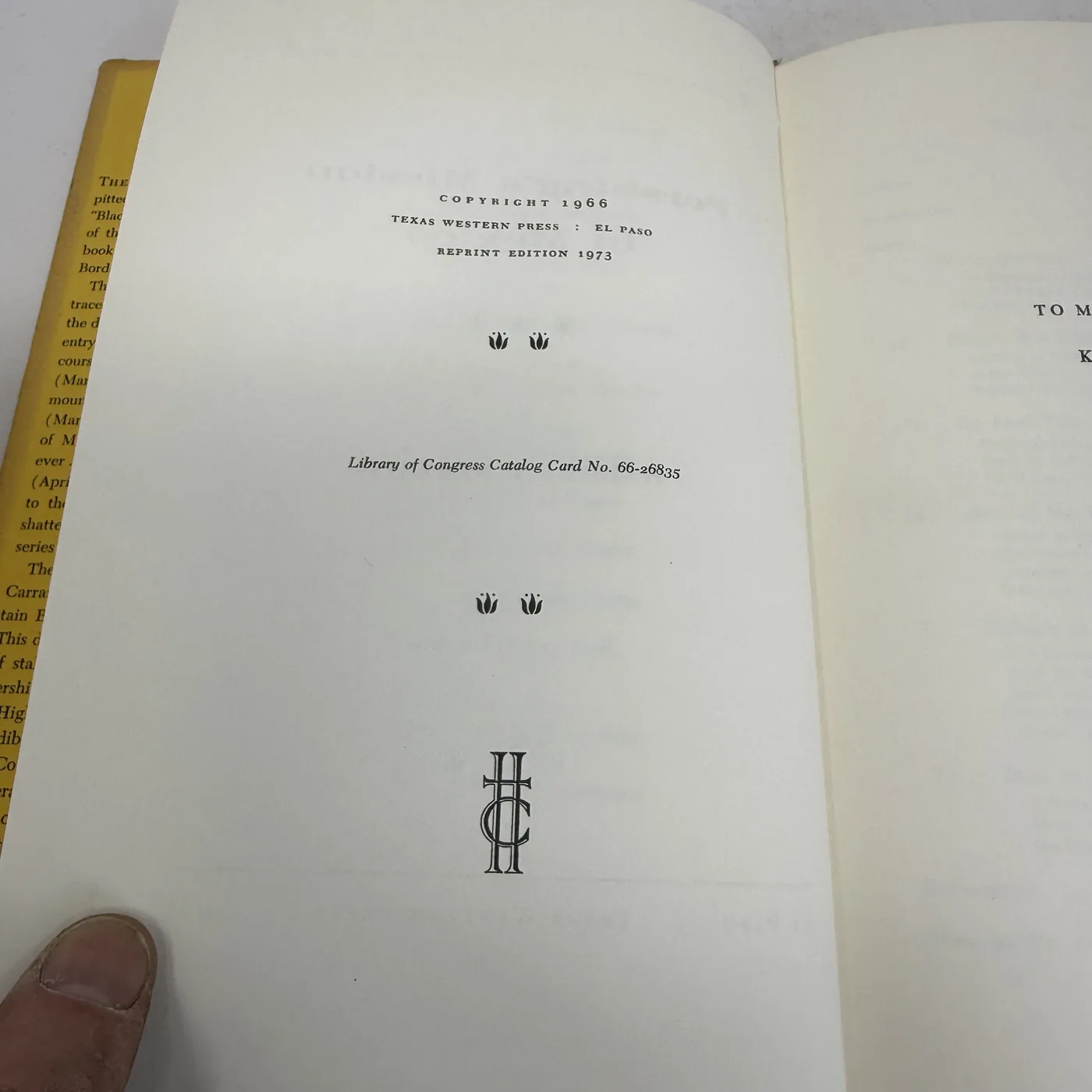
If you pick up a hardcover from the Southwestern history shelf in an Albuquerque estate library and it has an intertwined H and C monogram on the copyright page, you are holding a book designed by Carl Hertzog. Hertzog's name almost never appears on the title page, the spine, or the front of the dust jacket. The most reliable indicator is the monogram itself, plus the typography conventions he developed over a half-century of fine-press work in El Paso. This page exists because Hertzog-designed books are a recognized collector category that surfaces regularly through NMLP intake from estate libraries across northern and southern New Mexico, and that NMLP documents carefully in the open archive whenever they appear. If you have Hertzog volumes or any other Southwestern books to donate, NMLP accepts any condition and any quantity.
Last verified September 2026 · Original research by Josh Eldred
Who was Carl Hertzog
Carl Hertzog & Texas Western Press first editions, including titles like Pershing's Mission in Mexico (Hertzog design) (1966), are increasingly collectible regional-press volumes sought by Southwest book collectors. Carl Hertzog (1902–1984) was born in Lyons Falls, New York, trained in commercial printing in the Northeast, and arrived in El Paso in the 1920s. He operated Carl Hertzog Printer as a private fine-press operation in El Paso through the 1930s and 1940s, producing limited-edition trade books and ephemera for collectors and for the regional historical-society and academic-library market. The defining collaboration of his early career was with the Texas folklorist J. Frank Dobie (1888–1964), whose books on Texas frontier life Hertzog designed in editions that established the visual identity of mid-century Southwestern book publishing. The broader tradition of regional fine-press design connects to the New Mexico poetry collecting landscape, where small-press typography has always mattered.
In 1952 Hertzog became the founding director of Texas Western Press, the small academic press at what was then Texas Western College (later renamed The University of Texas at El Paso, UTEP). He served as director until his retirement in 1972, designing essentially every book the press produced during that twenty-year period. After his retirement the press continued operating under his typographic conventions; Hertzog continued working privately and on selected Texas Western projects until his death in 1984.
UTEP's C. L. Sonnichsen Special Collections Department holds the Carl Hertzog Papers, which are the primary archival source for Hertzog scholarship. The university established the Carl Hertzog Award for Excellence in the Design of the Book in 1989, five years after his death, to honor his legacy — the award is biennial and is one of the recognized honors in the American fine-printing field.
The Hertzog design vocabulary
Hertzog's books are identified by a consistent set of typographic and design conventions developed across his career and applied across hundreds of titles. Five core elements:
1. The intertwined HC monogram
An uppercase H and C overlapped in a small cartouche, typically placed on the copyright page below the LCCN line in books published from his Texas Western Press period (1952–1972) and on the colophon page of his earlier private-press work. The single most reliable identification point. Easy to miss if you don't know to look for it; unmistakable once you do.
2. Tulip-leaf and fleuron ornaments
Small tulip-shaped or stylized-leaf typographic ornaments used to frame imprints, separate title-page elements, and mark chapter openings. Hertzog used a small library of these throughout his Texas Western Press work; they are a stylistic signature even on books that don't carry the HC monogram.
3. Colon-spaced imprint typography
Imprints set with spaced colons rather than commas: El Paso : Texas Western Press : 1966 rather than El Paso, Texas Western Press, 1966. This is a deliberate Hertzog convention drawn from European fine-press tradition. Applied consistently across the Texas Western catalog during his tenure.
4. Iconographic silhouette covers
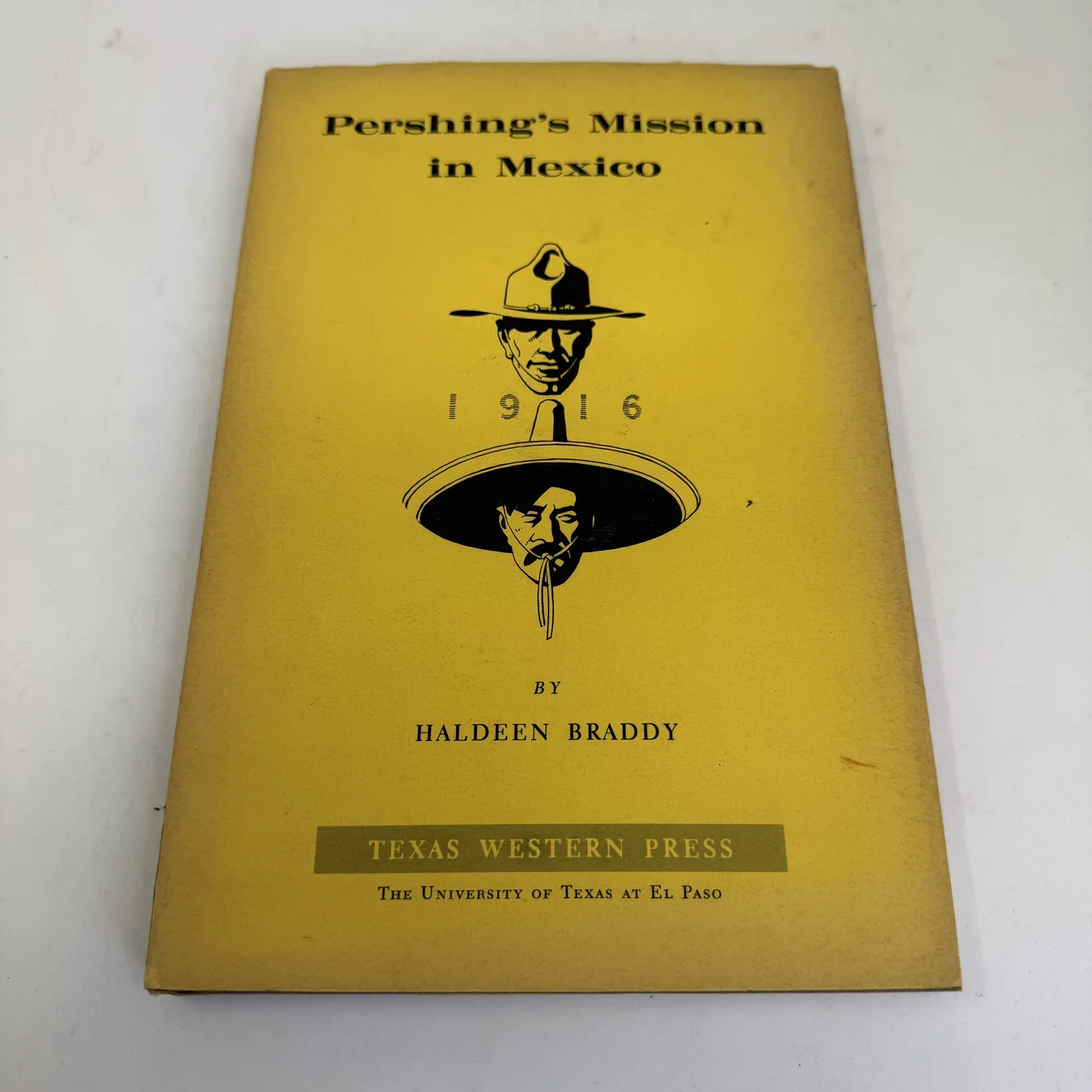
Cover designs reducing complex subject matter to flat-black silhouettes on a chromatic ground. The Texas Western Press Pershing's Mission in Mexico dust jacket reduces the entire 1916 Pancho Villa expedition to two silhouette portraits (Pershing in a cavalry hat, Villa in a sombrero) on a chrome-yellow ground. The same reductive design logic appears across his Dobie and Lea covers. Hertzog believed the dust jacket should communicate the book at twenty feet, not at arm's length.
5. The dust-jacket flap attribution
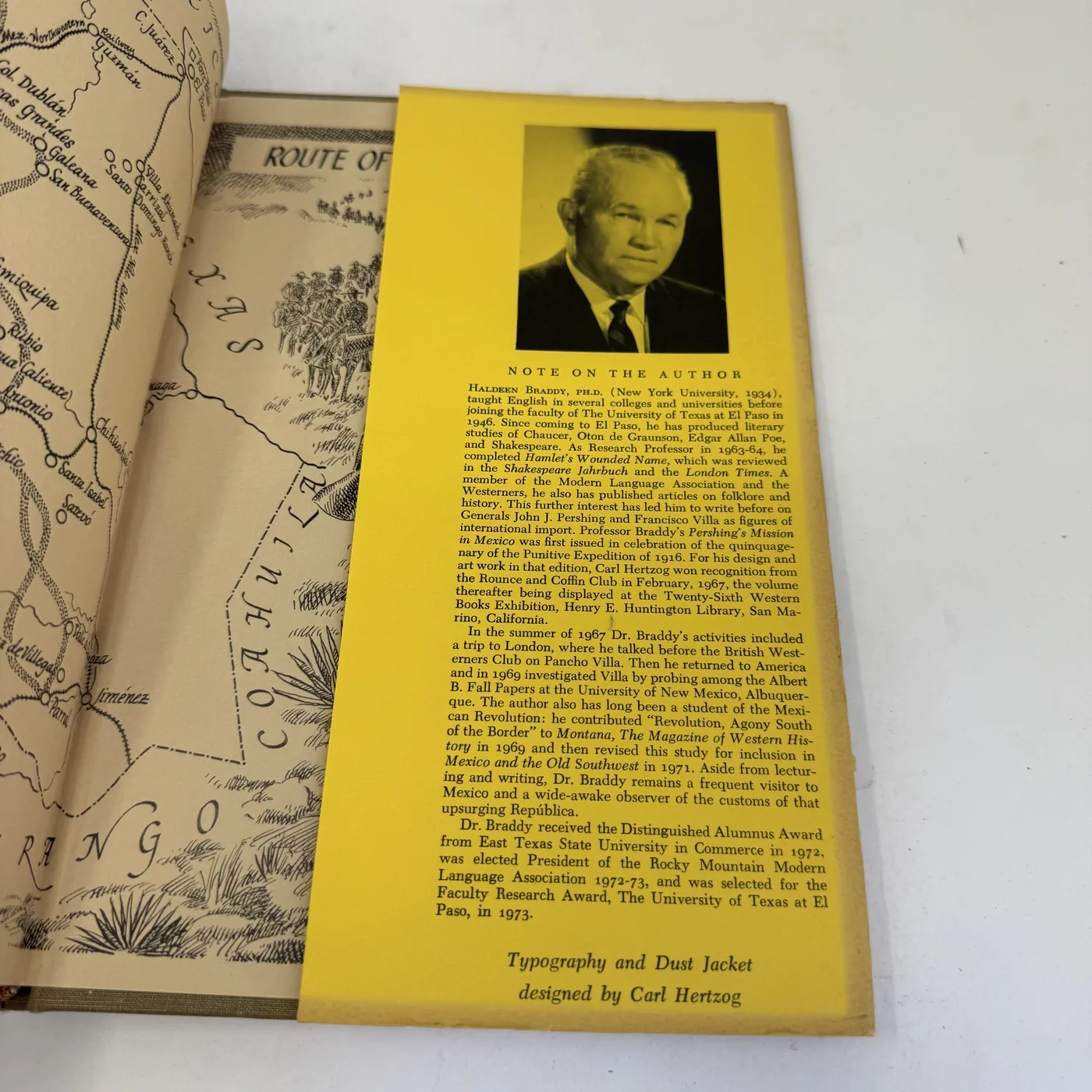
Texas Western Press dust jackets from the Hertzog era almost always carry a small attribution line, typically at the bottom of the rear flap, reading Typography and Dust Jacket designed by Carl Hertzog or a close variant. This is the clearest single line of explicit attribution and survives intact on most copies that still have the dust jacket.
The Dobie–Hertzog–Lea axis
The most-collected Hertzog books are the limited-edition collaborations with J. Frank Dobie and the El Paso artist Tom Lea (1907–2001). Dobie wrote the foundational popular-folklore books of mid-century Texas: Coronado's Children (1930), The Longhorns (1941), Apache Gold and Yaqui Silver (1939), The Mustangs (1952), Cow People (1964). Hertzog designed multiple editions in this catalog — particularly the limited and signed Carl Hertzog Printer editions that command the highest prices in the contemporary collector market.
Tom Lea was an El Paso–based painter and muralist who also wrote and illustrated several novels and works of nonfiction set in the borderlands. His most-collected works include The Brave Bulls (1949), The Wonderful Country (1952), and the two-volume A Picture Gallery (1968). Hertzog designed the limited editions and dust jackets that define how these books look to a Lea collector today. The Hertzog–Lea–Dobie axis is the densest single cluster of mid-century Southwestern fine-printing collector interest.
Texas Western Press and the UTEP institutional tradition
From 1952 through 1972 Hertzog directed Texas Western Press at UTEP, designing essentially every book the press produced. The Texas Western catalog from his era is dense with regional Southwestern history, biography, folklore, and cultural studies — written largely by UTEP faculty and visiting historians, designed entirely by Hertzog. Notable Texas Western titles that appear regularly in Albuquerque-area estate libraries:
- C. L. Sonnichsen — UTEP historian whose long bibliography of Southwestern history was the spine of the Texas Western catalog through the 1950s and 1960s. Multiple Hertzog-designed Sonnichsen titles, all with the HC monogram.
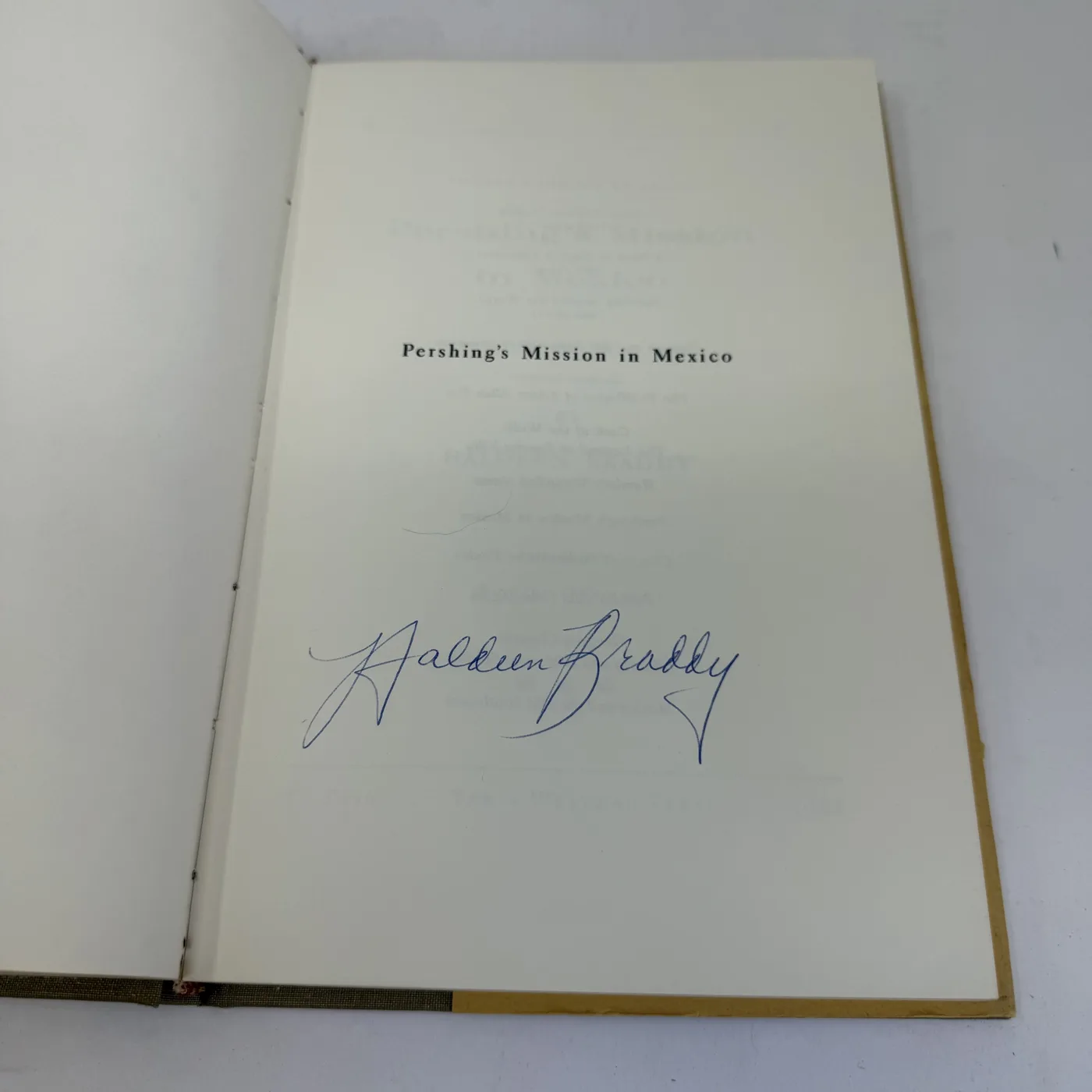
- Haldeen Braddy — UTEP English professor with secondary Pancho Villa scholarship interests. Pershing's Mission in Mexico (1966) and other Braddy Texas Western titles. Documented signed copy in the NMLP Donation Archive.
- Eugene Hollon — Texas/Southwest historian, multiple Texas Western volumes on the borderlands era.
- Hertzog's own writing — he authored brief design and printing-history essays distributed as Texas Western imprints.
- Southwestern Studies series — the long-running monograph series that constituted the press's primary scholarly output for decades. Each volume designed by Hertzog with the consistent vocabulary above.
After Hertzog's retirement in 1972 and his death in 1984, Texas Western Press continued operating under his typographic conventions, then evolved into UTEP Press, which today is part of the C. L. Sonnichsen Special Collections Department at UTEP and maintains his archive.
The Rounce and Coffin Club record
The Rounce and Coffin Club is a Southern California fine-printing society founded in 1931 that has, since its inception, maintained the Western Books Exhibition — an annual juried selection of the most distinguished examples of book design from across the western United States. Books selected for the exhibition are displayed at the Henry E. Huntington Library, San Marino, California, and at affiliated venues, then catalogued in the published Western Books record.
Hertzog-designed books appear regularly in the Western Books Exhibition record across his career. The exhibition catalogs (held in the Huntington's special collections and at various Texas research libraries) constitute one of the primary scholarly sources for tracking which Hertzog books received contemporary fine-printing recognition. For example, the 1966 first edition of Pershing's Mission in Mexico was specifically recognized by the Rounce and Coffin Club in February 1967 and exhibited at the Twenty-Sixth Western Books Exhibition at the Huntington.
For a collector evaluating the design significance of a particular Hertzog title, the Rounce and Coffin record is the primary contemporary-recognition reference; it complements the broader Hertzog bibliography maintained in the UTEP Sonnichsen archive.
The Carl Hertzog Award
Five years after Hertzog's death, UTEP established the Carl Hertzog Award for Excellence in the Design of the Book in 1989. The award is biennial, juried by a national panel of book-design professionals, and recognizes outstanding contemporary fine-press and trade-book design across all categories. Past recipients include major American fine-press publishers and individual book designers whose work continues the standards Hertzog established at Texas Western.
The award is one of the recognized honors in the American fine-printing field and is administered through the UTEP library system. The full list of past recipients is maintained on the UTEP institutional website and serves as a documented genealogy of post-Hertzog American book design.
The Hertzog collector market
Hertzog-designed books are a recognized subcategory in the antiquarian-book trade with active demand from three overlapping collector groups:
Texas and Southwestern history collectors who are building bibliographic completeness in their Dobie, Lea, Sonnichsen, or Texas Western Press shelves. For these collectors the Hertzog design is part of why the book is collected; a non-Hertzog reprint of the same text is a meaningfully different object.
Fine-printing collectors who collect Hertzog as a designer the same way they would collect Bruce Rogers, Frederic Goudy, or W. A. Dwiggins. These collectors track the Rounce and Coffin Western Books record and the Hertzog Award genealogy, and they value limited-edition and signed-by-Hertzog production work over trade reprints.
El Paso and UTEP institutional collectors — alumni, faculty, library patrons, and regional historical-society members building complete Texas Western Press collections or supporting the UTEP Sonnichsen archive's collecting priorities.
Trophy items in the Hertzog bibliography (the signed and limited Carl Hertzog Printer editions of Dobie and Lea, the early private-press ephemera, the limited-issue J. Evetts Haley and Tom Lea folios) trade in the four-figure range at specialist ABAA dealers. Trade-edition Texas Western Press titles designed by Hertzog (the standard Sonnichsen historical monographs, the Braddy and Hollon titles, the Southwestern Studies series) trade in the lower three-figure range when in good condition with the original Hertzog-designed dust jacket intact — meaningfully above what a comparable mid-century academic-press trade hardcover commands without Hertzog provenance.
Documented in the NMLP Donation Archive
Currently one Hertzog-designed book is documented at depth in the open NMLP Donation Archive:
- Pershing's Mission in Mexico — Haldeen Braddy SIGNED (Texas Western Press, 1966 first / 1973 reprint) — carries the HC monogram on the copyright page with tulip-leaf ornaments, colon-spaced imprint typography, the iconic yellow dust jacket with silhouette portraits of Pershing and Villa, the rear-flap "Typography and Dust Jacket designed by Carl Hertzog" attribution. The book's Hertzog design was recognized by the Rounce and Coffin Club in February 1967 and exhibited at the Twenty-Sixth Western Books Exhibition at the Henry E. Huntington Library. Author-signed by Braddy on the half-title page; Braddy (1908–1980) is a closed signature pool.
The archive grows with each Hertzog-designed book that comes through NMLP intake. Future entries will document additional Texas Western Press titles, signed Carl Hertzog Printer limited editions when they surface, and the broader regional fine-press tradition (Sunstone Press, Ancient City Press, Museum of New Mexico Press, UNM Press) within which Hertzog's work sits. The Spanish colonial historians canon includes several Hertzog-adjacent Texas Western Press authors whose scholarship overlapped the El Paso borderlands tradition.
If you have a Hertzog-designed book to donate
Hertzog-designed books from estate libraries are among the most welcome donations through NMLP intake. I offer free book pickup across the Albuquerque metro. The standard NMLP intake terms apply — any condition, any quantity, free Albuquerque-metro pickup, no minimum, no tax-receipt issued (NMLP is for-profit). If a donation includes a Hertzog-designed book that the NMLP archive review queue selects for documentation, the donor will be invited to author or co-author the archive entry with full anonymization options.
NMLP never buys books; Hertzog and Texas Western Press editions that come in as donations are researched by hand before they're listed, and the rest of the shelf goes in the same free pickup.
Cite This Guide
Eldred, J. (May 2026). Carl Hertzog & Texas Western Press — A Collector's Authority Guide. New Mexico Literacy Project.
https://newmexicoliteracyproject.org/carl-hertzog-texas-western-press-collecting
Content is original research by Josh Eldred. Licensed under CC BY 4.0. Cite with attribution.