New Mexico Poetry Collecting: A Collector's Authority Guide
By Josh Eldred · New Mexico Literacy Project · · ~7,800 words
Last verified September 2026 · Original research by Josh Eldred
In 1987 New Directions Publishing issued a slim hardcover by a Santa Fe-born Chicano poet named Jimmy Santiago Baca — a man who had taught himself to read and write while serving time in the Arizona State Prison Florence facility on drug charges in the mid-1970s, and who had since become one of the most compelling voices in American poetry. The book was Martin & Meditations on the South Valley, a two-part sequence anchored in the Albuquerque South Valley landscape: red-dirt arroyos, acequia cottonwood corridors, adobe compounds, the particular light of the Río Grande bosque in late October. It won the American Book Award in 1988. It is the first-edition collecting trophy of the contemporary New Mexico poetry market. And it represents just one thread in what is, on close examination, one of the richest regional poetry canons in the United States: a tradition running from the founding of the Santa Fe literary colony in the early 1920s through the present National Book Award generation, encompassing Pueblo oral-tradition poetry, Diné verse, Santa Fe Anglo-modernist experiment, Chicano political lyric, and formal innovations that have placed New Mexico poets at the center of American poetry's conversation with the indigenous Southwest.
This guide covers the full collecting canon: the Santa Fe colony founding generation (Alice Corbin Henderson, Witter Bynner, Haniel Long); the Native American literary renaissance (Simon J. Ortiz, N. Scott Momaday as poet, Joy Harjo, Luci Tapahonso); the contemporary Santa Fe formal generation (Arthur Sze, Alvaro Cardona-Hine); the Chicano lyric tradition (Baca, and the overlap with the Hispano fiction canon); the small-press and chapbook ecosystem (Sunstone Press, La Alameda Press, Sherman Asher Publishing, West End Press, Cinco Puntos Press, the Writers Editions Santa Fe imprints); and the institutional infrastructure that has made New Mexico a first-tier poetry city for a century (the Lannan Foundation readings, the Lensic Performing Arts Center, the UNM creative writing program, the Taos summer workshops).
The Santa Fe Colony Founding Generation, 1912-1945
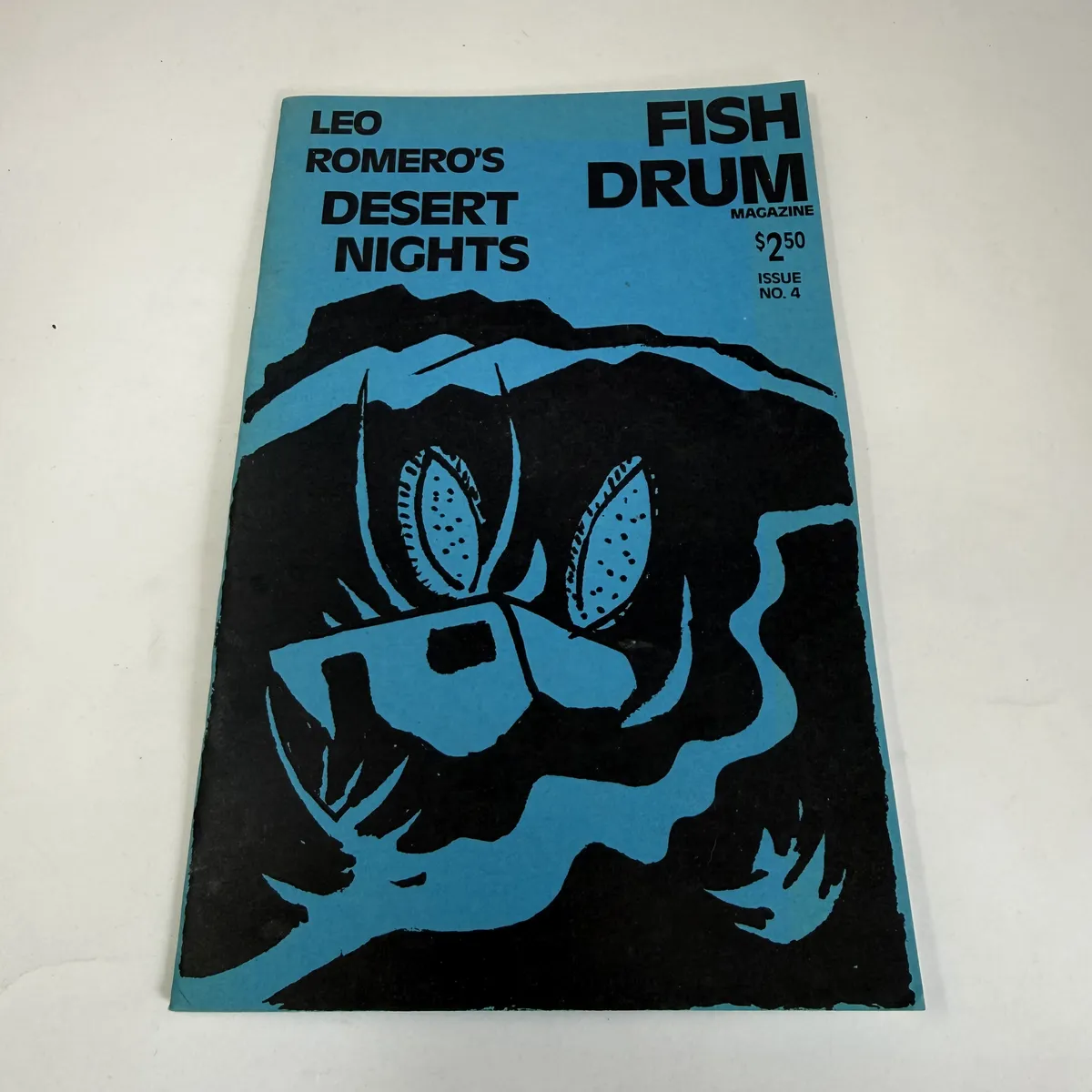
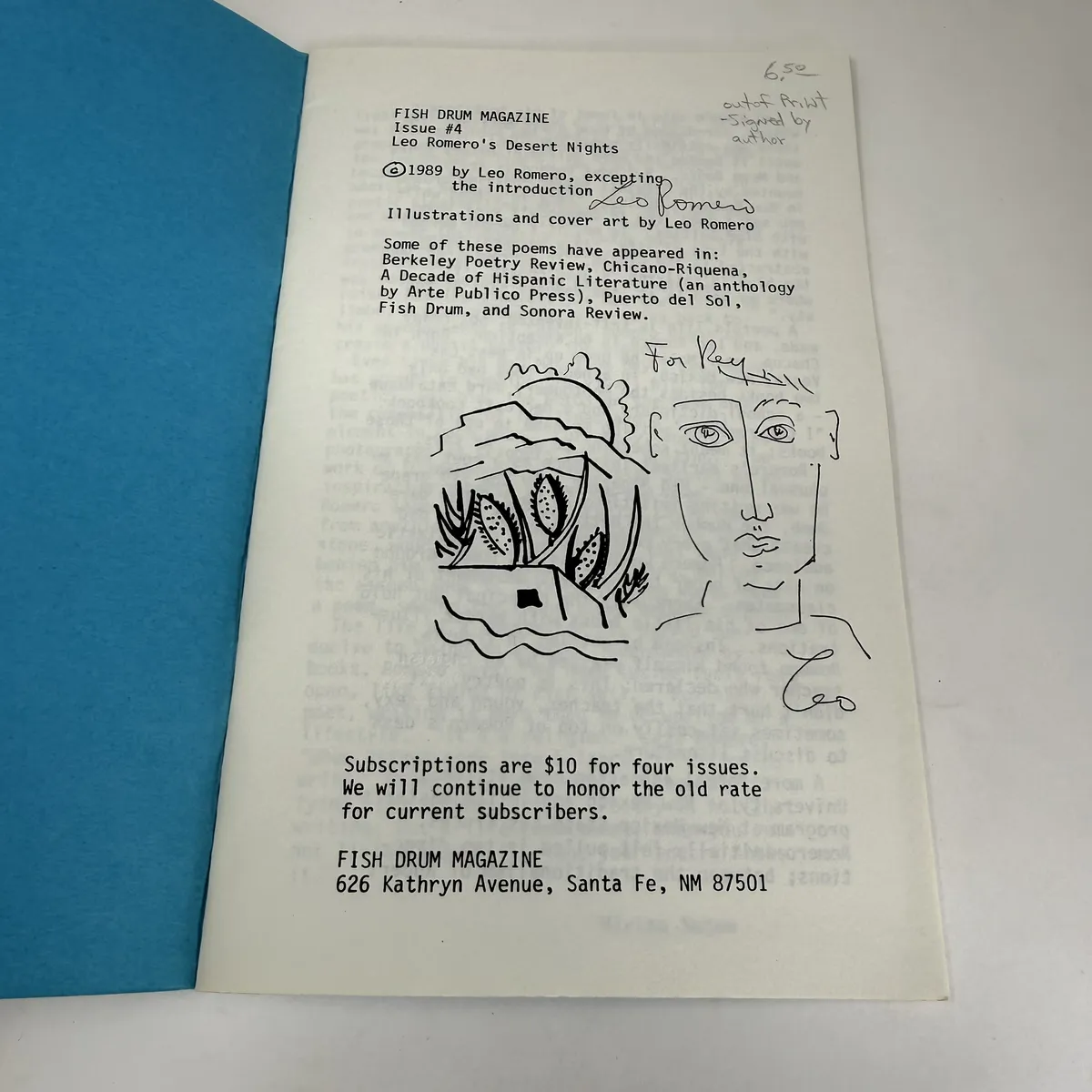
New Mexico Poetry Collecting books, including Martin & Meditations on the South Valley (1987), are sought-after collectibles commanding premium prices among Southwest and Western Americana collectors. The New Mexico poetry tradition has its Anglo-literary roots in two intertwined origin stories: the founding of Poetry: A Magazine of Verse in Chicago in 1912, and the tuberculosis-treatment migration that brought the most important of Poetry's founding editors to Santa Fe in 1916.
Alice Corbin Henderson
1881–1949 · Co-editor, Poetry magazine · Closed pool
Alice Corbin Henderson arrived in Chicago from St. Louis in the early 1900s, became co-editor of Poetry: A Magazine of Verse with Harriet Monroe at the journal's 1912 founding, and served as the indispensable editorial intelligence behind the journal's early triumphs — the first publication of T.S. Eliot, Pound's early American work, Carl Sandburg, Vachel Lindsay. Tuberculosis forced her to Santa Fe in 1916, where she settled at Camino del Monte Sol and became the social nucleus of what would become the Santa Fe literary and artistic colony. Red Earth: Poems of New Mexico (Ralph Fletcher Seymour, Chicago, 1920) is the resulting collection: forty poems anchored in Pueblo ceremonial observation, the high-desert landscape, and the Hispano folk tradition. She also edited The Turquoise Trail: An Anthology of New Mexico Poetry (Houghton Mifflin, 1928), the canonical anthology of the early colony period. Her archive is at the Harry Ransom Center, University of Texas at Austin.
Witter Bynner
1881–1968 · Santa Fe poet, translator · Closed pool
Witter Bynner settled permanently in Santa Fe in 1922 after a decade as one of America's most prominent younger poets, co-perpetrator of the famous Spectra hoax of 1916 (writing as 'Emanuel Morgan,' alongside Arthur Davison Ficke writing as 'Anne Knish,' they invented a fictional avant-garde poetry movement that fooled Amy Lowell, Louis Untermeyer, and Harriet Monroe for two years), friend to D.H. Lawrence during the 1922-1923 Taos period, and master translator of classical Chinese poetry. His Santa Fe house at 342 Buena Vista was the gathering place for three decades of American literary visitors — Edna St. Vincent Millay, Thornton Wilder, Robert Frost, W.H. Auden. Indian Earth (Alfred A. Knopf, 1929) is the principal NM collection; the companion The Jade Mountain (Knopf, 1929), co-translated with Kiang Kang-hu from 300 Tang dynasty poems, sold widely and remains a standard anthology text. The Way of Life According to Laotzu (John Day, 1944) sold more than a million copies. The Bynner Foundation for Poetry continues operating from his estate bequest.
Haniel Long
1888–1956 · Santa Fe poet and prose writer · Closed pool
Haniel Long arrived in Santa Fe from a Pittsburgh university teaching career in 1929, drawn partly by health and partly by the colony's gravitational pull. He co-founded Writers Editions, a Santa Fe cooperative press, in the mid-1930s — one of the first literary small presses to operate in New Mexico — with Alice Corbin Henderson, Lynn Riggs, and others. Writers Editions published Long's two most significant works: Pittsburgh Memoranda (Writers Editions Santa Fe, 1935), the memory-poem sequence of his Pittsburgh years, and Interlinear to Cabeza de Vaca (Writers Editions Santa Fe, 1936), the haunting prose-poem meditation on Álvar Núñez Cabeza de Vaca's eight-year survival walk across the American Southwest after the Narváez expedition's shipwreck — one of the foundational texts of the Southwest prose-poem tradition. Both Writers Editions Santa Fe imprints are among the rarest and most prized objects in the NM literary first-edition market. Long also wrote Malinche (Doña Marina) (Writers Editions, 1939) and later works for Duell, Sloan & Pearce.
The collector note on the Writers Editions Santa Fe imprints: the press produced books in extremely limited runs, often hand-sewn or hand-bound, with minimal distribution outside the Southwest. WorldCat shows very few institutional holdings of the principal Writers Editions titles. Pittsburgh Memoranda (1935) and Interlinear to Cabeza de Vaca (1936) are each documented in single-digit institutional-library holdings; surviving copies in the secondary market are comparably scarce. These are Tier 1 trophy items in the NM literary first-edition market regardless of condition — a reading copy of the Interlinear in worn paper wrappers is worth substantially more than most people who encounter it in an estate sale would expect.
The wider Santa Fe colony poetry context includes Mary Austin (see her NM appearances in the Mary Austin collecting guide), Lynn Riggs (principally a playwright — Green Grow the Lilacs, the basis for Oklahoma! — but with NM poetry connections through the Writers Editions circle), and visiting participants in the Bynner-Henderson salon network including Edna St. Vincent Millay, Hart Crane, and D.H. Lawrence (whose NM poems appear scattered through his collected works rather than in a dedicated NM-poetry volume). Frieda Lawrence's anthology connections and Mabel Dodge Luhan's literary facilitation are covered separately in the D.H. Lawrence collecting guide.
N. Scott Momaday as Poet
N. Scott Momaday
1934–2024 · Kiowa/Cherokee author · Closed pool
N. Scott Momaday (Navarre Scott Mammedaty, 1934-2024, born Lawton Oklahoma of Kiowa and Cherokee descent, raised partly at Jemez Pueblo NM where his parents taught at the day school) is best known to collectors of NM literature for his Pulitzer Prize-winning novel House Made of Dawn (Harper & Row, 1969) — documented at /new-mexico-native-american-literature-collecting — but his poetry canon is substantial and separately collectable. The Gourd Dancer (Harper & Row, New York, 1976) is his principal poetry collection, gathering poems composed across the prior decade and drawing on Kiowa oral tradition, the NM and Oklahoma landscapes, and his characteristic voice at the intersection of oral and written traditions. Harper & Row issued the book as a first hardcover with dust jacket. In the Presence of the Sun: Stories and Poems, 1961-1991 (St. Martin's Press, New York, 1992) is the collected-poetry-and-prose volume, followed by In the Bear's House (St. Martin's Press, 1999). Momaday was also a visual artist (drawings and paintings) who illustrated several of his own books. He received the National Medal of Arts in 2007. Points of issue for The Gourd Dancer 1976 Harper & Row first: first edition designation on copyright page, original Harper & Row dust jacket. Signed Momaday is the Tier 1 NM-Native-American poetry target alongside signed Ortiz and signed Harjo.
I pick up books for free anywhere in the metro area. Call 505-250-3804 to schedule.
The Native American Literary Renaissance: Ortiz, Harjo, Tapahonso
The Native American literary renaissance of the late 1960s through 1980s — anchored by Momaday's 1969 Pulitzer, Ortiz's 1976 debut, Leslie Marmon Silko's Ceremony (1977), and the emerging University of Arizona Press and University of Oklahoma Press series publishing Native American writers — produced several of the most important first editions in the New Mexico poetry market. Three figures are central:
Simon J. Ortiz
Born 1941, Acoma Pueblo NM · Currently working
Simon J. Ortiz (born 1941 at Acoma Pueblo, from the Deetziyamah village of McCartys) is the foundational Acoma Pueblo voice in American poetry and one of the principal architects of the Native American literary renaissance. His education at the Institute of American Indian Arts, the University of New Mexico, and the University of Iowa Writers' Workshop placed him at the center of the emerging Native American literary infrastructure. Canonical collecting bibliography: Naked in the Wind (Quetzal-Vihio Press, Pampa TX, 1971 — his first published work, issued as a chapbook, extremely scarce); Going for the Rain (Harper & Row Native American Series, 1976 — the first major-press trade collection); A Good Journey (Turtle Island Foundation, Berkeley, 1977); Fight Back: For the Sake of the People, For the Sake of the Land (INAD Literary Journal/UNM, 1980 — the uranium-mining polemical sequence); from Sand Creek (Thunder's Mouth Press, New York, 1981 — Pushcart Prize winner, the primary Ortiz collector target); Woven Stone (University of Arizona Press, 1992 — the early collected poetry omnibus with new prefatory essays, the standard Tier 2 Ortiz target); After and Before the Lightning (University of Arizona Press, 1994 — the South Dakota winter sequence); Out There Somewhere (University of Arizona Press, 2002); Beyond the Reach of Time and Change: Native American Reflections on the Frank A. Rinehart Photograph Collection (University of Arizona Press, 2002). Ortiz teaches widely and signs at Southwest literary events regularly.
Joy Harjo
Born 1951 · Muscogee (Creek) Nation · First Native American U.S. Poet Laureate 2019-2022
Joy Harjo (born 1951 Tulsa Oklahoma, Muscogee Creek Nation citizen) is the most publicly recognized Native American poet of the contemporary era, primarily through her appointment as the first Native American U.S. Poet Laureate in 2019 — a position she held for three consecutive terms, an unprecedented distinction. Her New Mexico connections run deep: she attended the Institute of American Indian Arts in Santa Fe, earned her MFA at the Iowa Writers' Workshop, and has maintained sustained UNM connections through the creative writing program. Canonical collecting bibliography: The Last Song (Puerto del Sol Press, Las Cruces NM, 1975 — her first chapbook, published by the NMSU literary journal, extremely scarce); What Moon Drove Me to This? (I. Reed Books, 1979 — the first full trade collection); She Had Some Horses (Thunder's Mouth Press, New York, 1983 — the breakthrough collection, her most-collected single volume, including the title poem that has appeared in hundreds of anthologies); Secrets from the Center of the World (University of Arizona Press, 1989 — with photographer Stephen Strom, prose poems accompanying aerial photographs of the Navajo Nation); In Mad Love and War (Wesleyan University Press, 1990 — American Book Award, Delmore Schwartz Memorial Award); The Woman Who Fell from the Sky (W.W. Norton, 1994); A Map to the Next World (Norton, 2000); How I Became Human: New and Selected Poems (Norton, 2002); Conflict Resolution for Holy Beings (Norton, 2015); An American Sunrise (Norton, 2019 — the Poet Laureate collection); Poet Warrior: A Memoir (Norton, 2021). Harjo is also a saxophonist and has recorded several albums. Points of issue for She Had Some Horses 1983: Thunder's Mouth Press New York imprint, trade paperback original format, copyright page reading 'First published in the United States in 1983.' A fine signed 1983 Thunder's Mouth She Had Some Horses is the Tier 1 Harjo collector target.
Luci Tapahonso
Born 1953, Shiprock NM · Diné (Navajo) poet · Navajo Nation Poet Laureate
Luci Tapahonso (born 1953 Shiprock NM) is the preeminent Diné (Navajo) poet and the Navajo Nation's first Poet Laureate (2013). She was raised at Shiprock in the heart of the Navajo Nation in the Four Corners country of northwestern New Mexico, took her BA and MFA at the University of New Mexico, and taught for many years in the UNM Department of English and Creative Writing before joining the University of Kansas faculty. Canonical collecting bibliography: One More Shiprock Night (Tejas Art Press, San Antonio TX, 1981 — her first chapbook, small-press run, quite scarce); Seasonal Woman (Tooth of Time Press, Santa Fe, 1982 — her first Santa Fe small-press chapbook; Tooth of Time was the principal Santa Fe poetry chapbook press of the period); A Breeze Swept Through (West End Press, Albuquerque, 1987 — her first major collection with a New Mexico small press); Sáanii Dahataal / The Women Are Singing: Poems and Stories (University of Arizona Press, Tucson, 1993 — the breakthrough collection, the standard Tier 1 Tapahonso collector target, published in the University of Arizona's Sun Tracks series); Blue Horses Rush In: Poems and Stories (University of Arizona Press, 1997); Shí Naasha': I Am Going in that Direction: Poems (University of New Mexico Press / Diné College, 2011); A Radiant Curve: Poems and Stories (University of Arizona Press, 2008). Points of issue for Sáanii Dahataal 1993 University of Arizona Press first: trade paperback original in the Sun Tracks series, University of Arizona Press Tucson imprint, copyright page first printing 1993.
Jimmy Santiago Baca: The South Valley Canon
Jimmy Santiago Baca
Born 1952, Santa Fe NM · Currently working
Jimmy Santiago Baca (born 1952 Santa Fe NM, raised in Estancia NM after being left at an orphanage at age five) is the major living New Mexico poet — the one figure in the NM poetry canon who commands both the critical recognition of the national literary establishment (American Book Award, International Prize for Literature) and the grassroots reverence of the South Valley communities whose world he has documented. He entered the Arizona State Prison Florence facility in 1973 on drug-possession-with-intent charges, taught himself to read and write inside the facility using a dictionary and the poetry of Pablo Neruda and Romantic English poets, began writing, and had his first poems published in Mother Jones magazine while still incarcerated. His canonical poetry bibliography: Immigrants in My Own Land (Louisiana State University Press, Baton Rouge, 1979 — the first full trade collection, published by LSU Press's emerging contemporary-American-poetry series; Black Sparrow Press subsequently issued a revised and expanded paperback edition); Swords of Darkness (Mango Publications, 1981 chapbook); What's Happening (Curbstone Press, Willimantic CT, 1982); Martin & Meditations on the South Valley (New Directions, New York, 1987 first hardcover — American Book Award 1988, the primary Baca collector target); Black Mesa Poems (New Directions, 1989); Set This Book on Fire! (Cedar Tree Books, Albuquerque, 1999); Healing Earthquakes (Grove Press, 2001); A Glass of Water (Grove Press, 2009). His memoir A Place to Stand: The Making of a Poet (Grove Press, 2001) won the International Prize for Literature and is the primary Baca prose collector target. He founded Cedar Tree Inc., his Albuquerque nonprofit serving at-risk youth through literacy, and remains an active reader and signer at Southwest events.
The New Directions relationship is central to Baca's collecting profile. New Directions — the New York independent press that had published William Carlos Williams, Ezra Pound, Denise Levertov, Gary Snyder, and Gregory Corso — represented a signal institutional validation when it took on Baca in 1987. The press's history of publishing overlooked American voices (Levertov, Snyder) alongside European modernists (Neruda, Lorca, Vallejo) made the Baca relationship feel continuous with the press's mission. The 1987 Martin & Meditations first hardcover with New Directions dust jacket is accordingly positioned in the collector market both as a New Mexico poetry trophy and as a New Directions first editions trophy — it appears at specialist literary-auction venues across both categories.
Arthur Sze: Santa Fe and the National Book Award
Arthur Sze
Born 1950, New York City · Santa Fe NM resident · National Book Award 2019
Arthur Sze (born 1950 New York City, parents Chinese immigrants) settled in Santa Fe in 1972 after briefly attending MIT and graduating from UC Berkeley, joining the Institute of American Indian Arts faculty as the program's first director of creative writing. He has been the central figure in the contemporary Santa Fe formal poetry tradition for more than fifty years. His canonical collecting bibliography: The Willow Wind (self-published chapbook, 1972 — his first publication, essentially a student production, extremely scarce and rarely surfaces in the secondary market); Two Ravens (Tooth of Time Press, Santa Fe, 1976 — the first Santa Fe small-press chapbook); Dazzled (Floating Island Publications, Point Reyes CA, 1982); River River (Lost Roads Publishers, 1987); Archipelago (Copper Canyon Press, Port Townsend WA, 1995 — the breakthrough major-press collection); The Redshifting Web: Poems 1970-1998 (Copper Canyon Press, 1998 — the collected early poetry, the standard Tier 2 Sze target); The Silk Dragon: Translations from the Chinese (Copper Canyon Press, 2001 — translations of Du Fu, Li Po, Wang Wei, and contemporary Chinese poets); Quipu (Copper Canyon Press, 2005); The Ginkgo Light (Copper Canyon Press, 2009); Compass Rose (Copper Canyon Press, 2014 — National Book Award finalist, L.A. Times Book Prize finalist); Sight Lines (Copper Canyon Press, 2019 — National Book Award winner in Poetry, the primary Sze collector target). He was elected to the American Academy of Arts and Sciences in 2017. He was the inaugural Poet Laureate of Santa Fe (2006).
The Copper Canyon Press relationship defines Sze's collector profile from Archipelago (1995) onward. Copper Canyon, the Port Townsend Washington independent press that has published W.S. Merwin, Carolyn Kizer, Pablo Neruda in translation, and dozens of other major American poets, issues its poetry collections as simultaneous hardcover and trade paperback editions with strictly limited hardcover print runs; the hardcovers are accordingly scarcer at point of issue than they appear. For Sight Lines 2019, the National Book Award announcement postdated the initial print run, meaning first printings carry no award sticker — subsequent printings add the sticker — making copyright-page verification the standard identification method. Sze signs regularly at Lannan Foundation events, Santa Fe Poet Laureate events, and Copper Canyon promotional readings; signed firsts trade meaningful premium at Santa Fe specialist dealers and online at Copper Canyon-collector venues.
Alvaro Cardona-Hine and the Painter-Poet Tradition
Alvaro Cardona-Hine
1926–2020 · Santa Fe NM resident, painter and poet · Closed pool
Alvaro Cardona-Hine (born 1926 San José Costa Rica, long Santa Fe NM resident, died 2020) represented the painter-poet tradition in the Santa Fe colony's late-twentieth-century continuation. He arrived in the United States in the 1940s, moved through California small-press poetry circles, and settled in northern New Mexico, where he combined a prolific painting career with a sustained poetry practice. His principal poetry collections: Aguas y Leños (1957 early Spanish-language collection), Words on Paper (Amber House Press, 1961), The Flesh of Utopia (1962), A Bestiary (Abraxas Press, 1970), Contributor's Notes (Abraxas Press, 1974), The Half-Eaten Angel (Sherman Asher Publishing, Santa Fe, 1994 — the principal NM small-press Cardona-Hine collection and the standard NM poetry collector target for his work), Thirteen Tangos for Stravinsky (Sherman Asher, 2000), and Of Lands and Longings (Sherman Asher, 2004). His paintings are held in the collections of the Museum of New Mexico, the Smithsonian Institution, and numerous private collections. Sherman Asher Publishing's Santa Fe small-press production of the later Cardona-Hine collections gives those titles their collector profile — limited distribution, small runs, authentic Santa Fe imprint provenance.
Not sure what you have? Text me a photo at 505-250-3804 and I'll tell you what I see.
Jim Sagel: Española's Bilingual Voice and the Mango Press
Jim Sagel
1947–1998 · Española, NM · Casa de las Américas Prize 1981 · Closed pool
Jim Sagel (born 1947 Fort Collins, Colorado; died 1998 Española, New Mexico) was one of New Mexico's most important bilingual poets and writers — a Colorado-born Anglo who immersed himself so deeply in the Hispano communities of northern New Mexico that he wrote fluently in both English and Spanish, and was recognized by Cuba's Casa de las Américas with their prestigious literary prize in 1981 for Tunomás Honey, making him the first American to win in the Chicano literature category. He settled in Española after attending the University of New Mexico and made the Río Arriba country — its voices, its code-switching humor, its kitchen-table stories — the center of his literary world. He published with Red Crane Books (four titles including Dancing to Pay the Light Bill: Essays on New Mexico and the Southwest — documented at /red-crane-books-first-editions-collecting), with the Española-area small press Mango, and with various regional publishers. His poetry chapbook Foreplay and French Fries (Mango, 1981) — the same press that published Jimmy Santiago Baca's Swords of Darkness that same year — is a characteristic Sagel production: wry, bilingual, rooted in the daily texture of northern New Mexico life, with cover art by Jaime Valdez. Sagel died in 1998, closing his signature pool permanently.


Photos: Josh Eldred, June 2026. Original desk photography at the New Mexico Literacy Project, Albuquerque, NM.
This copy surfaced in a donation stream — an inscribed and signed first edition from the year of publication, dedicated to someone named Reese and dated August 13, 1981, just months after Sagel won the Casa de las Américas Prize. That's exactly the kind of provenance detail that matters in the collector market. Sagel has been dead since 1998. Every signed copy that exists is already out there; the pool only shrinks as copies are lost, damaged, or absorbed into institutional collections that don't resell. A signed Sagel from a press with a print run this small — Mango was operating out of the Española area, serving a local literary community, not printing for national distribution — is a genuinely scarce object.
The Mango connection ties Sagel directly into the Chicano small-press infrastructure that also produced Baca's earliest chapbooks. Mango published Baca's Swords of Darkness in 1981 — the same year, the same press, the same northern New Mexico literary world. For collectors building a comprehensive picture of the Chicano poetry movement in New Mexico, the Mango imprint links two of the most important names in the canon. Sagel's broader bibliography with Red Crane Books extends the collecting trail into the 1990s, with four titles that document the bilingual literary culture of Río Arriba County.
Collector positioning: unsigned Sagel chapbooks and trade editions sit at Tier 3. Signed copies from the closed pool — particularly inscribed copies with dates and personal dedications like this one — move into solid Tier 2 territory. The combination of closed signature pool, micro-press scarcity, and Sagel's Casa de las Américas credential makes inscribed Sagel copies among the most undervalued objects in the NM bilingual poetry market.
The Small Press Ecosystem
New Mexico's poetry scene has been sustained by a cluster of small and independent presses operating from Albuquerque, Santa Fe, El Paso, and the surrounding region. Each press has its own collecting profile:
Sunstone Press (Santa Fe, founded 1971 by James Clois Smith Jr.) is the longest-continuously-operating New Mexico literary small press, with a list that spans regional history, Hispano literature, Native American studies, and poetry. Sunstone's poetry output includes dozens of NM-regional and Southwestern poets across five decades; the press has served as the publication venue of first resort for many NM poets whose work predates the availability of major-press contracts. Sunstone first editions trade at Tier 3 for most titles but Tier 2 for signed firsts of canonically important poets who published there early.
La Alameda Press (Albuquerque, operated by J.B. Bryan through the 1990s and 2000s) was the principal Albuquerque fine-press poetry publisher of its era, producing beautifully designed limited editions with letterpress printing and hand-sewn bindings. La Alameda editions ran 200-500 copies; they are the most physically handsome small-press NM poetry objects of the period. Collector targets: the complete La Alameda list commands premium pricing for signed fine copies.
Sherman Asher Publishing (Santa Fe) published the principal late-career Cardona-Hine collections and other Santa Fe poets through the 1990s and 2000s. Small runs, clean production, genuine Santa Fe literary provenance.
West End Press (Albuquerque, founded 1976 by John Crawford) was the principal Albuquerque socialist-and-labor-poetry small press of the late 1970s through 1990s, publishing Luci Tapahonso's A Breeze Swept Through (1987), Jimmy Santiago Baca's early work, and poets associated with the Chicano, Native American, and labor movements. West End Press firsts of Tapahonso and Baca are Tier 2 collector targets.
Cinco Puntos Press (El Paso TX, founded 1985 by Bobby Byrd and Lee Byrd) is the principal cross-border Chicano-and-border-region literary press of the El Paso–Juárez corridor, with a list that extends substantially into the New Mexico cultural sphere. Cinco Puntos published Dagoberto Gilb, Benjamin Alire Sáenz (NM-resident El Paso poet and novelist — his collection Calendar of Dust, Broken Moon Press 1991, is the primary Sáenz collector target), and a substantial poetry list. Cinco Puntos firsts are Tier 2 collector targets for NM-anchored poets on their list.
Tooth of Time Press (Santa Fe, operated by Gene Frumkin through the 1970s and early 1980s) was the principal Santa Fe poetry chapbook press of the era, publishing Arthur Sze's Two Ravens (1976) and Luci Tapahonso's Seasonal Woman (1982), among others. Tooth of Time chapbooks are extremely scarce in the secondary market and represent some of the highest-value per-page objects in the NM poetry collecting ecosystem.
Mango (Española area, early 1980s) published both Jim Sagel's Foreplay and French Fries (1981) and Jimmy Santiago Baca's Swords of Darkness (1981) — two of the most important Chicano poets in the NM canon, from the same micro-press, in the same year. Mango operated from the Española corridor and served the northern New Mexico bilingual literary community. Print runs were small, distribution was local, and surviving copies are scarce. Any Mango imprint is a collector-grade object by virtue of rarity alone; signed copies from either Sagel (closed pool, d. 1998) or Baca are Tier 2 targets.
The Chapbook Collecting Problem
The poetry chapbook represents the most significant and most underrecognized collecting challenge in the NM poetry market. The structural problem is fourfold: (1) extremely small print runs (100-500 copies is typical for NM small-press chapbooks of the 1970s-1990s, with some runs under 100); (2) physical fragility (stapled or saddle-stitched paper wrappers, untrimmed newsprint-grade pages that brown and crack, self-adhesive bindings that fail); (3) minimal institutional acquisition (WorldCat shows numerous NM poetry chapbooks with single-digit or zero institutional library holdings); and (4) donor misidentification (chapbooks arrive in donation streams filed as 'pamphlets,' 'programs,' or 'random papers' by estate managers who cannot distinguish a first-edition chapbook from a church bulletin).
The collector implication is asymmetric opportunity: the same physical qualities that make chapbooks fragile and easily lost also make them, when they survive in fine condition, some of the most genuinely scarce objects in the NM poetry market. The specific chapbooks of greatest collector interest are documented in the FAQ section above, but the general principle applies to any signed, fine-condition NM poetry chapbook from a press with a recognized list: Tooth of Time, West End Press, La Alameda, Writers Editions, Quetzal-Vihio, Tejas Art Press, and the various IAIA and UNM-affiliated serial publications that issued poet's work in limited runs before their first full-length trade collections.
NMLP sorting protocol: any stapled or stitched paper-wrapped item under 64 pages in the poetry intake stream is flagged for specialist evaluation before routing to general stock. This single rule captures the majority of chapbook value that would otherwise be lost in high-volume donation processing.
S.O.M.O.S. and the Taos Literary Anthology Tradition
The small-press ecosystem didn't operate in isolation — it was fed by a parallel tradition of community literary organizations that sustained the reading, writing, and publishing culture across Northern New Mexico. The most important of these for collectors is S.O.M.O.S. (Society of the Muse of the Southwest), the Taos-based non-profit writers' organization that has sponsored readings, workshops, mentorship programs, and — crucially for our purposes — annual literary anthologies since the late 1990s.
S.O.M.O.S. continues a Taos literary tradition that stretches from Mabel Dodge Luhan's salon in the 1920s through D.H. Lawrence and Witter Bynner's residencies, through the John Nichols Milagro Beanfield War counterculture era, to the present-day concentration of nationally recognized writers who live and work in Taos. The organization's anthology series captured that community in print — and the contributor lists read like a roll call of NM literary history.


Look at that contributor list: Rudolfo Anaya (Bless Me, Ultima, the foundational Chicano novel), Jimmy Santiago Baca (A Place to Stand, the most important Chicano poet working today), Julia Cameron (The Artist's Way, Taos-based), Natalie Goldberg (Writing Down the Bones, Taos-based), John Nichols (The Milagro Beanfield War, Taos), Alvaro Cardona-Hine (the painter-poet profiled above), Joan Logghe (New Mexico's 2020 Poet Laureate), Judyth Hill, Laura Hendrie, Sherri Szeman, and many others. That's effectively the three giants of NM literature — Anaya, Baca, Nichols — alongside two nationally famous writing teachers and a future state Poet Laureate, all contributing to a single Taos community anthology at the turn of the millennium.
The anthology format matters for collectors because each writer contributed something specifically for this collection — these aren't reprints. S.O.M.O.S. published from PO Box 3225, Taos, New Mexico 87571, and proceeds from the book supported their Young Writers Mentorship Program and other community literary programs. The cover painting, Barbara MacCauley's "Distant Farm" (acrylic on canvas, 4'6" × 56"), is the kind of regional art that grounds Taos literary production in the landscape tradition.
For collectors, the S.O.M.O.S. anthologies are Tier 3 objects with Tier 2 association value — the individual titles won't command high prices on their own, but as cross-references and provenance markers they're invaluable. If you're building an Anaya collection or a Baca collection and you find a copy of Chokecherries 2000 with either writer's contribution, it fills a gap that specialist collectors care about. And if the copy is signed by any of the major contributors, it moves squarely into Tier 2 territory.
The Poetry Institutional Infrastructure
New Mexico's claim to be one of the world's significant poetry cities — a claim advanced with some justice — rests on a set of overlapping institutional structures that have continuously supported poetry production, publication, and readership for more than a century.
The Lannan Foundation (Santa Fe, established by Patrick Lannan Jr., now operating under the Lannan Foundation with executive director Douglas Humble) has been the most important single patron institution in American poetry since the early 1990s. The Lannan Literary Awards have recognized dozens of major American poets (including Simon Ortiz, Joy Harjo, Arthur Sze, C.D. Wright, Forrest Gander, Lucille Clifton, and many others). The Lannan Readings and Conversations series at the Lensic Performing Arts Center in Santa Fe produced an extraordinary documentation project: recorded conversations between poets and interlocutors that are available through the Lannan Foundation's video archive. For collectors, the Lannan connection matters because many Lannan Award winners subsequently signed books at Santa Fe readings — Lannan-event-documented signatures carry provenance premium.
The Lensic Performing Arts Center (Santa Fe, 211 West San Francisco Street — the restored 1931 Spanish Colonial Revival movie house) has hosted the Lannan series and numerous other poetry readings since its 1999 restoration. The Lensic's reading program makes Santa Fe, a city of fewer than 85,000 people, host to more major American and international poets in any given year than most American cities ten times its size.
The University of New Mexico Department of English Creative Writing Program (Albuquerque) has trained NM poets since the mid-twentieth century and continues to maintain an MFA program with substantial poetry faculty. The UNM Press publishes NM-anchored poetry and poetry criticism as part of its regional-literature mission. The Taos Summer Writers' Conference and the Ghost Ranch Writers' Retreat have served as summer workshop venues drawing major American poets to NM teaching residencies for decades — many of the signed books that surface in NM donation streams carry inscriptions to former workshop students, a useful provenance indicator.
The Institute of American Indian Arts (IAIA, Santa Fe) has been the single most important institutional producer of Native American poets in the United States since its 1962 founding. The IAIA alumni list includes Simon Ortiz, Joy Harjo, Luci Tapahonso, N. Scott Momaday (as faculty), Leslie Marmon Silko (briefly), Sherman Alexie (briefly), and dozens of other central figures in Native American poetry and fiction. IAIA-affiliated publication venues — the IAIA Literary Journal, the affiliated small presses, and the student publication series — represent a category of extremely limited-run publications with significant collector interest.
Points of Issue: Key First Editions
Below is a consolidated points-of-issue reference for the principal NM poetry first editions most likely to surface in donation and estate-sale contexts:
Baca, Martin & Meditations on the South Valley (New Directions, 1987): Hardcover first (verify hardcover vs simultaneous trade paperback). Copyright page: 'First published clothbound in 1987 by New Directions Publishing Corporation.' Dust jacket with New Directions colophon. ISBN 0-8112-1022-5 (hardcover). American Book Award announcement postdates first printing — first printings carry no award mention.
Ortiz, from Sand Creek (Thunder's Mouth Press, 1981): Trade paperback original (no hardcover issued). Thunder's Mouth Press Chicago imprint on copyright page. Cover art depicting the Sand Creek Massacre landscape. First printing 1981 copyright page statement. Pushcart Prize announcement postdates first printing.
Sze, Sight Lines (Copper Canyon Press, 2019): Hardcover and trade paperback issued simultaneously; verify hardcover format (ISBN 978-1-55659-564-3 hardcover). Copyright page: first printing designation. No National Book Award sticker on first printings — award announced after initial print run. Subsequent printings add award sticker.
Harjo, She Had Some Horses (Thunder's Mouth Press, 1983): Trade paperback original. Thunder's Mouth Press New York imprint. Copyright page: 'First published in the United States in 1983.' Cover with original Thunder's Mouth design. Second edition (1986) and subsequent editions update cover design — first printing is distinguishable by the 1983 copyright page statement and original cover art.
Momaday, The Gourd Dancer (Harper & Row, 1976): First hardcover. Harper & Row first-edition designation on copyright page. Original Harper & Row dust jacket. Signed copies are the Tier 1 target — Momaday signed at NM events through his 2024 closed pool.
Bynner, Indian Earth (Knopf, 1929): First hardcover. Knopf 'FIRST EDITION' statement on copyright page. Original Knopf orange cloth binding. Original Knopf dust jacket with borzoi device showing a few dollars price. Signed copies extremely scarce — closed 1968 pool, minimal post-1950 signing record.
Henderson, Red Earth (Ralph Fletcher Seymour, Chicago, 1920): First hardcover. Seymour Chicago imprint. Original cloth binding (orange-tan and blue-gray binding variants documented). Copyright page 1920. Dust jacket rarely survives — most copies are in binding only. Signed copies extremely scarce — closed 1949 pool.
Long, Interlinear to Cabeza de Vaca (Writers Editions, Santa Fe, 1936): Small-press limited run. Writers Editions Santa Fe imprint on copyright page. Hand-sewn or staple-bound paper wrappers in surviving copies. Extreme scarcity — zero to single-digit institutional holdings in WorldCat. Any fine copy is a significant find regardless of condition.
Inherited a library and not sure where to start? Call or text 505-250-3804 — I handle this all the time.
Three-Tier Collector Market
Tier 1 trophy (mid-three-figure to low-four-figure or higher): Signed Jimmy Santiago Baca Martin & Meditations on the South Valley New Directions 1987 first hardcover American Book Award winner; signed Baca A Place to Stand Grove Press 2001 International Prize memoir; signed Simon J. Ortiz from Sand Creek Thunder's Mouth Press 1981 Pushcart Prize first trade paperback in fine condition; signed Arthur Sze Sight Lines Copper Canyon Press 2019 National Book Award winner first hardcover; signed Joy Harjo She Had Some Horses Thunder's Mouth Press 1983 first trade paperback; signed N. Scott Momaday The Gourd Dancer Harper & Row 1976 first hardcover with dust jacket (closed 2024 pool); Witter Bynner Indian Earth Knopf 1929 first hardcover with original dust jacket; Alice Corbin Henderson Red Earth Ralph Fletcher Seymour 1920 first in original binding; The Turquoise Trail Henderson ed. Houghton Mifflin 1928 first hardcover with dust jacket; Haniel Long Interlinear to Cabeza de Vaca Writers Editions Santa Fe 1936 first (any condition); Haniel Long Pittsburgh Memoranda Writers Editions Santa Fe 1935 first; any Writers Editions Santa Fe imprint in fine or better condition; Simon J. Ortiz Naked in the Wind Quetzal-Vihio Press Pampa TX 1971 chapbook first (extremely scarce); Joy Harjo The Last Song Puerto del Sol Press Las Cruces NM 1975 chapbook first; Arthur Sze Two Ravens Tooth of Time Press Santa Fe 1976 chapbook first; Luci Tapahonso One More Shiprock Night Tejas Art Press San Antonio 1981 chapbook first; Luci Tapahonso Seasonal Woman Tooth of Time Press Santa Fe 1982 chapbook first.
Tier 2 collector targets (low-to-mid three-figure): Unsigned Jimmy Santiago Baca Martin & Meditations on the South Valley New Directions 1987 first hardcover; unsigned Baca Immigrants in My Own Land LSU Press 1979 first; signed or unsigned Baca Black Mesa Poems New Directions 1989 first; Simon J. Ortiz Woven Stone University of Arizona Press 1992 first trade paperback; Ortiz Going for the Rain Harper & Row 1976 Native American Series first paperback; Ortiz A Good Journey Turtle Island Foundation Berkeley 1977 first; Arthur Sze Compass Rose Copper Canyon Press 2014 National Book Award finalist first hardcover; Sze The Redshifting Web Copper Canyon 1998 first trade paperback; Joy Harjo In Mad Love and War Wesleyan University Press 1990 American Book Award winner first; Harjo An American Sunrise W.W. Norton 2019 first hardcover (Poet Laureate collection); Luci Tapahonso Sáanii Dahataal / The Women Are Singing University of Arizona Press 1993 first trade paperback; Tapahonso A Breeze Swept Through West End Press Albuquerque 1987 first; N. Scott Momaday In the Presence of the Sun St. Martin's Press 1992 first hardcover; Witter Bynner The Jade Mountain Knopf 1929 first; Bynner Guest Book Knopf 1935 first; Bynner The Way of Life According to Laotzu John Day 1944 first hardcover; Alvaro Cardona-Hine The Half-Eaten Angel Sherman Asher Publishing Santa Fe 1994 first; any La Alameda Press Albuquerque fine-press first editions in fine condition.
Tier 3 working library (upper-two-figure to low-three-figure): Trade paperback subsequent printings of all canonical titles; UNM Press paperback reissues of Momaday; Norton trade paperback Harjo titles after She Had Some Horses; Copper Canyon trade paperback subsequent printings of Sze; anthologies including NM poets (Heath Anthology of American Literature; Vintage Book of Contemporary American Poetry; Duane Niatum ed. Carriers of the Dream Wheel Harper & Row 1975; Kenneth Rosen ed. Voices of the Rainbow Viking 1975; Geary Hobson ed. The Remembered Earth Red Earth Press Albuquerque 1979 — a significant anthology of the period); academic monographs on NM and Southwest poetry; Sunstone Press NM regional poetry; general Southwest poetry anthologies.
NMLP Intake Position
New Mexico poetry arrives in the NMLP donation stream through several concentrated donor streams. The most productive for Tier 1 objects: UNM Department of English and Creative Writing faculty and student estate donations (full runs of canonical NM and American poetry, often including signed firsts, chapbooks, and association copies with UNM readings provenance); Santa Fe literary estate donations from the Lannan Foundation community and Lensic readings attendees (the Santa Fe donor surface produces the highest proportion of Tier 1 contemporary poetry firsts — signed Sze, Harjo, Ortiz, Baca — in any NM donor geography); IAIA alumni and faculty donations (Ortiz, Tapahonso, Harjo IAIA-connected firsts with institutional provenance); and general South Valley Albuquerque household donations containing Baca's books given as gifts or purchased at community readings.
The early-colony-era material (Bynner, Henderson, Long, Haniel Long Writers Editions) surfaces primarily from estate donations from long-established Santa Fe households — families that have lived in the Canyon Road, Camino del Monte Sol, or Garcia Street neighborhoods for multiple generations, or estates of former Lannan Foundation board members and Museum of New Mexico associates. These households produced the original small-press NM poetry circulation in the 1920s-1940s, and the books they retained across generations are the source of the majority of Writers Editions, early Sunstone, and Tooth of Time items that surface in the NM secondary market.
Chapbook identification remains the highest-priority training need in the NMLP poetry intake stream. The standing protocol — any stapled or stitched paper-wrapped item under 64 pages flagged for specialist evaluation before routing to general stock — captures the majority of chapbook value that would otherwise be lost. Estate sales from UNM faculty households and Santa Fe literary estates should receive the highest-priority specialist evaluation for the poetry collection as a whole.
NMLP routes Tier 1 NM poetry objects to specialist literary dealers (William Reese Company New Haven CT — the preeminent American poetry first-editions dealer — Heritage Auctions Books and Manuscripts, Swann Galleries, and the specialist Native American literature dealers including Hay River Press and Books of the Southwest) or to specialist auction houses. Tier 2 canonical trade firsts route through SellBooksABQ with NM-poetry-collector customer outreach. Tier 3 subsequent printings and anthologies route to Little Free Libraries around the metro, community reading programs, and NMLP general reading stock.
Have New Mexico Poetry Books to Donate?
Free Pickup — Any Quantity, Any Condition
Got a single chapbook or a complete estate library? I pick up across the Albuquerque metro at no charge. Signed firsts, small-press imprints, chapbooks, and working copies all welcome.
External References
- Wikipedia: Jimmy Santiago Baca
- Wikipedia: Simon J. Ortiz
- Wikipedia: Arthur Sze
- Wikipedia: Joy Harjo
- Wikipedia: Luci Tapahonso
- Wikipedia: N. Scott Momaday
- Wikipedia: Witter Bynner
- Wikipedia: Alice Corbin Henderson
- Wikipedia: Haniel Long
- Wikipedia: New Directions Publishing
- Wikipedia: Copper Canyon Press
- Wikipedia: Lannan Foundation
- New Directions Publishing
- Copper Canyon Press
- University of Arizona Press
- Lannan Foundation
- Sunstone Press Santa Fe
- Institute of American Indian Arts, Santa Fe
- Witter Bynner Foundation for Poetry
Related on This Site
- NM Native American Literature Collecting — Momaday's House Made of Dawn, Silko's Ceremony, the prose canon parallel to Ortiz, Harjo, and Tapahonso
- NM Hispano Literature Collecting — Baca's placement within the Chicano literary canon alongside Anaya, Ulibarrí, and Chávez
- Rudolfo Anaya Collecting Guide — Anaya's contribution to the S.O.M.O.S. Chokecherries 2000 anthology and the full Bless Me, Ultima first-edition bibliography
- D.H. Lawrence & Taos Collecting — the Bynner-Lawrence Mexico travel period and the Mabel Dodge Luhan circle
- Taos Society of Artists Books — the visual-arts parallel to the Bynner-Henderson poetry colony
- Mary Austin Collecting — Austin's connections to the Henderson-Bynner Santa Fe colony and her parallel Southwest poetic prose tradition
- Tony Hillerman Collecting — Hillerman's use of the Navajo landscape Tapahonso and Ortiz write from
- NM Music & Folklore Collecting — the oral-tradition overlap with Ortiz's and Tapahonso's work in Pueblo and Diné verbal art
- Book Collecting Glossary — points of issue, first-edition identification, and authentication terminology
- NM Maps & Cartography Collecting — the landscape imagination underpinning Sze's Sight Lines and Harjo's Secrets from the Center of the World
- Albuquerque Book Fairs & Literary Events Guide — the annual calendar of poetry readings, open mics, and literary festivals where NM poets appear live
Cite This Guide
Eldred, J. (May 2026). New Mexico Poetry Collecting: A Collector's Authority Guide. New Mexico Literacy Project.
https://newmexicoliteracyproject.org/new-mexico-poetry-collecting
Content is original research by Josh Eldred. Licensed under CC BY 4.0. Cite with attribution.
From the NMLP Archive
Real specimens I’ve handled
Books on this subject that came through my intake and were documented with full photographic provenance — click through for cover, title page, copyright, and condition detail.