New Mexico Hispano Literature: A Collector's Authority Guide
By Josh Eldred · New Mexico Literacy Project · · ~5,900 words
Last verified September 2026 · Original research by Josh Eldred
In 1972 a small Berkeley California Chicano press named Quinto Sol Publications issued a slim trade paperback by a New Mexico writer named Rudolfo Anaya, then a public-school teacher and university counselor who would not join the UNM English faculty until 1974. The book was Bless Me, Ultima, a coming-of-age novel set in the eastern New Mexico plains country, narrated by a young boy named Antonio Márez y Luna, anchored by an old curandera named Ultima who teaches him to walk the line between the Hispano Catholic tradition and the older indigenous-derived curandera knowledge of the New Mexico land. The 1972 Quinto Sol first edition print run was small. The book went on to become the foundational text of contemporary Chicano literature, a New Mexico high school assigned-reading requirement, the subject of a 2013 Carl Franklin-directed feature film, and the most-collected New Mexico Hispano literary object of the late twentieth and early twenty-first centuries. This is the collector's guide to that canon.
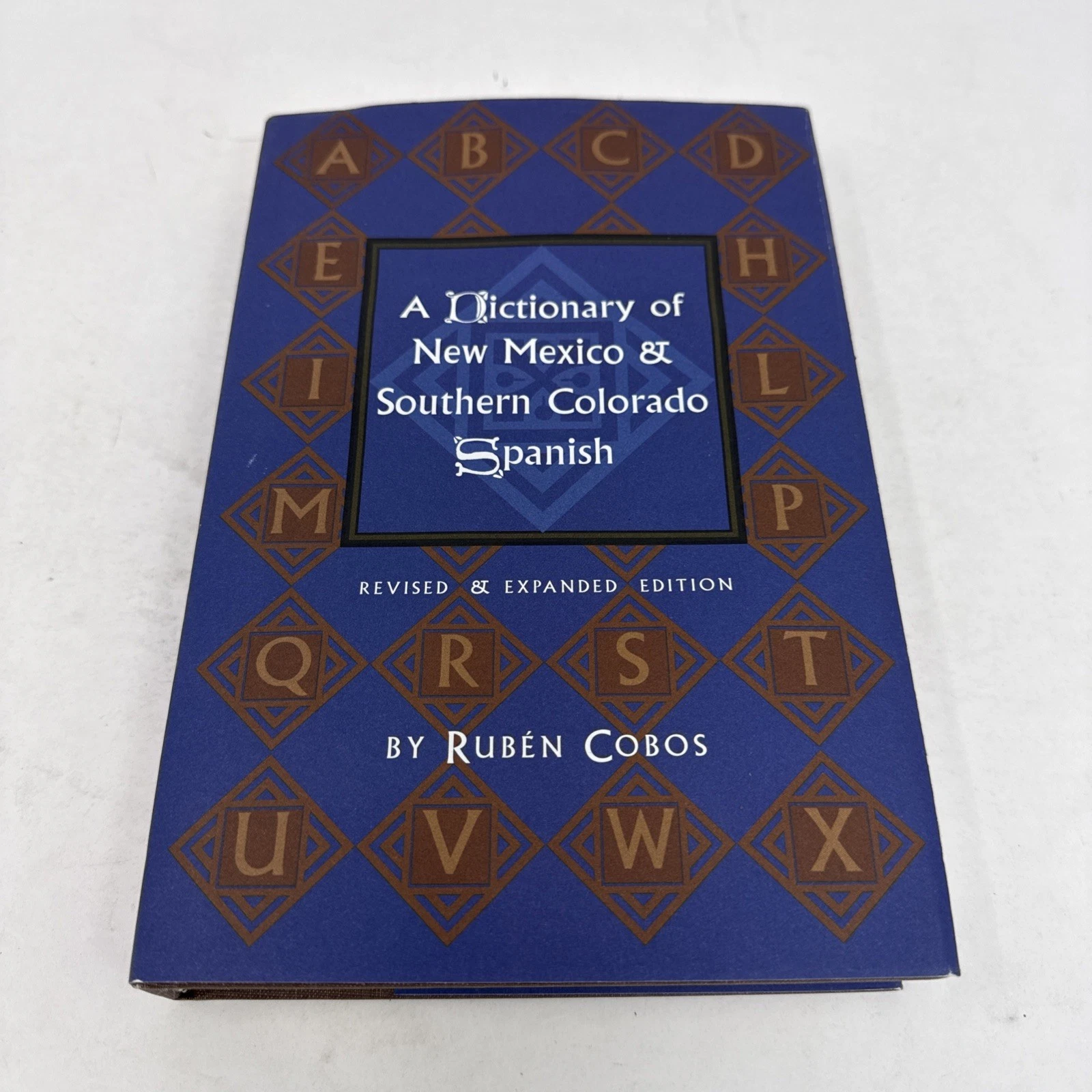
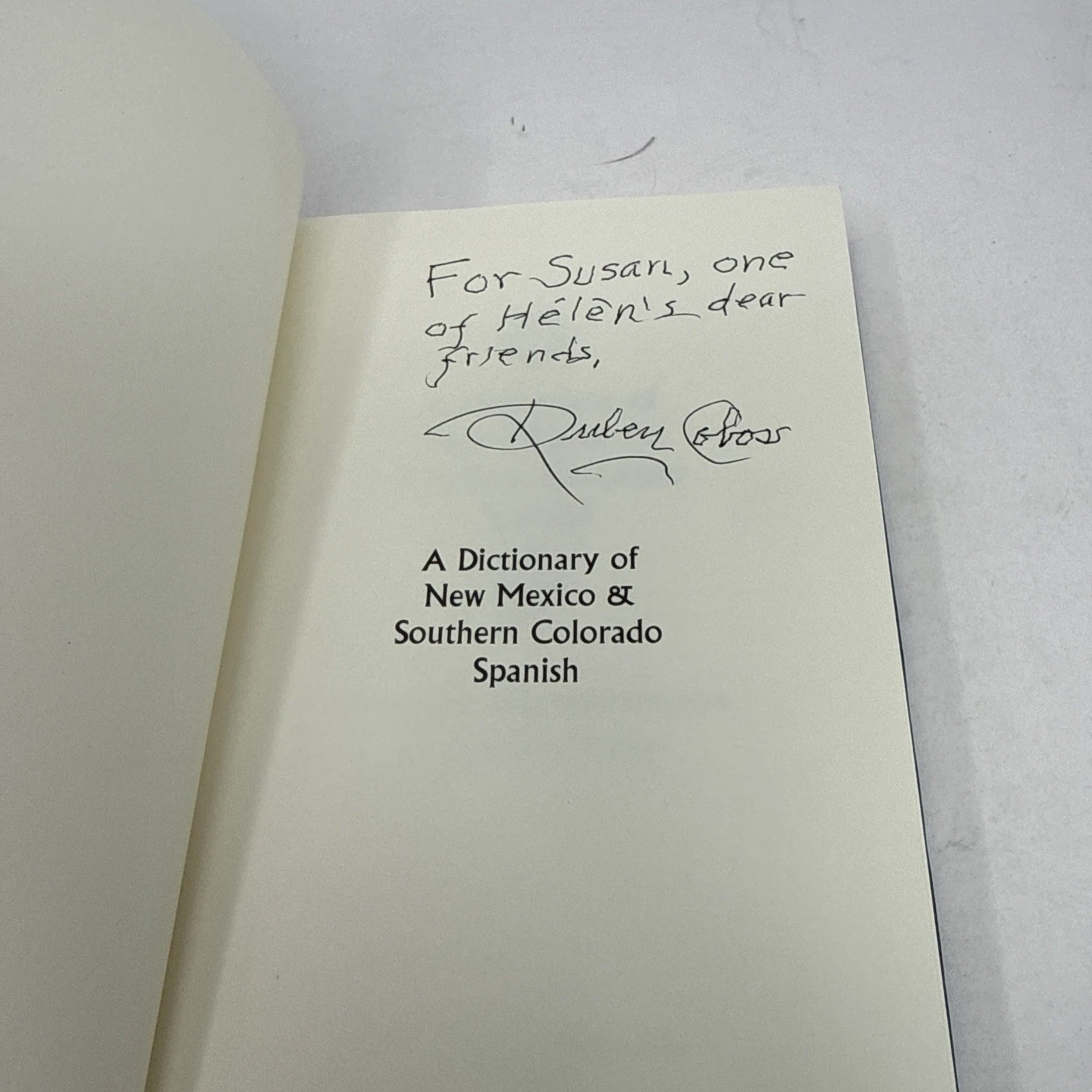
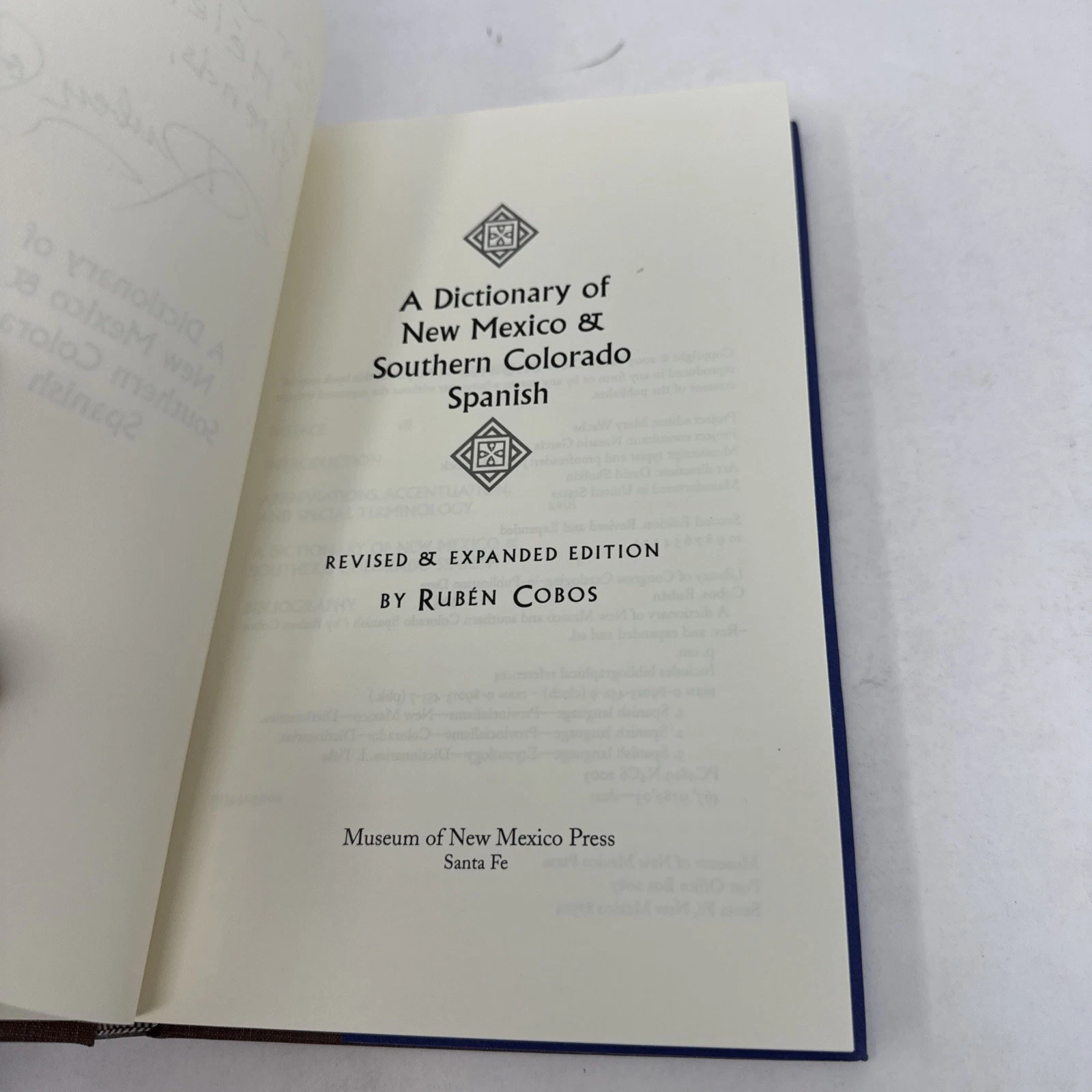
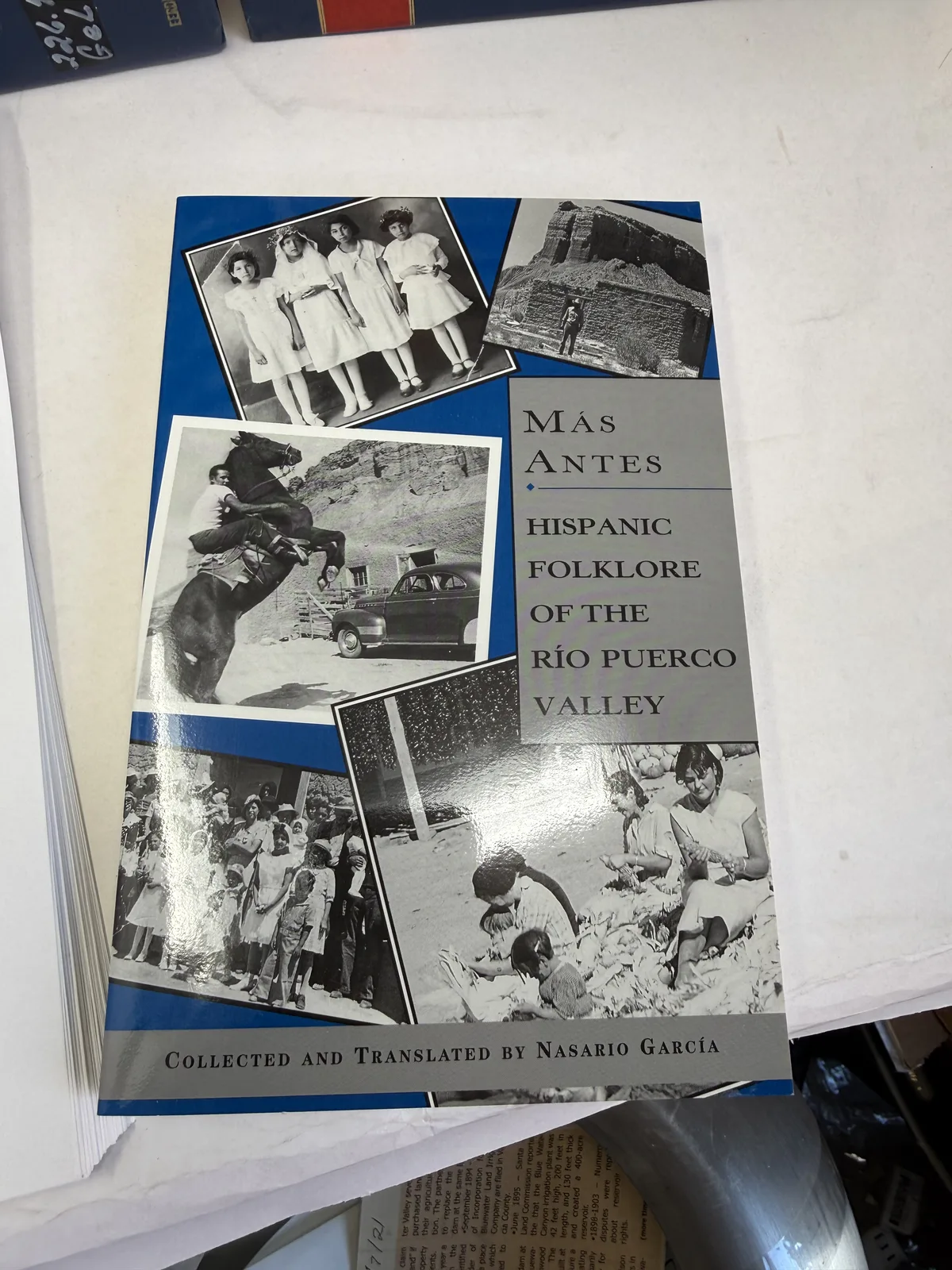
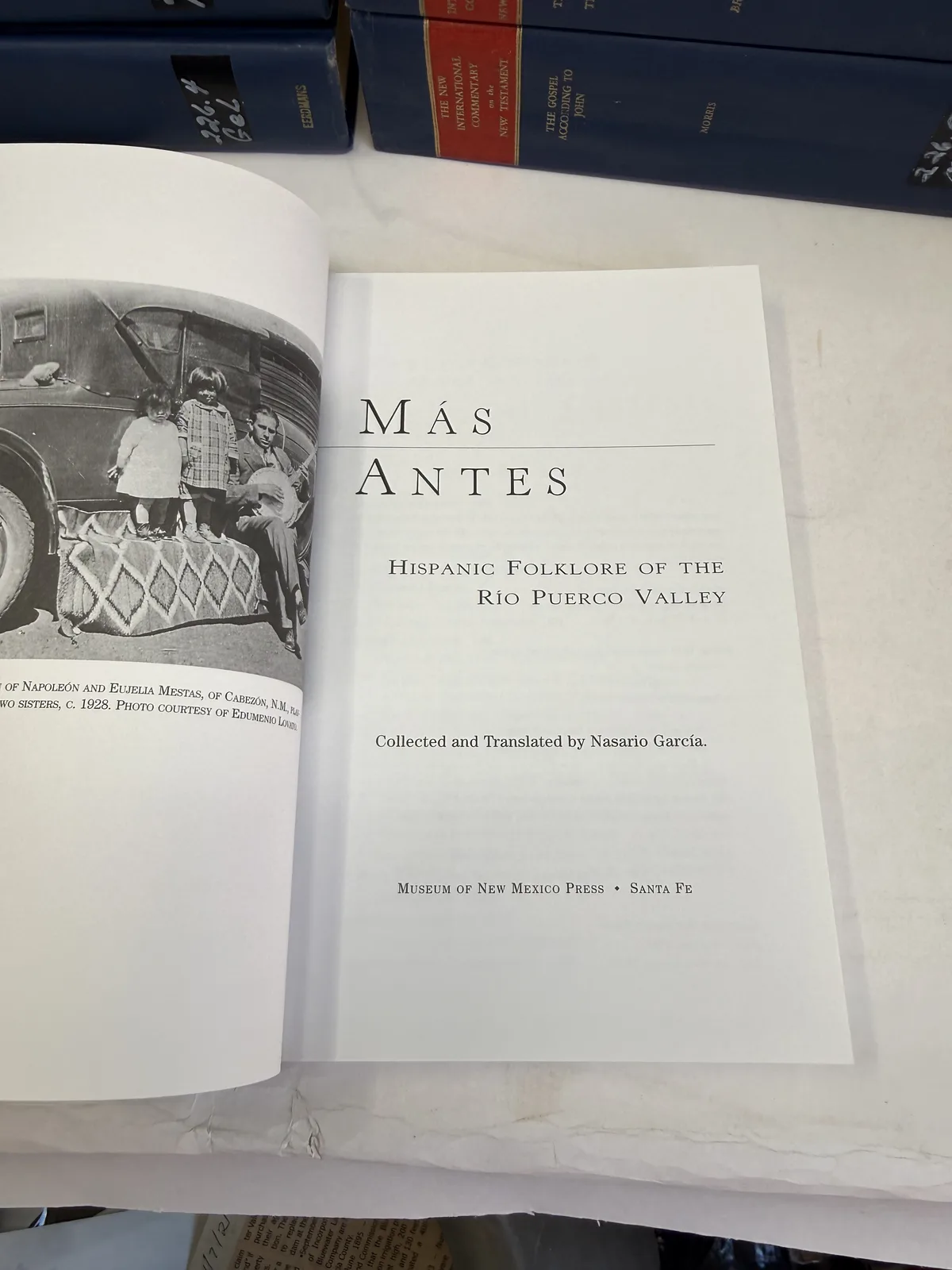
The other half of the tradition was never written for publication at all — it was collected from people who remembered it. Nasario García spent decades recording the Spanish oral tradition of the Río Puerco Valley; Más Antes is one result, published by the Museum of New Mexico Press:
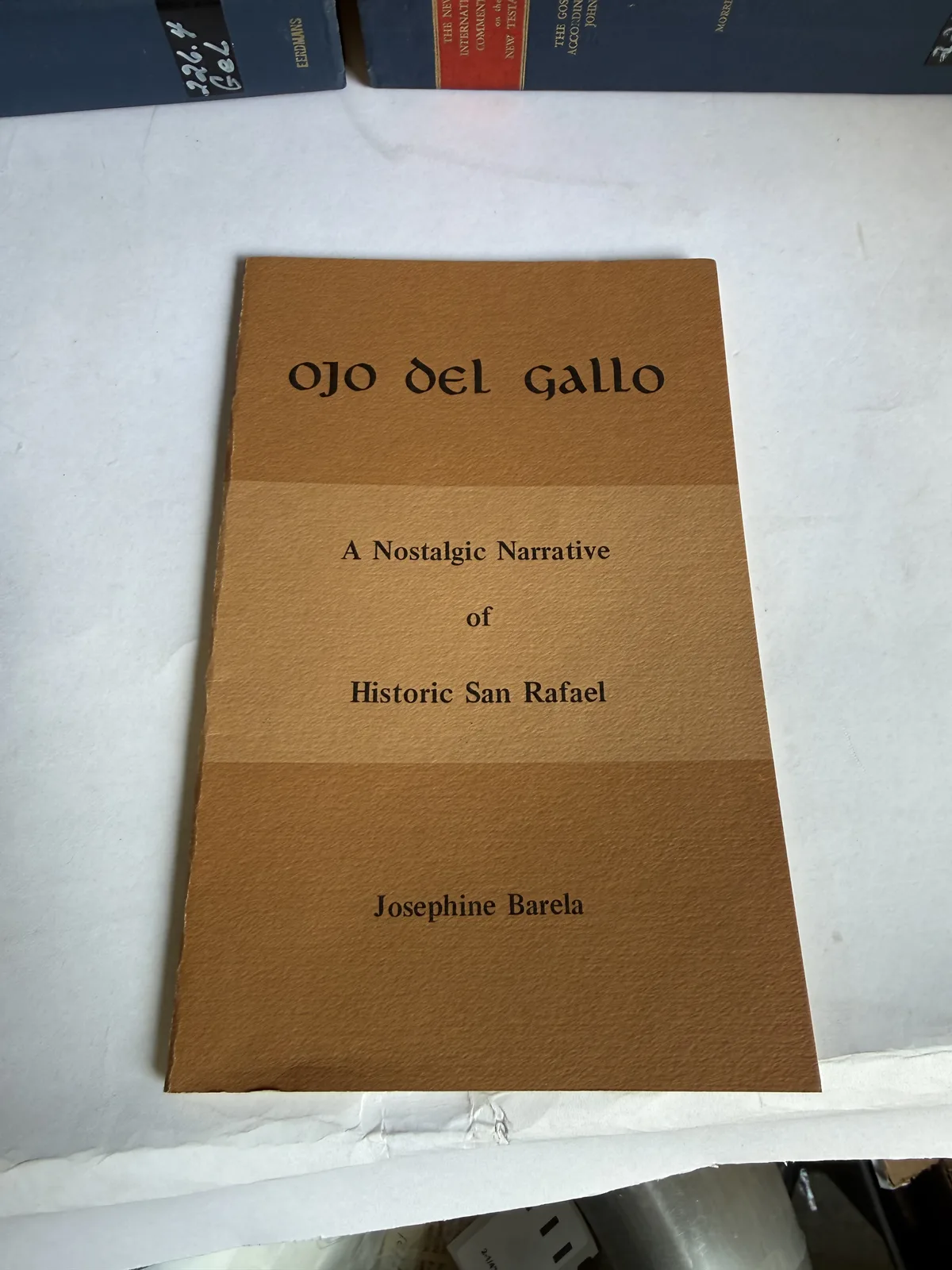
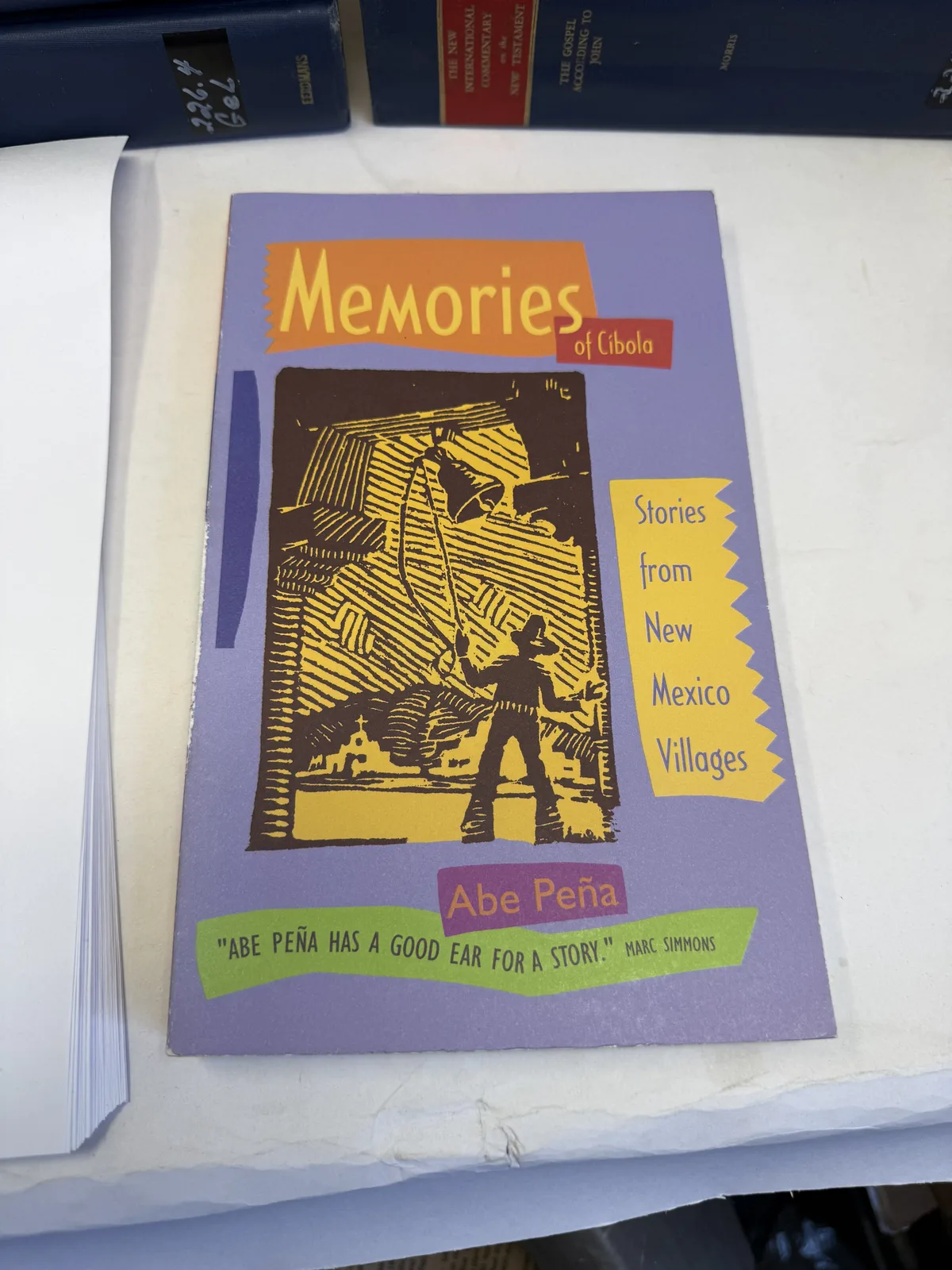
Alongside the collected folklore sits the village memoir written from inside. Two Cibola County examples came through intake together — Josephine Barela’s Ojo del Gallo, a nostalgic narrative of San Rafael printed by Sleeping Fox in Santa Fe, and Abe Peña’s Memories of Cíbola, his village sketches collected by UNM Press:
The New Mexico Hispano literary tradition runs continuously from the 1930s. The foundational generation of Hispana writers — Fabiola Cabeza de Baca Gilbert, Cleofas Martínez Jaramillo, Nina Otero-Warren — established the regional memoir-and-folkways canon in print before the Chicano Movement arrived. The Chicano Movement era (1971-1985) produced the Anaya canon, the Sabine Ulibarrí short-story canon, the John Nichols Anglo-perspective New Mexico Trilogy, and the foundational Premio Quinto Sol winners. The contemporary era (1985-2000) extended the canon through Denise Chávez's Las Cruces fiction, Demetria Martínez's sanctuary-movement work, Pat Mora's poetry-and-children's-book program, and Jimmy Santiago Baca's prison-to-poetry trajectory. The recent era (2000-present) continues with Anaya's late-career Sonny Baca Albuquerque detective novels, Chávez's Loving Pedro Infante, contemporary Chicana/o poets, and the bilingual-and-multilingual generation. The collector's library spans all four generations.
The Foundational Generation, 1930s-1955
New Mexico Hispano Literature books, including Bless Me, Ultima (1972), are sought-after collectibles commanding premium prices among Southwest and Western Americana collectors. Three foundational Hispana writers established the NM Hispano literary tradition in print before the Chicano Movement era. They are documented in detail at /collecting-new-mexico-cookbooks on the foodways side; this section covers the literary intersection.
Fabiola Cabeza de Baca Gilbert (1894-1991, closed pool) was the NMSU Cooperative Extension Service home-demonstration agent in northern New Mexico from 1929 to 1959, and the first sustained Hispana literary memoirist. I Fed Them Cactus (UNM Press 1954) is the canonical memoir of her childhood on the Cabeza de Baca family ranch in eastern NM Las Vegas country across the Mexican-territory-into-statehood transition. The book documents Hispano ranching practice, family genealogy, the displacement-and-survival of the Hispano landed-class through Anglo-takeover, and the texture of pre-suburbanization eastern NM village life. The 1954 UNM Press I Fed Them Cactus first hardcover with original dust jacket is the standard Tier 2 collector target; signed copies trade meaningful premium at SellBooksABQ-tier dealers.
Cleofas Martínez Jaramillo (1878-1956, closed pool), founder of La Sociedad Folklórica de Santa Fe (1935), produced a four-book canon: The Genuine New Mexico Tasty Recipes / Potajes Sabrosos (Seton Village Press 1939), Cuentos del Hogar (1939 folktales collection), Shadows of the Past (Seton Village Press 1941, the Hispano-village folkways memoir, written from her Arroyo Hondo NM upbringing), and Romance of a Little Village Girl (Naylor Company San Antonio 1955, her late-career autobiography). The 1941 Shadows of the Past Seton Village Press first hardcover is a Tier 1 collector target — small Seton Village Press print run, the foundational Hispano-village folkways memoir, scarce. The 1955 Romance of a Little Village Girl Naylor first hardcover is a Tier 2 collector target.
Nina Otero-Warren (1881-1965, closed pool), the first Hispana congressional candidate (1922 Republican nomination for U.S. Representative from New Mexico) and major New Mexico women's suffrage organizer (Congressional Union for Woman Suffrage NM chair, working alongside Aurora Lucero-White Lea and Mabel Vernon), authored Old Spain in Our Southwest (Harcourt Brace and Company, New York, 1936) — the foundational Anglo-readership Hispano-history primer that established the broad-readership template for NM Hispano writing. The 1936 Harcourt Brace first hardcover with original dust jacket is the Tier 1 foundational-generation collector trophy. The book is dedicated to her mother and uncle; chapters cover Hispano village customs, Catholic religious tradition, ranching, education, and the cultural transition through territorial-and-statehood periods. Otero-Warren signed limited copies in Santa Fe and Washington DC circles; signed Old Spain in Our Southwest trades upper-three to low-four-figure at specialist auction.
The Chicano Movement Era, 1971-1985: The Anaya Canon
Rudolfo Alfonso Anaya (1937-2020, closed pool) was born in Pastura NM, a small village near Santa Rosa in eastern Guadalupe County, raised in Santa Rosa and later Albuquerque, suffered a near-fatal swimming accident at age sixteen that left him temporarily paralyzed, returned to school, took the UNM bachelor's degree in 1963, master's in English 1968, joined the UNM Department of English faculty in 1974, became Professor Emeritus on retirement in 1993, and continued publishing and signing books until shortly before his June 28, 2020 death in Albuquerque. President Obama awarded him the National Medal of Arts in 2016 — the only New Mexico writer to receive that honor. He is recognized as the principal foundational figure of contemporary Chicano literature and the most-collected NM Hispano writer of the late twentieth and early twenty-first centuries.
The canonical Anaya bibliography organizes into three groupings. THE EARLY TRILOGY (1972-1979) — Bless Me, Ultima (Quinto Sol 1972 first paperback original), Heart of Aztlan (Editorial Justa Publications 1976, the urban-Albuquerque Barrio sequel set in the Martínez Town/Sawmill neighborhood), and Tortuga (Editorial Justa 1979, concluding the Antonio Márez storyline) — the foundational Anaya canon. THE MID-CAREER EXPANSION (1982-1992) — The Silence of the Llano (TQS Publications 1982, the short story collection), Lord of the Dawn: The Legend of Quetzalcóatl (UNM Press 1987, the prose retelling), The Legend of La Llorona (TQS 1984), and ALBURQUERQUE (UNM Press 1992 — note Anaya's deliberate spelling-restoration to the city's original 1706 Spanish-language name Alburquerque without the second R that was dropped in Anglo-territorial-period administrative usage; the novel itself addresses contemporary city politics through a Chicano boxer-protagonist). THE SONNY BACA SERIES (1995-2005) — Zia Summer (Warner Books 1995, the first Sonny Baca Albuquerque private-investigator novel), Rio Grande Fall (Warner 1996), Shaman Winter (Warner 1999), and Jemez Spring (UNM Press 2005), an Albuquerque seasonal cycle.
Anaya signed extensively from the early 1990s through 2020 at Albuquerque events including Bookworks (Rio Grande Boulevard), Page One Books (now closed), UNM Press launches, the Albuquerque Public Library Friends events, the Hispanic Cultural Center events, and the Festival de Letras y Lecturas series. Signed Anaya is accordingly present in the New Mexico secondary market in substantial numbers — what separates Tier 1 signed Anaya from Tier 2 signed Anaya: title scarcity (signed 1972 Quinto Sol Bless Me, Ultima first > signed Heart of Aztlan 1976 Editorial Justa first > signed Tortuga 1979 Editorial Justa first > signed Alburquerque 1992 UNM first > signed Sonny Baca firsts > signed mass-market and trade reprints), inscription quality (full inscription with date and location, ideally event documentation, > signed first-issue book > signed reissue), and provenance documentation.
I pick up books for free anywhere in the metro area. Call 505-250-3804 to schedule.
The Ulibarrí Short-Story Canon
Sabine Reyes Ulibarrí (1919-2003, closed pool) was born in Tierra Amarilla NM in northern Río Arriba County, served in World War II as an Army Air Forces gunner on B-17 bombing missions over Germany (Distinguished Flying Cross), took the UNM bachelor's and master's, the UCLA doctorate in Spanish 1959, served as chair of the UNM Department of Modern and Classical Languages for many years, and retired as Professor Emeritus. He was the principal NM Hispano short-story writer of the twentieth century.
Tierra Amarilla: Cuentos de Nuevo México (Casa de la Cultura Ecuatoriana, Quito, Ecuador, 1964 first Spanish-language edition) is the foundational Spanish-language Ulibarrí collection — published in Ecuador because Spanish-language NM literary publishing did not yet exist at scale. The UNM Press 1971 bilingual English-Spanish edition (translated by Thelma Campbell Nason) is the standard NM secondary-market collector target; the 1964 Casa de la Cultura Ecuatoriana Quito Spanish-language first is the trophy for serious Chicano-literature collectors and is genuinely scarce in the United States (limited Spanish-language Ecuador import).
Mi Abuela Fumaba Puros / My Grandma Smoked Cigars (Quinto Sol Publications 1977 bilingual edition) extends the canon into the principal Berkeley Chicano-press distribution. El Cóndor and Other Stories (Arte Público Press 1989) carries the canon into the Houston Arte Público era. Earlier poetry — Al Cielo Se Sube a Pie (Ediciones Alfaguara Quito 1966) — is the trophy for completist Ulibarrí collectors. The 1971 UNM Press bilingual Tierra Amarilla first hardcover with original dust jacket is the standard Tier 2 collector target; signed copies trade upper-three-figure at NM specialist dealers.
The Denise Chávez Canon
Denise Chávez (born 1948 Las Cruces NM, currently still working) is the principal NM Hispana novelist and playwright of the contemporary period. NMSU bachelor's, Trinity University master's in drama 1974, UNM doctorate in English. The Last of the Menu Girls (Arte Público Press 1986 first hardcover with simultaneous trade paperback) is the foundational short-story collection covering young Hispana coming-of-age in Las Cruces hospital settings. The book launched Arte Público Press as a serious Chicano-literature publisher and established Chávez as the principal contemporary NM Hispana fiction voice.
Face of an Angel (Farrar Straus Giroux, New York, 1994) is the major Chávez novel, winner of the American Book Award and Premio Aztlán, set in a fictional Las Cruces-adjacent New Mexico restaurant. Loving Pedro Infante (FSG 2001) anchors to the Mexican golden-age-of-cinema actor Pedro Infante and constructs a sustained meditation on Hispana popular-culture consumption. A Taco Testimony: Meditations on Family, Food and Culture (Rio Nuevo Publishers 2006) is the foodways memoir; King of the Cumbia Kings / El Rey de la Cumbia (Atlas 2008) is the contemporary novel. Chávez is also a major playwright with productions across NM, Texas, and California (including Plaza, Novena Narrativas, Calling All Saints, and adaptations).
The 1986 Arte Público Last of the Menu Girls hardcover first with original dust jacket is the Tier 2 collector target — points of issue: Arte Público Press Houston imprint, ISBN 0-934770-49-9, original dust jacket, simultaneous trade paperback was issued so collectors verify hardcover format. The 1994 FSG Face of an Angel first hardcover with dust jacket is the second-tier Chávez trophy. Chávez signs at Mesilla Valley events, Las Cruces Book Festival, UNM Press launches, and Cervantes Cultural Center events; signed firsts trade meaningful premium.
The John Nichols New Mexico Trilogy
John Treadwell Nichols (1940-2023, closed pool) was the Anglo novelist who wrote the principal late-twentieth-century Anglo-perspective Taos NM regional novel cycle. Born Berkeley CA, Hamilton College bachelor's 1962, journalism and screenwriting through the mid-1960s, settled in Taos NM 1969 where he remained until his July 27, 2023 death.
THE NEW MEXICO TRILOGY: The Milagro Beanfield War (Henry Holt and Company 1974 first hardcover, original illustrations by Rini Templeton — the foundational comic novel of NM Hispano village water-rights conflict against a fictional Anglo developer Ladd Devine III); The Magic Journey (Henry Holt 1978, the trilogy's second volume covering mid-twentieth-century NM Hispano-Anglo history and the transformation of a fictional NM village); The Nirvana Blues (Henry Holt 1981, the trilogy's contemporary-period close). Robert Redford produced and directed the 1988 feature film adaptation of The Milagro Beanfield War (Universal Studios), filmed substantially on location at Truchas NM, with screenplay by David Ward and Nichols himself. The film created a substantial spike in NM Trilogy collector demand that persisted through the 1990s and continues to drive Nichols-collector interest.
Other major Nichols works: The Sterile Cuckoo (David McKay 1965, his first novel, also a 1969 film with Liza Minnelli), The Wizard of Loneliness (Putnam 1966), If Mountains Die: A New Mexico Memoir (Knopf 1979, illustrated with William Davis photographs — the principal Nichols memoir), The Last Beautiful Days of Autumn (Holt Rinehart 1982 autobiographical), On the Mesa (Peregrine Smith 1986), A Fragile Beauty (Peregrine Smith 1987), American Blood (Henry Holt 1987), An Elegy for September (Holt 1992), and the Northern New Mexico memoir cycle continuing into the 2000s. Nichols signed extensively at Taos and Santa Fe events through his 2023 closed pool.
The 1974 Henry Holt The Milagro Beanfield War first hardcover with original dust jacket is the principal Tier 1 collector target. Points of issue: first-edition designation on copyright page, original Henry Holt dust jacket without price-clip showing modest value price, Rini Templeton illustrations intact, signed copies with full Taos inscriptions and ideally event documentation premium-priced. Subsequent printings include Ballantine paperback editions, Holt trade paperback editions, and the 1988 movie-tie-in editions. Fine signed 1974 Henry Holt firsts cross four-figure at specialist Western Americana auction.
Contemporary Chicana/o Poets and the Spoken-Word Generation
Pat Mora (born 1942 El Paso TX, sustained NM publishing-and-residency career) is the principal contemporary Chicana poet and children's-book author with NM-anchored publishing. Canonical: Chants (Arte Público 1984 first), Borders (Arte Público 1986), Communion (Arte Público 1991), Aunt Carmen's Book of Practical Saints (Beacon Press 1997), and House of Houses (Beacon Press 1997 family memoir). Mora founded the El día de los niños/El día de los libros (Children's Day/Book Day) national literacy initiative observed annually April 30 since 1997 — the initiative is now backed by REFORMA (the National Association to Promote Library and Information Services to Latinos) and the American Library Association.
Jimmy Santiago Baca (born 1952 Santa Fe NM), raised in Estancia NM and orphaned at age five, self-taught poet who began writing while incarcerated at the Arizona State Prison Florence facility 1973-1978 on drug-possession-with-intent charges. Canonical: Immigrants in My Own Land (Louisiana State University Press 1979 first, Black Sparrow Press subsequent editions), Martin & Meditations on the South Valley (New Directions 1987 first hardcover — winner of the American Book Award 1988), Black Mesa Poems (New Directions 1989), A Place to Stand: The Making of a Poet (Grove Press 2001 memoir — winner of the International Prize, and the major Baca prose work). The signed Baca Martin & Meditations on the South Valley New Directions 1987 first hardcover American-Book-Award-winner is the Tier 1 contemporary-poetry trophy. Baca signs at UNM events, Albuquerque South Valley community events, and his nonprofit Cedar Tree Inc. programming.
Demetria Martínez (born 1960 Albuquerque NM), poet and journalist, primarily known for Mother Tongue (Bilingual Press 1994 first, the sanctuary-movement novel based on Martínez's own 1988 indictment on federal alien-smuggling charges for transporting Central American refugees — Martínez was acquitted), and Confessions of a Berlitz-Tape Chicana (UNM Press 2005 essay collection). Other significant contemporary NM Chicana/o writers include Levi Romero (UNM, Embudo NM, NM State Centennial Poet 2010-2014), Estevan Arellano (Embudo NM, La Querencia Press), Juan Estevan Arellano (acequia tradition), and Joy Harjo (Mvskoke Nation citizen with sustained NM publishing-and-residency career; U.S. Poet Laureate 2019-2022 — three terms, the only American poet to serve three).
Not sure what you have? Text me a photo at 505-250-3804 and I'll tell you what I see.
Publisher Provenance: Quinto Sol, Editorial Justa, TQS, Arte Público, UNM Press
The Chicano-press infrastructure that produced and sustained the NM Hispano literary canon runs through five principal publishers. Quinto Sol Publications (Berkeley CA 1967-mid-1970s, founded by Octavio Romano-V., Nick C. Vaca, Andrés Segura) — original publisher of Bless Me, Ultima 1972 and the Premio Quinto Sol annual award (Rivera 1971, Anaya 1972, Hinojosa 1973). Tonatiuh-Quinto Sol International / TQS Publications — Quinto Sol successor operations of the late 1970s and 1980s, principal publisher of Anaya's Silence of the Llano 1982 and Legend of La Llorona 1984. Editorial Justa Publications (Berkeley CA, late-1970s Chicano press) — publisher of Anaya's Heart of Aztlan 1976 and Tortuga 1979. Arte Público Press (University of Houston, founded 1979 by Nicolás Kanellos) — the principal contemporary Chicano-Latino literary publisher; published Denise Chávez Last of the Menu Girls 1986, Sabine Ulibarrí El Cóndor and Other Stories 1989, Pat Mora Chants 1984, and dozens of other canonical NM Hispano titles. Bilingual Press / Editorial Bilingüe (Arizona State University, founded by Gary D. Keller) — publisher of Demetria Martínez Mother Tongue 1994 and contemporary Chicano-Latino bilingual work. University of New Mexico Press (Albuquerque, founded 1929) — academic publisher of the NM Hispano literary scholarly canon and the principal post-Quinto-Sol Anaya publisher (Alburquerque 1992, Jemez Spring 2005, posthumous scholarly editions).
For collectors, the publisher imprint indicates both edition status and provenance authentication. Quinto Sol and Editorial Justa originals are the foundational Tier 1 targets. Arte Público firsts are the Tier 2 standard collector targets across the contemporary canon. UNM Press firsts are the late-career Anaya targets. Trade-paperback Warner Books, Grand Central, and Vintage Contemporaries reprints of Bless Me, Ultima are Tier 3 working-library copies; the 1972 Quinto Sol first is the artifact.
Five Identification Problems
Problem one: Bless Me, Ultima 1972 Quinto Sol first vs subsequent printings. The 1972 Quinto Sol first edition is paperback original (no hardcover ever issued by Quinto Sol), trade-size, with the Antonio Márquez foreword and Quinto Sol Berkeley CA imprint on the copyright page. Subsequent printings include TQS Publications reprintings of the 1970s, Warner Books mass-market paperback editions of the 1980s-1990s (the editions most NM high-school readers actually encountered), Grand Central Publishing trade paperback editions following the 2008 Universal Studios film rights deal, and the 2012 Vintage Contemporaries movie-tie-in edition. Provenance verification: copyright page reading "Quinto Sol Publications Berkeley, California" rather than later imprints; Antonio Márquez foreword intact; original Quinto Sol cover art (rather than the Warner Books photographic cover or the Grand Central illustrated cover or the Vintage Contemporaries film-tie-in cover).
Problem two: Ulibarrí Tierra Amarilla — 1964 Ecuador Spanish-language first vs 1971 UNM Press bilingual. The 1964 Casa de la Cultura Ecuatoriana, Quito Tierra Amarilla: Cuentos de Nuevo México is the genuine Spanish-language first edition, published in Ecuador because Spanish-language NM literary publishing did not yet exist at scale. The 1971 UNM Press bilingual edition (translated by Thelma Campbell Nason) is the standard NM secondary-market collector target. They are not the same edition — collectors note which they have.
Problem three: Anaya Heart of Aztlan and Tortuga — Editorial Justa firsts vs subsequent reprintings. The 1976 Editorial Justa Heart of Aztlan first and 1979 Editorial Justa Tortuga first are the Tier 1 Anaya targets after Bless Me, Ultima. Subsequent reprintings appear under TQS, UNM Press, Warner Books, and other imprints. Provenance verification: copyright page reading "Editorial Justa Publications" with the Berkeley address.
Problem four: Nichols Milagro Beanfield War 1974 Henry Holt first vs movie-tie-in reprints. The 1974 Henry Holt and Company first hardcover with original dust jacket showing modest value price and Rini Templeton illustrations is the principal Tier 1 collector target. The 1988 Robert Redford-directed Universal Studios film adaptation generated multiple movie-tie-in printings (Ballantine paperback, Holt trade paperback, Henry Holt movie-tie-in edition with the film poster artwork on the cover). The Holt 1974 first is the artifact; the movie-tie-in printings are working copies.
Problem five: signed-Anaya authentication. Anaya signed extensively from the early 1990s through 2020, so signed Anaya is not by itself rare. What separates a Tier 1 signed Anaya from a Tier 2 signed Anaya: title scarcity (signed 1972 Quinto Sol Bless Me, Ultima first > signed Heart of Aztlan 1976 Editorial Justa first > signed Tortuga 1979 Editorial Justa first > signed Alburquerque 1992 UNM first > signed Sonny Baca series firsts > signed mass-market reprints), inscription quality (full inscription with date and location, ideally event documentation, > signed first-issue book > signed reissue), and provenance documentation (event photographs, programs, bookseller letters of authenticity). Signed copies are heavily faked in the Anaya market; provenance documentation matters.
Three-Tier Collector Market
Tier 1 trophy (mid-three-figure to low-four-figure or higher): Signed Rudolfo Anaya Bless Me, Ultima Quinto Sol 1972 first paperback in fine condition with original cover art and Antonio Márquez foreword intact; signed Sabine Ulibarrí Tierra Amarilla Casa de la Cultura Ecuatoriana Quito 1964 Spanish-language first; signed Sabine Ulibarrí Tierra Amarilla UNM Press 1971 bilingual first hardcover with dust jacket; signed John Nichols The Milagro Beanfield War Henry Holt 1974 first hardcover with original dust jacket; signed Nina Otero-Warren Old Spain in Our Southwest Harcourt Brace 1936 first hardcover; signed Jimmy Santiago Baca Martin & Meditations on the South Valley New Directions 1987 first hardcover American-Book-Award-winner; signed Cleofas Martínez Jaramillo Shadows of the Past Seton Village Press 1941 first; Tomás Rivera ...y no se lo tragó la tierra Quinto Sol 1971 Premio Quinto Sol first (the canonical Chicano-literature sister text to Bless Me, Ultima).
Tier 2 collector targets (low-to-mid three-figure): Trade firsts of canonical NM Hispano literature — Anaya Heart of Aztlan Editorial Justa 1976 first; Anaya Tortuga Editorial Justa 1979 first; Anaya The Silence of the Llano TQS 1982 first; Anaya Alburquerque UNM Press 1992 first hardcover with dust jacket; Anaya Zia Summer Warner 1995 first; Denise Chávez The Last of the Menu Girls Arte Público 1986 first hardcover with dust jacket; Chávez Face of an Angel Farrar Straus Giroux 1994 first hardcover with dust jacket; John Nichols The Magic Journey Henry Holt 1978 first; John Nichols The Nirvana Blues Henry Holt 1981 first; John Nichols If Mountains Die Knopf 1979 first; Sabine Ulibarrí Mi Abuela Fumaba Puros Quinto Sol 1977 first bilingual; Sabine Ulibarrí El Cóndor and Other Stories Arte Público 1989 first; Pat Mora Chants Arte Público 1984 first; Demetria Martínez Mother Tongue Bilingual Press 1994 first; Fabiola Cabeza de Baca I Fed Them Cactus UNM Press 1954 first hardcover with dust jacket; Cleofas Jaramillo Romance of a Little Village Girl Naylor 1955 first; Jimmy Santiago Baca Immigrants in My Own Land LSU Press 1979 first.
Tier 3 working library (upper-two-figure to low-three-figure): Trade-paperback Bless Me, Ultima Warner Books / Grand Central / Vintage Contemporaries / TQS subsequent reprintings; mass-market and trade paperback editions of all canonical authors; Arte Público trade paperback editions of Chávez and Mora; Ballantine and Holt mass-market editions of the Nichols Trilogy; UNM Press paperback reissues; Anaya late-career trade paperbacks and children's books; literary anthologies including selected NM Hispano work (Norton Anthology of Latino Literature 2010, Heath Anthology of American Literature, Vintage Book of Contemporary American Short Stories); academic monographs on NM Hispano literature; UNM Press scholarly editions; movie-tie-in editions of Bless Me, Ultima and The Milagro Beanfield War.
NMLP Intake Position
NM Hispano literature arrives in the NMLP donation stream with substantial frequency. Bless Me, Ultima alone has been a New Mexico high school assigned-reading requirement for decades through the APS, RRPS, SFPS, LCPS, and Hatch Valley school district reading-list cycles, so trade-paperback Warner Books and Grand Central reprints surface in essentially every Albuquerque metro household donation containing books read by anyone who attended an NM high school between 1990 and the present. The donor surface concentration: APS-Title-I-classroom-of-the-1990s reading-list demographic (Bless Me, Ultima paperback reprints surface from former high school students now downsizing or moving out of state), UNM Hispanic Studies and Chicano Studies faculty estates (Tier 1 and Tier 2 firsts including the 1972 Quinto Sol Bless Me, Ultima, signed Anaya runs, signed Ulibarrí runs), Hispano-heritage Albuquerque and Santa Fe households (full Anaya and Ulibarrí bibliographies inherited across generations), Las Cruces / Mesilla Valley estates (Denise Chávez Arte Público firsts), Taos estates (signed John Nichols New Mexico Trilogy firsts), and South Valley / Estancia / Santa Rosa Hispano household donations (regional pride in Anaya as Pastura-born native son).
NMLP routes Tier 1 trophy items (signed 1972 Quinto Sol Bless Me, Ultima first, signed Ulibarrí 1964 or 1971 Tierra Amarilla first, signed John Nichols 1974 Henry Holt Milagro Beanfield War first, signed Jimmy Santiago Baca Martin & Meditations 1987 New Directions first, signed Otero-Warren Old Spain in Our Southwest 1936 first, signed Cleofas Jaramillo Shadows of the Past 1941 Seton Village Press first) to specialist Chicano-literature dealers (William Reese Company New Haven CT, Heritage Auctions Books and Manuscripts, Swann Galleries African Americana and Latino Heritage sales, Adobe Gallery occasional book sales) or to specialist auction houses. Tier 2 trade firsts route through SellBooksABQ standard hand-sort with Latino-literature-collector-customer outreach. Tier 3 paperback reprints route to community literacy partners and Little Free Libraries (the Bless Me, Ultima curriculum requirement keeps paperback reprints in demand in classroom-set quantities).
Free Albuquerque-metro pickup with no condition limit and no minimum quantity — schedule your pickup or text/call 505-250-3804.
External References
- Wikipedia: Rudolfo Anaya
- Wikipedia: Bless Me, Ultima
- Wikipedia: Sabine Ulibarrí
- Wikipedia: Denise Chávez
- Wikipedia: John Nichols
- Wikipedia: Pat Mora
- Wikipedia: Jimmy Santiago Baca
- Wikipedia: Nina Otero-Warren
- Wikipedia: Tomás Rivera
- Arte Público Press
- University of New Mexico Press
Related on This Site
- Closed Signature Pools — Albuquerque/NM Authors — Rudolfo Anaya (closed 2020), Sabine Ulibarrí (closed 2003), John Nichols (closed 2023), Fabiola Cabeza de Baca (closed 1991), Cleofas Jaramillo (closed 1956), Nina Otero-Warren (closed 1965)
- Collecting New Mexico Cookbooks — the foundational Hispana memoirist generation overlap (Cabeza de Baca, Jaramillo)
- Collecting New Mexico Ethnobotany — Curtin's Healing Herbs and the curandera tradition Anaya draws on in Bless Me, Ultima
- New Mexico Spanish Colonial Historians — the scholarly canon Anaya, Ulibarrí, and Chávez engage with
- NM Santero & Hispano Folk Art Books — the parallel Hispano material-culture canon
- Taos Society of Artists Books — the Anglo-painter Mabel Dodge Luhan circle overlapping Nichols's later Taos arrival
- Book Authentication Methodology — signature-pool authentication for closed-pool NM Hispano authors
- NM Ranching & Cowboy Literature — Cabeza de Baca’s I Fed Them Cactus as the Hispano ranching perspective alongside Agnes Morley Cleaveland and Eugene Manlove Rhodes
- NM Children’s Literature — Anaya’s children’s books, Joe Hayes bilingual folktales, and the BIA Indian Life Readers
Cite This Guide
Eldred, J. (May 2026). New Mexico Hispano Literature: A Collector's Authority Guide. New Mexico Literacy Project.
https://newmexicoliteracyproject.org/new-mexico-hispano-literature-collecting
Content is original research by Josh Eldred. Licensed under CC BY 4.0. Cite with attribution.
From the NMLP Archive
Real specimens I’ve handled
Books on this subject that came through my intake and were documented with full photographic provenance — click through for cover, title page, copyright, and condition detail.