Pillar · New Mexico Regional Reference
Collecting New Mexico ethnobotany — from the Fényes-Curtin lineage to modern native-plant scholarship
A reference guide to the New Mexico regional ethnobotany book universe. The Pasadena watercolorist Eva Scott Fényes (1849–1930) and her late-nineteenth-century southwestern botanical documentation. Her daughter Leonora Scott Muse Curtin (1879–1972) and the canonical New Mexico ethnobotany texts she produced from her Santa Fe base: Healing Herbs of the Upper Rio Grande (1947, Laboratory of Anthropology) and By the Prophet of the Earth: Ethnobotany of the Pima (1949). The late-twentieth-century field-guide expansion — Anne Bliss’s Rocky Mountain Dye Plants (1976), William W. Dunmire and Gail D. Tierney’s Wild Plants of the Pueblo Province (Museum of New Mexico Press, 1995) and Wild Plants and Native Peoples of the Four Corners (1997). Daniel Moerman’s pan-tribal database, Native American Ethnobotany (Timber Press, 1998). The Native Plant Society of New Mexico. And the institutional infrastructure — El Rancho de las Golondrinas, the Leonora Curtin Wetland Preserve, the Acequia Madre House — that the Fényes-Curtin family built to keep the documentation alive across three generations of Santa Fe women.
Last verified September 2026 · Original research by Josh Eldred
Why a New Mexico ethnobotany reference
Ethnobotany is the systematic documentation of how a particular human community uses the plants of its place. In the trans-Mississippi American West, the discipline began as ethnography of Indigenous plant use in the late nineteenth century — the U.S. Bureau of American Ethnology Annual Reports of the 1890s contain the earliest comprehensive published records — and was extended into the twentieth century by independent women researchers working largely outside the academy, the most consequential of whom in the New Mexico tradition was Leonora Scott Muse Curtin of Santa Fe.
The reason a New Mexico ethnobotany reference is worth assembling separately from the broader American ethnobotany literature is that the New Mexico record has three distinctive features. First: a three-culture overlay (Pueblo, Hispano, Anglo) that produced parallel and sometimes mutually informing plant-use traditions in a single region. Second: an institutional history concentrated in Santa Fe, where the Laboratory of Anthropology (founded 1927), the Museum of New Mexico Press (the publisher of arc-defining titles from the 1930s forward), and the family-built institutions of El Rancho de las Golondrinas, the Leonora Curtin Wetland Preserve, and the Acequia Madre House have between them anchored the documentation across three generations. Third: a survivorship-bias problem in the surviving printed record that closely parallels what I have described in the New Mexico cookbook collecting pillar — the most historically important titles are saddle-stitched ephemera, museum-press paperbacks, and out-of-print field guides that the chain-thrift sorting algorithms reject as “no scan” and route to landfill, leaving the publicly available secondary market thin and uneven.
This pillar walks the four periods of the New Mexico ethnobotany print record, identifies the central titles in each, names the institutional infrastructure that produced them, and explains where a donated New Mexico ethnobotany book actually belongs in 2026. Two of the central titles are already in the NMLP Donation Archive; the page is part of the moat that NMLP is building around regional book donation in central New Mexico.
The Fényes precursor — botanical watercolors, 1880s–1920s
Eva Scott Muñoz Fényes (November 9, 1849 — February 3, 1930) was an American watercolor painter of the southwestern landscape and architecture, married to the Hungarian-American entomologist and physician Adalbert Fényes. She is the matriarchal figure in the New Mexico ethnobotany lineage not because she published an ethnobotanical work herself but because she produced the documentary precursor: more than 300 historical watercolors of southwestern missions and adobes and more than 3,000 sketches and studies, made during decades of travel through California, Arizona, and New Mexico from her Pasadena home base. The Pasadena Museum of History holds the principal collection; smaller holdings are at the Autry Museum of the American West in Los Angeles and at the Acequia Madre House in Santa Fe.
Fényes’s southwestern documentation work was undertaken in active correspondence with Charles Fletcher Lummis (1859–1928), the editor of Out West magazine and the founder of the Southwest Society. Lummis encouraged Fényes to commit her watercolors to the southwestern architectural record specifically; the result was the largest single-artist watercolor archive of pre-modern southwestern domestic and ecclesiastical architecture. Embedded throughout that archive are botanical sketches — plant studies done from life on travels through the same landscape that her daughter Leonora would later make the systematic subject of ethnobotanical writing. Fényes’s sketchbooks, in other words, are the visual prologue to the canonical written record.
For a collector, two consequences. First, the Fényes work is held almost entirely in institutional collections and is not a meaningful private-market category — what circulates is reproductions, occasional exhibition catalogs from Pasadena Museum of History, and the documentary literature about her. Second, the family-archive context matters: the Fenyes-Curtin-Paloheimo Papers are jointly held across multiple repositories, and the New Mexico Historic Women Marker Program at the Acequia Madre House documents the three-generation continuity as a single conservation thread.
Found old books in an estate or attic? Text me a photo at 505-250-3804 and I'll tell you what I see.
The L. S. M. Curtin canon, 1934–1949
Leonora Scott Muse Curtin (October 2, 1879 — September 2, 1972) is the central figure of the twentieth-century New Mexico ethnobotany record. Born in White Plains, New York, brought to Santa Fe by her mother in 1889 in the wake of her parents’ divorce, returning to Pasadena after her husband Thomas Curtin’s death in 1911, and re-settling in Santa Fe shortly after, Curtin spent the next six decades building both the documentary record and the institutional structures that would preserve it.
The institutional record first. In 1914, Curtin helped found the Santa Fe Garden Club and served as its first president — the institutional vehicle through which she would later make ethnobotany a sustained civic project. In 1925, she became a founding member of the Spanish Colonial Arts Society, the Santa Fe organization that today operates the Nuevo Mexicano Heritage Arts Museum and the annual Spanish Market. In 1932, she and her daughter Leonora Frances acquired the founding core of what would become El Rancho de las Golondrinas, the eighteenth-century paraje on the Camino Real southwest of Santa Fe that today operates as the principal living-history museum of Hispano New Mexico. In 1934, she founded the Santa Fe Native Market on West Palace Avenue, which operated through 1937 as a Hispano New Mexican folk-art and traditional-craft retail cooperative under the tagline “From Village to Market to You,” served as a stop on the Fred Harvey Indian Detours tour-bus circuit, supported village artisans through the Great Depression, and was the operational precursor of Santa Fe’s contemporary Spanish Market.
Against this institutional armature, Curtin produced the two canonical printed ethnobotanies of the southwestern record. The fieldwork started in the 1920s, after Curtin had returned to Santa Fe and entered the circle of regional cultural figures who were building the institutional infrastructure of early-twentieth-century Santa Fe Style: the Laboratory of Anthropology, the Museum of International Folk Art, the School of American Research. She did unaffiliated linguistic fieldwork for the Smithsonian Institution alongside John Peabody Harrington (then the Smithsonian’s principal Native American languages researcher), and conducted years of interview work with curanderas, Pueblo informants, Akimel O’odham elders, Hispano village healers, and local agricultural workers, in fluent Spanish and through translators where necessary.
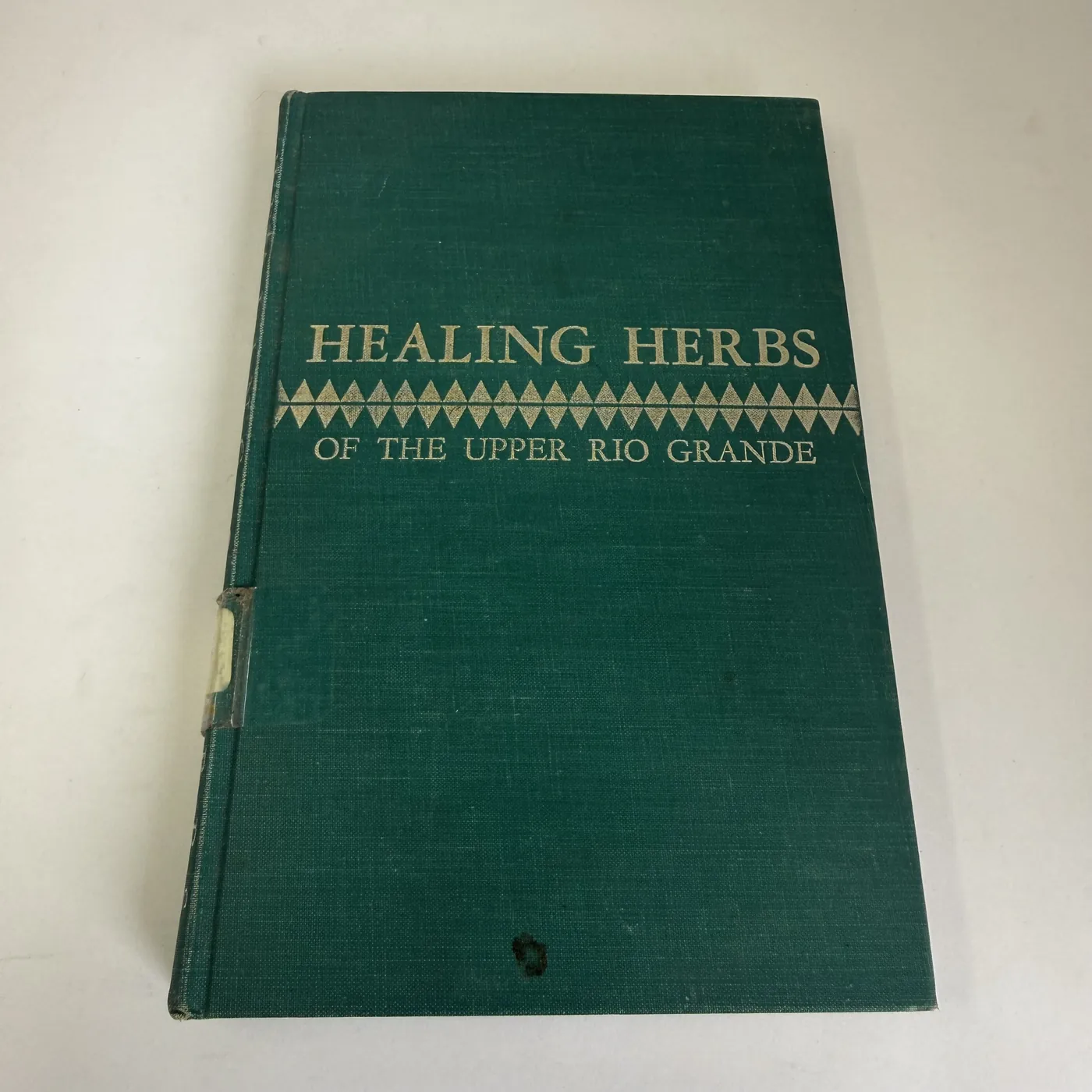
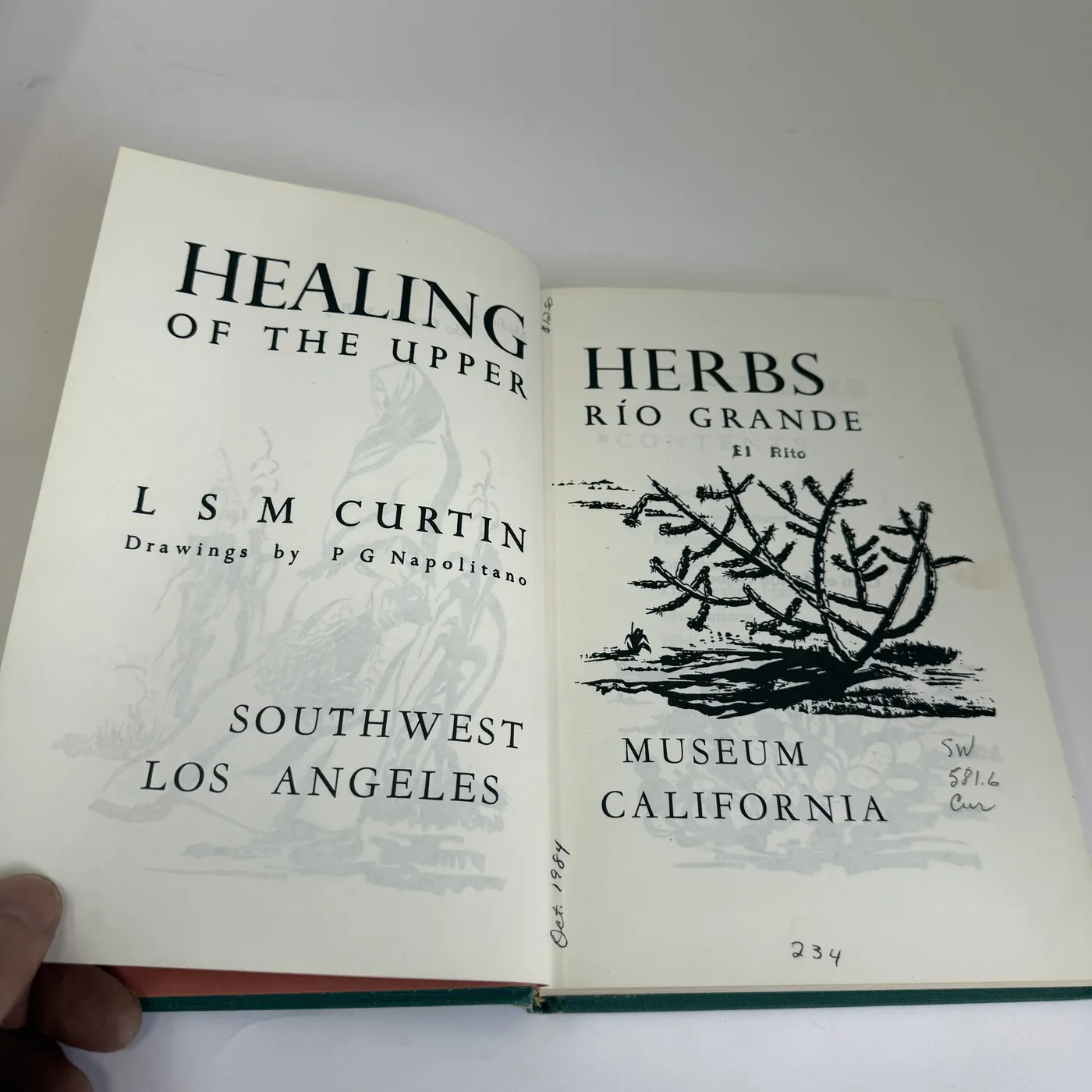
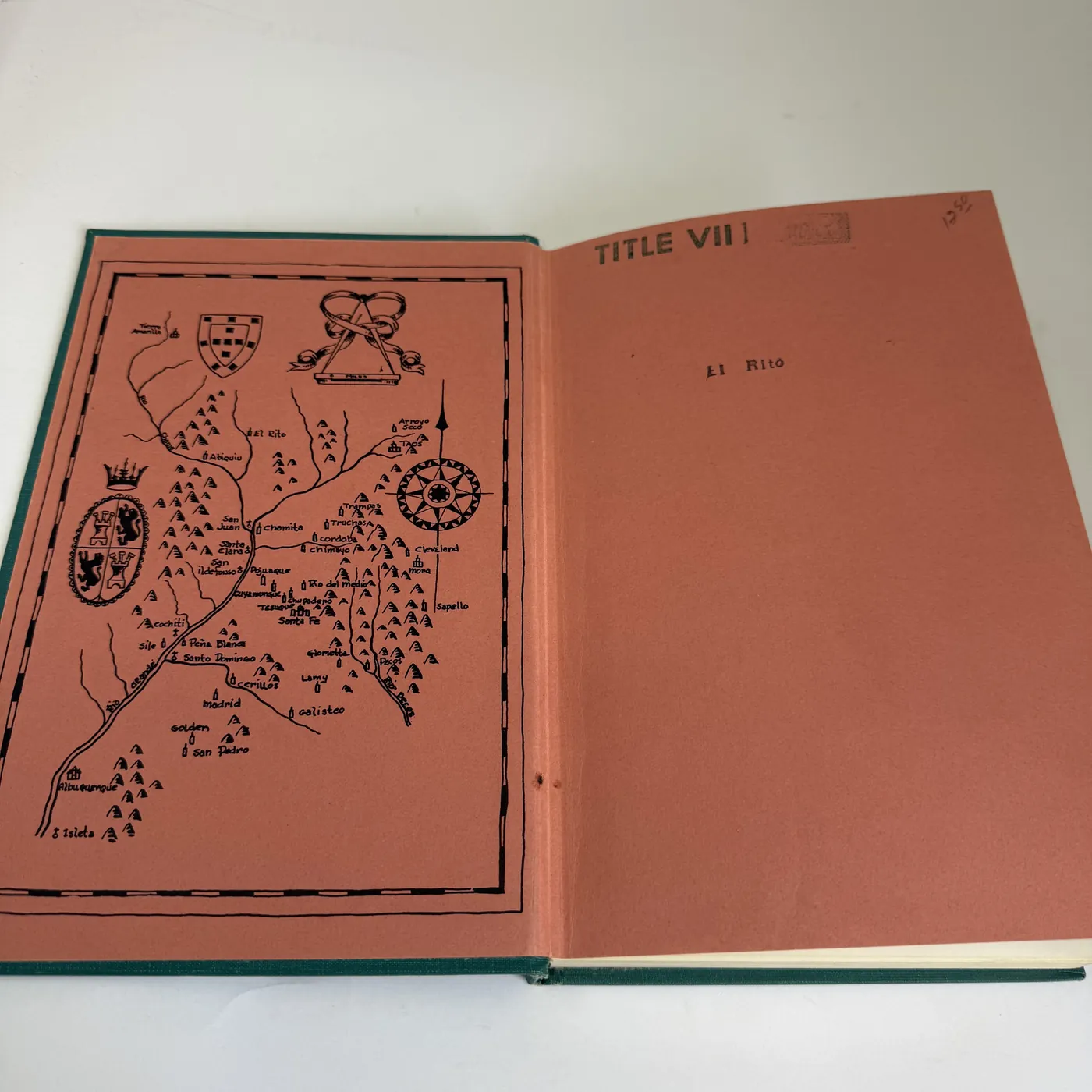
Healing Herbs of the Upper Rio Grande. The publication history matters: the 1947 first edition was issued by the Laboratory of Anthropology in Santa Fe and printed at the Rydal Press — the same Santa Fe small-press operation that handled much of the Laboratory of Anthropology and Museum of New Mexico publication during the mid-twentieth century. The widely circulated 1965 reissue was published by the Southwest Museum in Los Angeles (281 pages, hardcover, illustrations by P. G. Napolitano, salmon-ground endpaper map of upper Rio Grande villages from Albuquerque to El Rito and Tesuque). A 1974 Second Printing of the Southwest Museum edition is identical except for the copyright-page printing-line addition. A 1997 revised edition was issued by Western Edge Press in Santa Fe under the title Healing Herbs of the Upper Rio Grande: Traditional Medicine of the Southwest, with annotations by Michael Moore (the Bisbee/Albuquerque-based herbalist, founder of the Southwest School of Botanical Medicine). The NMLP Donation Archive entry documents a 1974 Second Printing of the Southwest Museum edition acquired as an Albuquerque Public Library Title VII discard with the call number SW 581.6 Cur. The 1947 Laboratory of Anthropology first is scarce; the 1965/1974 Southwest Museum edition is the practical working benchmark in the secondary market.
By the Prophet of the Earth: Ethnobotany of the Pima (Santa Fe: San Vicente Foundation, 1949). The companion volume documenting plant use among the Akimel O’odham (Pima) of southern Arizona — not strictly a New Mexico work in geographic subject, but a New Mexico publication produced from Santa Fe by a Santa Fe researcher, and arguably the most influential book Curtin wrote in terms of ongoing academic citation. The University of Arizona Press reissued the work in 1984, which is the edition still in print and the one most likely to surface in a donation pile. The 1949 first is scarce.
Both books share a methodological signature: each plant entry begins with the Spanish or Indigenous name, then the scientific Latin binomial, then the documented use (medicinal, ceremonial, food, fiber, dye), then the source — Curtin records who told her what and where. The result is field anthropology written with the precision of a museum catalog. The works hold up as primary sources eighty years on because of this discipline.
Curtin’s archival papers are held in two principal locations: the Center for Southwest Research at the University of New Mexico (the “Leonora Scott Muse Curtin, Material dated 1898–1980” collection, accessioned via the New Mexico Archives Online) and at the Acequia Madre House in Santa Fe, where the family papers form the core of the museum’s holdings.
The late-twentieth-century field-guide era, 1976–1997
By the mid-1970s, the academic and amateur-naturalist audience for ethnobotanical reference had expanded substantially beyond the Laboratory of Anthropology audience Curtin had originally written for. Two specific factors converged: the back-to-the-land movement of the late 1960s and 1970s brought a generation of new amateur natural-dye, herbal-medicine, and edible-plant practitioners into the southwestern landscape; and the founding of the Museum of New Mexico Press as a state-supported regional publisher in the same period created an institutional outlet for the trail-guide-format treatments that the academic literature had not previously produced. The result was a generation of late-twentieth-century field guides that translated Curtin’s and the earlier ethnographic literature into formats accessible to weekend hikers and amateur naturalists.
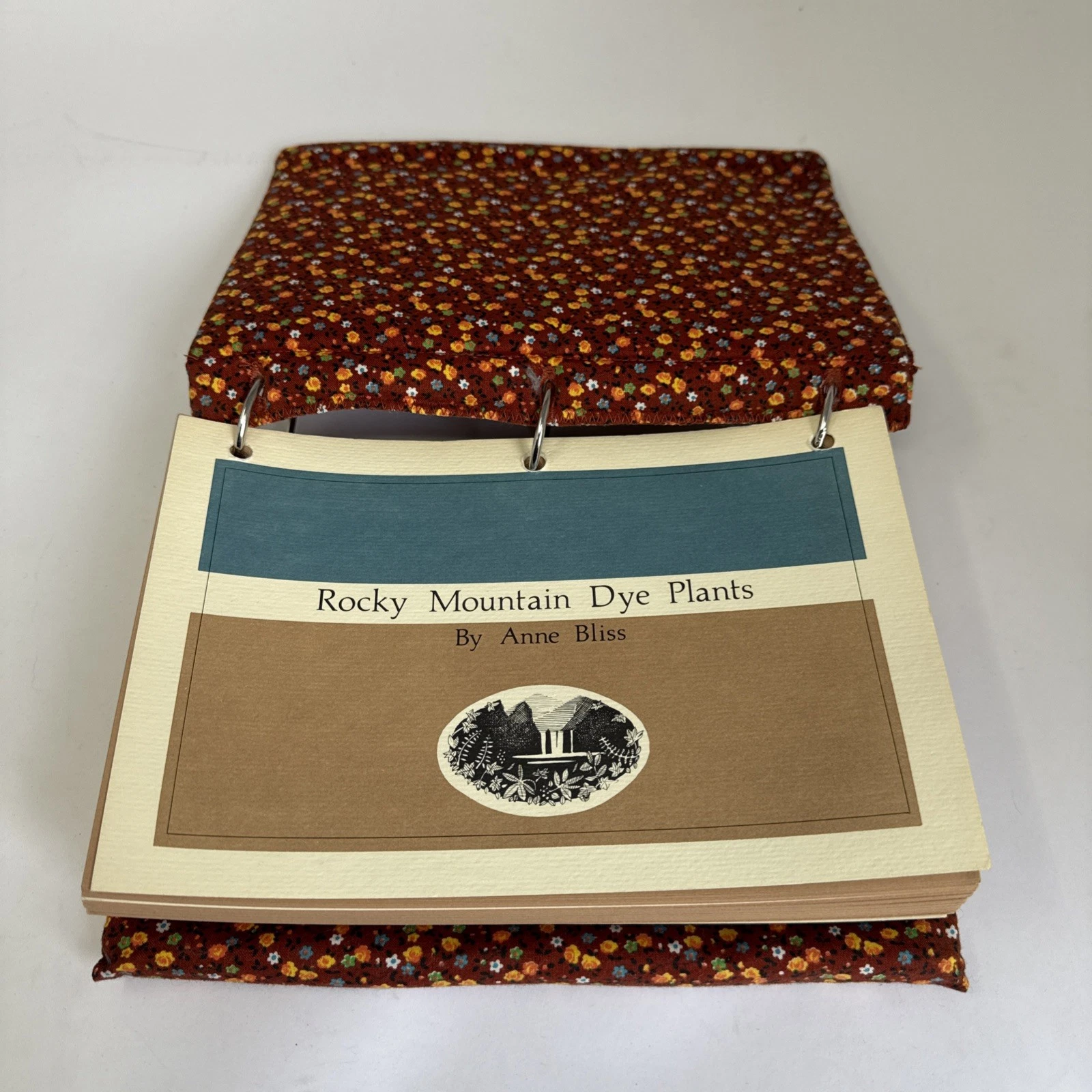
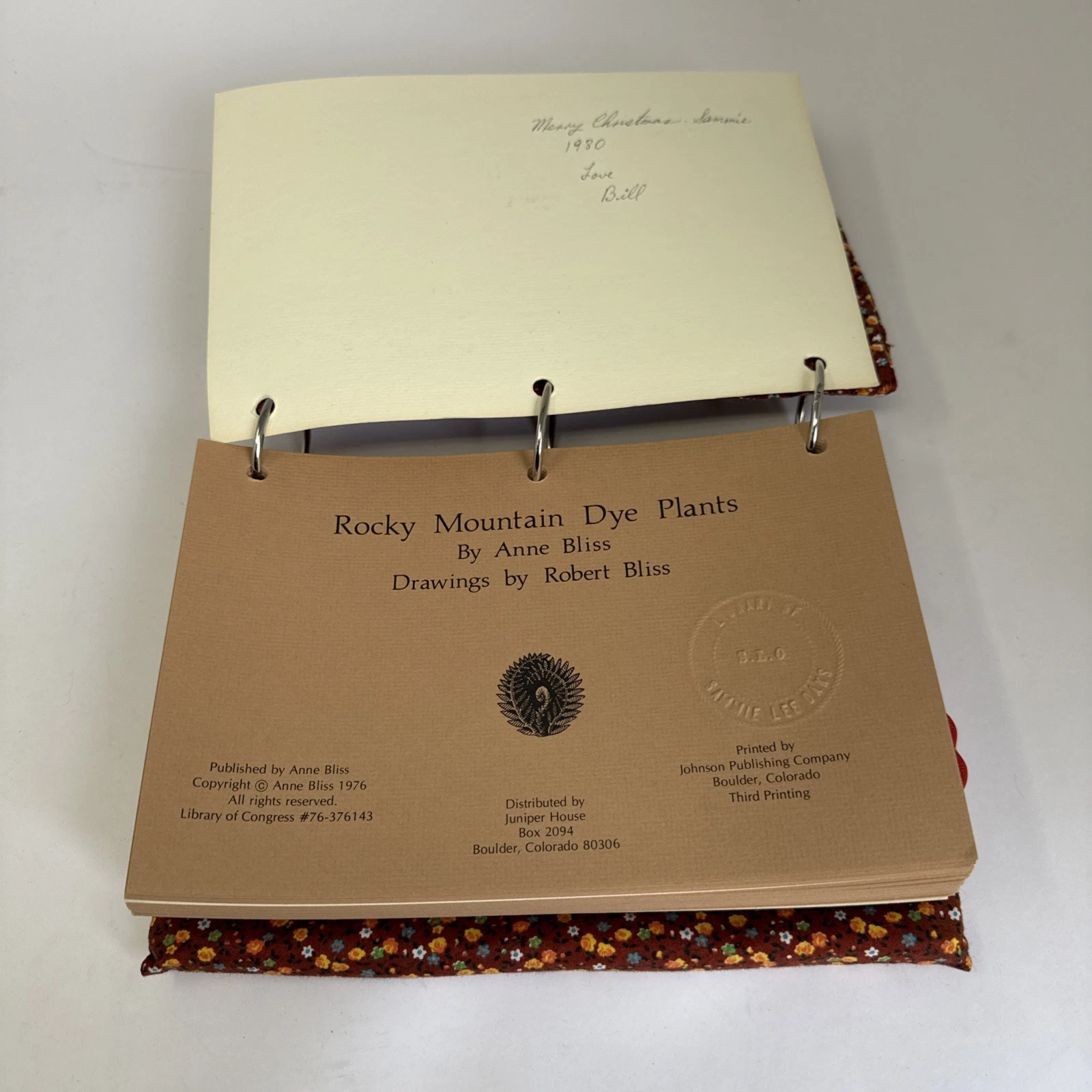
Anne Bliss, Rocky Mountain Dye Plants (Boulder, Colorado: privately published / self-published, 1976; reissued multiple printings). A natural-dye field guide specifically focused on the Rocky Mountain region (which includes northern and central New Mexico), produced in hand-bound 3-ring binder format with original photographs and dye-sample swatches. Bliss was part of the 1970s back-to-the-land natural-dye movement centered in Boulder; her book is one of the more thorough single-author treatments of the regional dye-plant universe. The NMLP Donation Archive holds a Third Printing copy — see the Bliss 1976 archive entry for the full entry. The book is hard to find in original format; the 3-ring binder construction is the survivorship problem — copies sit in basements and garages and rarely surface intact.
William W. Dunmire and Gail D. Tierney, Wild Plants of the Pueblo Province: Exploring Ancient and Enduring Uses (Santa Fe: Museum of New Mexico Press, 1995; ISBN 0-89013-272-0). A trail-guide treatment of Pueblo ethnobotany covering the Rio Grande Valley and the Pajarito Plateau, profiling sixty plants with color landscape photographs, line drawings, and use-tradition documentation. Foreword by Gary Paul Nabhan (the Tucson-based ethnobotanist and founder of Native Seeds/SEARCH, who is one of the central modern figures in southwestern ethnobotany scholarship). Dunmire was a plant biologist and former U.S. National Park Service ecologist; Tierney was a botanist-anthropologist hybrid. The combination produced a work that has held up as both serious scholarship and accessible trail companion — it is still the book a Bandelier or Pajarito hike-leader hands a guest who asks “what is this plant.”
William W. Dunmire and Gail D. Tierney, Wild Plants and Native Peoples of the Four Corners (Santa Fe: Museum of New Mexico Press, 1997; ISBN 0-89013-319-0). The geographic-companion volume, extending the Pueblo Province treatment north into the Four Corners region and incorporating Navajo, Ute, and southern Ancestral Puebloan plant-use traditions. The pair of Dunmire/Tierney books together constitute the standard amateur-naturalist reference for greater Pueblo and Diné ethnobotany; serious researchers add Moerman (1998) and the older academic literature.
Two other titles of the same era are worth naming for completeness: Michael Moore, Medicinal Plants of the Mountain West (Museum of New Mexico Press, 1979; reissued and revised through multiple printings) and his companion Medicinal Plants of the Desert and Canyon West (Museum of New Mexico Press, 1989). Moore (1941–2009) was an Albuquerque-based clinical herbalist, the founder of the Southwest School of Botanical Medicine, and the annotator of the 1997 Western Edge Press reissue of Curtin’s Healing Herbs. His books straddle the field-guide and the working-clinical-herbalist literatures and are the bridge from Curtin’s mid-century ethnographic ethnobotany to the contemporary herbal-medicine practice that operates in Santa Fe, Taos, and Albuquerque today.
The modern era — institutional databases and the Native Plant Society of New Mexico
The third era of the New Mexico ethnobotany record is the post-1998 institutional and database era. Three documentary landmarks define it.
Daniel E. Moerman, Native American Ethnobotany (Portland, Oregon: Timber Press, 1998; ISBN 0-88192-453-9; 927 pages). The pan-tribal scholarly database, twenty-five years in the making, documenting more than 44,000 recorded uses of more than 4,000 plant species by Indigenous communities across North America — 2,874 plants used as medicines, 1,886 as foods, 230 as dyes, 492 as fibers. Moerman is the William E. Stirton Professor of Anthropology Emeritus at the University of Michigan-Dearborn; the book won the Council on Botanical and Horticultural Libraries’ Annual Literature Award for 2000. Native American Ethnobotany is now the standard scholarly cross-reference: any New Mexico-specific ethnobotany finding from Curtin or Dunmire/Tierney can be cross-checked against Moerman’s pan-tribal record. Moerman also operates a publicly accessible online database derived from the print volume at the University of Michigan, which remains in active use.
Native Plant Society of New Mexico (NPSNM). The statewide membership organization, founded in the 1980s, operates with chapters in Albuquerque (Middle Rio Grande Basin), Santa Fe (Northern), Las Cruces (Southern), Gila (Silver City), Taos, El Paso/Trans-Pecos, Otero (Alamogordo), and the “at-large” statewide membership. Each chapter produces a periodic newsletter; the Albuquerque chapter’s newsletter is the most consequential in terms of archival print record, with the back-issue run available through the chapter website and through institutional library holdings. NPSNM’s long-time Albuquerque chapter past-president George Oxford Miller (1943–2024) was a prolific natural-history author whose Landscaping with Native Plants of the Southwest (Voyageur Press, 2007), Hiking New Mexico, and field guides extended the Native Plant Society’s educational program into commercial natural-history publishing.
The Pueblo-author and Indigenous-scholarship turn. The late twentieth and early twenty-first centuries have seen the substitution of Indigenous-authored ethnobotanical writing for the previous-generation pattern of Anglo-anthropologist-documents-Indigenous-knowledge. The pattern is now well-established in Pueblo and Native American Studies publishing: tribal cultural-resource offices, the Indian Pueblo Cultural Center (Albuquerque), the Poeh Cultural Center (Pojoaque), the Institute of American Indian Arts (Santa Fe), and the various tribal museums have become the publishing locus for ethnobotanical material from inside the communities whose traditions are being documented. The transition is documented in the introduction Gary Paul Nabhan wrote for Dunmire and Tierney’s Wild Plants of the Pueblo Province and has accelerated steadily since.
The Three Wise Women and the Acequia Madre House
The institutional through-line in the New Mexico ethnobotany record is a single family across three generations of Santa Fe women. The New Mexico Historic Women Marker Program has formally recognized this lineage as the “Three Wise Women of Santa Fe,” the named historical figures being Eva Scott Fényes (the watercolor matriarch), her daughter Leonora Scott Muse Curtin (the canonical ethnobotanist), and her granddaughter Leonora Frances Curtin Paloheimo (the institution-builder who carried the work forward). The physical site of the historical marker is the Acequia Madre House in Santa Fe, the family home that today functions as a small house museum holding the consolidated Fenyes-Curtin-Paloheimo archive.
Leonora Frances Curtin Paloheimo (1903–1999), known in the family as “Babsie,” was born in Colorado Springs in 1903 and grew up trilingual; she would speak several more languages by adulthood. With her mother in 1932 she acquired the founding core of what would become El Rancho de las Golondrinas; with her husband, the Finnish consul Yrjö Alfred (“Y. A.”) Paloheimo, whom she married in 1946, she turned the property into the operating Spanish-Colonial living-history museum that today welcomes seventy thousand visitors a year. Y. A. Paloheimo (1899–1990) had been Finland’s honorary consul in Santa Fe; the museum the two of them built is documented in the El Rancho de las Golondrinas Wikipedia entry and at the museum’s own historical archive.
The third institutional landmark, separate from but adjacent to Las Golondrinas, is the Leonora Curtin Wetland Preserve, a 35-acre protected wetland in La Ciénega south of Santa Fe that the family donated to the Santa Fe Botanical Garden for permanent conservation. The preserve protects a riparian ecosystem that Curtin had documented as a working ethnobotanist for half a century and that has become a regional teaching site for the kinds of plant communities Curtin wrote about in Healing Herbs of the Upper Rio Grande.
The three sites — Acequia Madre House (the family home and archive), El Rancho de las Golondrinas (the living-history museum), Leonora Curtin Wetland Preserve (the conservation site) — together form the geographic infrastructure of the New Mexico ethnobotany lineage. A New Mexico ethnobotany book is in some literal sense an artifact of this infrastructure. The continuity across three generations of one family is the reason the record survives at all.
Not sure whether to sell, donate, or keep? Call or text me at 505-250-3804 — I'll walk you through it.
The survivorship problem in New Mexico ethnobotany titles
The same survivorship-bias problem I described in the New Mexico cookbook pillar applies, with slightly different mechanics, to the ethnobotany literature. Four pressure points compound to thin out the surviving printed record.
Format: the most historically important titles are saddle-stitched soft cover with no ISBN (the early Laboratory of Anthropology Curtin pamphlets), 3-ring binder format (Bliss), or museum-press paperback with a print run measured in low thousands (the Dunmire/Tierney books). None of these formats are barcode-scannable by chain-thrift sorting algorithms, and most are too lightly bound to survive heavy library circulation. The 1947 first edition of Healing Herbs of the Upper Rio Grande in clean copy is essentially impossible to source on the open secondary market; the 1965 reissue (the copy in the NMLP archive) is the practical working benchmark.
Use pattern: ethnobotany titles get used. A copy of Dunmire/Tierney that gets carried on twenty Bandelier hikes is a copy with a creased spine, sweat-stained covers, and a coffee ring on the title page. A copy of Curtin that a curandera or amateur herbalist actually uses to look up Spanish-language plant names is a copy that is going to be heavily annotated and edge-worn within five years. The use-pattern that gives the books their ongoing value also accelerates their physical disappearance.
Generational handoff: ethnobotany books are categorized at estate dispersal as “old textbooks” or “crafty hobby books” rather than as “valuable reference,” with the result that they are among the first categories to be discarded when a household downsizes or settles an estate. The same New Mexico household that carefully retained a Frank Waters or a Tony Hillerman hardcover for the next generation will quietly route a 1965 Curtin paperback or a Bliss 3-ring binder to the curb.
Chain-thrift rejection: the Goodwill, Savers, and similar chain-thrift sorting workflows reject saddle-stitched and 3-ring-binder formats as “no scan” without further examination. The same titles get rejected at the same operations multiple times before either landing in an estate-cleanout pile that NMLP or a comparable independent operation can intake or going to landfill.
The combined effect is that the New Mexico ethnobotany record on the public secondary market is heavily over-weighted toward the late-twentieth-century field-guide titles (which had larger print runs and more rugged binding) and heavily under-weighted toward the earlier and more historically significant Laboratory of Anthropology and museum-press publications. This is precisely the reason NMLP’s donation pipeline is the right intake point for these books — the kind of careful regional documentation NMLP does is the only operation in central New Mexico structurally positioned to recognize what is in the pile.
Ethnobotany entries currently in the NMLP Donation Archive
Two New Mexico ethnobotany books are currently entered into the archive with the multi-photo bibliographic treatment NMLP applies to regionally significant donations. Both came through donation in May 2026.
Healing Herbs of the Upper Rio Grande — L. S. M. Curtin (1965 reissue)
The 1965 paperback reissue of the canonical Curtin work first published 1947 by the Laboratory of Anthropology in Santa Fe. The 1965 reissue is the practical working edition: more circulated than the scarce 1947 first, less revised than the 1997 Michael-Moore-annotated Western Edge reissue. Documented as a discarded copy from the Albuquerque Public Library system (purple-oval “Albuquerque Public Library” stamp on copyright page; “Yours to Keep” deaccession stamp; pencil accession numbers at the foot). Opens the Three Wise Women cross-cluster on the archive index.
Rocky Mountain Dye Plants — Anne Bliss (1976, Third Printing)
The hand-bound 3-ring binder edition of the Boulder, Colorado natural-dye specialist’s regional dye-plant guide. Includes original photographs, hand-recorded dye-sample swatches, and use-tradition documentation. The 3-ring binder format is itself a documentary feature: an artifact of 1970s back-to-the-land DIY self-publishing in regional natural history.
Future donations of New Mexico ethnobotany titles will be cataloged into the same archive thread. Titles particularly wanted: 1947 first edition Curtin Healing Herbs (any condition); 1949 first edition Curtin By the Prophet of the Earth; early Laboratory of Anthropology pamphlets (any 1930s–1950s saddle-stitched); Michael Moore Medicinal Plants of the Mountain West (1979 first or any printing); back-issue Native Plant Society of New Mexico Albuquerque-chapter newsletters; Spanish-language curandera handbooks from any era. NMLP picks up free free across the Albuquerque metro.
External research references
- Eva Scott Fényes — Wikipedia: en.wikipedia.org/wiki/Eva_Scott_Fényes — biographical entry on the watercolorist and southwestern documentary artist.
- Pasadena Museum of History — Fényes Mansion: pasadenahistory.org — the principal repository of Eva Scott Fényes’s watercolor and sketchbook archive; mansion is open for tours.
- Fenyes-Curtin-Paloheimo Papers, Online Archive of California: oac.cdlib.org — Fenyes-Curtin-Paloheimo finding aid — consolidated family-archive finding aid covering 1745–1970, bulk 1880–1960.
- Leonora Scott Muse Curtin — Wikipedia: en.wikipedia.org/wiki/Leonora_Scott_Muse_Curtin.
- By the Prophet of the Earth (Curtin, 1949 / 1984 reissue) — Internet Archive: archive.org/details/byprophetofearth00curt — full text of Curtin’s Pima ethnobotany available open-access.
- Leonora Scott Curtin (Paloheimo) — Wikipedia: en.wikipedia.org/wiki/Leonora_Scott_Curtin.
- Three Wise Women of Santa Fe — NM Historic Women Marker Program: nmhistoricwomen.org — Three Wise Women / Acequia Madre House.
- El Rancho de las Golondrinas — History Herald: The Three Wise Women of Santa Fe: golondrinas.org — The Three Wise Women of Santa Fe.
- El Rancho de las Golondrinas — Wikipedia: en.wikipedia.org/wiki/El_Rancho_de_las_Golondrinas.
- Leonora Curtin Wetland Preserve — Santa Fe Botanical Garden: santafebotanicalgarden.org — Leonora Curtin Wetland Preserve — the 35-acre La Ciénega conservation site.
- Daniel E. Moerman, Native American Ethnobotany (Timber Press, 1998): archive.org — Native American Ethnobotany full text; the print volume is ISBN 0-88192-453-9, 927 pages, available second-hand and at most major US research libraries.
- Wild Plants of the Pueblo Province (Dunmire & Tierney, Museum of NM Press 1995) — WorldCat: search.worldcat.org — Pueblo Province library holdings.
- Native Plant Society of New Mexico: npsnm.org — statewide membership organization with active chapters in Albuquerque, Santa Fe, Las Cruces, Gila, Taos, El Paso/Trans-Pecos, Otero, and at-large.
- Native Plant Society of New Mexico — Albuquerque Chapter: npsnm.org/albuquerque — the Middle Rio Grande Basin chapter, with the George Oxford Miller memorial education grants and a quarterly newsletter back-issue run.
- Southwest School of Botanical Medicine (Michael Moore archive): swsbm.com — the late Michael Moore’s archive of clinical-herbal teaching materials and his published-book listings (Medicinal Plants of the Mountain West, Medicinal Plants of the Desert and Canyon West, the 1997 annotated Curtin reissue).
- Leonora Scott Muse Curtin papers — New Mexico Archives Online (UNM Center for Southwest Research): nmarchives.unm.edu — Leonora Scott Muse Curtin material 1898–1980.
- Gary Paul Nabhan — Native Seeds/SEARCH: nativeseeds.org — the Tucson-based southwestern seed-conservation organization Nabhan co-founded; relevant to the Pueblo and Diné agricultural-ethnobotanical record.
Frequently asked questions
What is the most important New Mexico ethnobotany book to know?
Who were the “Three Wise Women of Santa Fe”?
Where can I read Curtin’s By the Prophet of the Earth online?
Is the Native Plant Society of New Mexico a publisher?
Who was Michael Moore?
Why don’t more historically important New Mexico ethnobotany books survive in clean condition?
Where should I donate New Mexico ethnobotany books I no longer want?
Related on this site
- Collecting New Mexico Cookbooks — A Regional Reference Guide — the parallel cookbook pillar; same four-period structure, same survivorship-bias analysis, same NMLP-intake conclusion. The two pillars together cover the food-and-medicine plant universe of regional New Mexico.
- Healing Herbs of the Upper Rio Grande — L. S. M. Curtin (1965) — the canonical ethnobotany, deep multi-photo archive entry.
- Rocky Mountain Dye Plants — Anne Bliss (1976) — the natural-dye companion volume, deep multi-photo archive entry.
- The NMLP Donation Archive — the full open archive of regionally significant donated books.
- What I Take That Other Places Won’t — the YES Guide — the photographic field guide of the “looks-like-trash-but-isn’t” donation categories that includes saddle-stitched ethnobotany pamphlets.
- Where Your Donated Books Actually Go — the transparency map for every NMLP intake.
- Free Book Pickup — Albuquerque — schedule the pickup.
Cite as: Eldred, Josh. “Collecting New Mexico Ethnobotany: From the Fényes-Curtin Lineage to Modern Native-Plant Scholarship.” New Mexico Literacy Project, May 12, 2026. https://newmexicoliteracyproject.org/collecting-new-mexico-ethnobotany
Cite This Guide
Eldred, J. (May 2026). Collecting New Mexico ethnobotany — from the Fényes-Curtin lineage to modern native-plant scholarship. New Mexico Literacy Project.
https://newmexicoliteracyproject.org/collecting-new-mexico-ethnobotany
Content is original research by Josh Eldred. Licensed under CC BY 4.0. Cite with attribution.