On a February morning in 1942, a civil engineer named Philip Johnston walked into the headquarters of Major General Clayton Vogel at Camp Elliott, near San Diego, and proposed one of the most audacious ideas in the history of military intelligence: that the Navajo language — an unwritten Athabaskan tongue spoken by fewer than 50,000 people, almost all of them living on a reservation in the remote interior of the American Southwest — could be used as the basis for a battlefield communications code that no enemy cryptographer would ever break. Johnston had grown up on the Navajo reservation as the son of a Protestant missionary and was one of perhaps thirty non-Navajo in the world who spoke the language. He understood what the Japanese code breakers would not: that Navajo was not merely difficult but structurally alien to anyone trained in Indo-European, Sino-Tibetan, or Japonic linguistic traditions. Within three months, twenty-nine young Navajo men had been recruited from reservation boarding schools and trading-post communities, shipped to boot camp in San Diego, and set to work building a code vocabulary that would carry the Marine Corps through three years of Pacific island warfare without a single intercepted message being decoded. The Navajo Code Talker program is the most celebrated intelligence innovation of the Pacific Theater, and the literature documenting it — from Doris Paul's pioneering 1973 account through Chester Nez's 2011 memoir — constitutes one of the most distinctive and emotionally powerful collecting fields in American military history.
The collecting field divides into five streams. STREAM ONE — the Code Talker program itself: the recruitment, the code development, the combat deployments from Guadalcanal through Iwo Jima, the declassification, and the Congressional Gold Medal recognition. STREAM TWO — the first-person accounts: the memoirs, oral histories, and photographic records created by or with the Code Talkers themselves. STREAM THREE — the broader New Mexico WWII experience: the Bataan Death March, the 200th and 515th Coast Artillery, and the distinctive New Mexico contribution to the war. STREAM FOUR — the Manhattan Project and the atomic landscape: Los Alamos, Trinity, and the military-scientific installations that transformed New Mexico during and after the war. STREAM FIVE — the peripheral but important subjects: Japanese-American internment sites in New Mexico, POW camps, and the military installations that became permanent features of the state's landscape. A complete New Mexico WWII library requires representation from all five streams, though the Code Talker material forms the collecting field's emotional and market-value center.
Last verified September 2026 · Original research by Josh Eldred
Philip Johnston and the Birth of the Program
Navajo Code Talkers & New Mexico WWII Books, including The Navajo Code Talkers (1973), are sought-after collectibles commanding premium prices among Southwest and Western Americana collectors. The idea of using Native American languages for military communications was not entirely new in 1942. During World War I, Choctaw soldiers in the American Expeditionary Forces had transmitted messages in their language during the Meuse-Argonne Offensive of 1918, confusing German intelligence. Cherokee, Comanche, and other Native language speakers had been used in various ad hoc communication roles. But Philip Johnston's proposal to Major General Vogel was categorically different in its ambition: Johnston was not proposing the occasional tactical use of a Native language for brief, simple messages. He was proposing the systematic development of a comprehensive military code built on the Navajo language — a structured vocabulary of hundreds of terms covering the full range of military operations, capable of transmitting complex tactical and strategic messages at the speed of speech.
Johnston's confidence rested on specific linguistic properties of Navajo that made it uniquely suited to the purpose. Navajo is a Southern Athabaskan language, part of the Na-Dene language family, and its structure differs from the major world language families in ways that create extreme barriers to adult acquisition. The language is tonal — meaning and grammatical function are conveyed through pitch contours that are extremely difficult for non-native speakers to perceive and reproduce. Its verb morphology is extraordinarily complex: a single Navajo verb can incorporate dozens of prefixes and suffixes that encode information about subject, object, direction, aspect, mode, and other grammatical categories in ways that have no parallel in European or Asian languages. The sound system includes a range of lateral fricatives, ejective consonants, and nasalized vowels that are alien to speakers of most other languages. And critically, in 1942, Navajo had no widely used written form — the language existed primarily in oral tradition, which meant that an enemy interceptor could not consult a Navajo dictionary or grammar to begin breaking the code. The number of non-Navajo who spoke the language was estimated at fewer than thirty people worldwide, virtually all of them missionaries, traders, or anthropologists who had spent years on the reservation.
Vogel authorized a demonstration. Johnston recruited several Navajo men living in the Los Angeles area, and they transmitted a series of test messages in Navajo, demonstrating that complex military orders could be communicated accurately and rapidly. The Marine Corps approved the pilot program, and in April 1942, Marine recruiters traveled to the Navajo reservation — primarily to the Bureau of Indian Affairs boarding schools at Fort Defiance, Shiprock, and Tuba City — to enlist the first twenty-nine volunteers.
The Original 29 at Camp Elliott
The twenty-nine Navajo men who reported for Marine Corps boot camp in May 1942 were, by any measure, an extraordinary group. They ranged in age from their late teens to thirty-five — Carl Gorman, at thirty-five, was the oldest, and had lied about his age to enlist, as the Marines' maximum enlistment age was thirty-two. Many had been educated at Bureau of Indian Affairs boarding schools where they had been punished for speaking Navajo — the same language the Marine Corps now wanted them to use as a weapon. The irony was not lost on the recruits, and it became a recurring theme in the subsequent literature: the language that the federal government's Indian education policy had spent decades trying to eradicate was now being mobilized by the federal government's military as a critical wartime asset.
After completing standard Marine boot camp at the Marine Corps Recruit Depot in San Diego, the Original 29 transferred to Camp Elliott, where they were given the task that would define their legacy: building the Navajo military code from scratch. The men worked in a secured classroom, creating a vocabulary that would allow them to transmit any military message in Navajo. The code operated on two levels. For common military terms, the Code Talkers created a substitution vocabulary using Navajo words — most of them drawn from the natural world — to represent military concepts. A tank became chay-da-gahi (turtle). A fighter plane became da-he-tih-hi (hummingbird). A bomber became jay-sho (buzzard). A submarine became besh-lo (iron fish). A battleship became lo-tso (whale). A hand grenade became ni-ma-si (potatoes). A fortification became ah-na-sozi (cliff dwelling). The vocabulary was not arbitrary — the Code Talkers chose Navajo words whose meanings suggested the military objects they represented, creating mnemonic associations that aided rapid communication under fire.
For words not covered by the substitution vocabulary — proper names, coordinates, and technical terms — the Code Talkers developed a Navajo-alphabet system in which each letter of the English alphabet was represented by a Navajo word whose English translation began with that letter. The letter A could be represented by wol-la-chee (ant), be-la-sana (apple), or tse-nill (axe) — the multiple options for each letter prevented frequency analysis, the standard technique by which cryptographers break substitution codes. This dual system — direct substitution for common terms and alphabetic spelling for everything else — gave the code the flexibility to handle any message content while remaining impervious to Japanese code-breaking efforts.
The initial code vocabulary developed by the Original 29 contained approximately 211 terms. As the program expanded throughout the war, the vocabulary grew to approximately 411 terms in later iterations, but the foundational structure created by the Original 29 at Camp Elliott remained the basis of the system throughout the war. The Code Talkers memorized the entire vocabulary — no written code sheets were permitted in combat zones, which meant that the code existed only in the minds of the Navajo Marines who used it. This human-memory-based system was both the code's greatest strength (there was no codebook to capture) and a source of constant anxiety for the Marines who depended on it (a Code Talker killed or incapacitated in combat could not be replaced by a non-Navajo substitute).
The boarding-school irony is central to the Code Talker narrative. The Bureau of Indian Affairs boarding schools to which many of the Original 29 had been sent as children were instruments of the federal government's assimilation policy — institutions designed to strip Native American children of their languages, cultures, and identities. Students caught speaking Navajo were routinely punished, sometimes physically. That the Marine Corps recruited these same men specifically because they spoke Navajo — the language the schools had tried to destroy — is a contradiction that every Code Talker author addresses, and it gives the literature a moral complexity that distinguishes it from conventional military history. Chester Nez's memoir Code Talker (Dutton 2011) treats the boarding-school experience at length, and it is one of the most powerful sections of the book.
The Pacific Theater: Guadalcanal to Iwo Jima
The first combat deployment of Navajo Code Talkers came in August 1942, when Code Talkers attached to the 1st Marine Division went ashore at Guadalcanal in the Solomon Islands — the first major American offensive operation in the Pacific Theater. The Code Talkers' performance at Guadalcanal validated the program: Navajo-coded messages were transmitted rapidly and accurately, and Japanese intelligence — which had successfully broken American military codes on multiple occasions earlier in the war — was unable to make any progress against the Navajo transmissions. The success at Guadalcanal led the Marine Corps to expand the program aggressively, recruiting additional Navajo men from the reservation and training them at Camp Elliott (and later at Camp Pendleton) for assignment to Marine units across the Pacific.
Over the next three years, Navajo Code Talkers participated in every major Marine Corps operation in the Pacific Theater. At Tarawa (November 1943), Code Talkers transmitted messages during one of the bloodiest amphibious assaults of the war, as Marines fought their way across the reef-enclosed lagoon under devastating Japanese fire. At Saipan (June-July 1944), Code Talkers supported the 2nd and 4th Marine Divisions in the battle that broke through Japan's inner defense perimeter. At Peleliu (September-November 1944), Code Talkers operated in some of the most intense combat conditions of the Pacific war, as Marines fought to clear the Japanese from a honeycomb of coral-rock caves and fortifications. At Guam (July-August 1944), Code Talkers supported the recapture of the American territory taken by Japan in December 1941.
The climactic deployment came at Iwo Jima in February and March 1945. Six Navajo Code Talkers — working in continuous shifts around the clock — transmitted more than 800 messages during the first 48 hours of the invasion without a single error. The volume and accuracy of the Navajo-coded communications during the Iwo Jima assault were unprecedented, and the Code Talkers' performance drew the most famous tribute to the program: Major Howard Connor, signal officer of the 5th Marine Division, stated afterward that the Marines would not have taken Iwo Jima without the Navajo Code Talkers. Connor's assessment is quoted in virtually every Code Talker book and has become the definitive military endorsement of the program's value.
The Code Talkers also served at Okinawa (April-June 1945), the last major battle of the Pacific war before the atomic bombings. Throughout these campaigns, the Navajo code was never broken. Japanese cryptographers — who had successfully intercepted and decoded American, British, and other Allied communications on numerous occasions — were completely unable to decipher the Navajo transmissions. Captured Japanese intelligence officers confirmed after the war that they had identified the Navajo transmissions as a code rather than a conventional language but had been unable to make any progress toward breaking it. The code's security record is unique in the history of World War II military communications.
Twenty-Five Years of Silence
When the war ended in August 1945, the Navajo Code Talkers returned home to the reservation under orders not to discuss their wartime service. The Code Talker program was classified — the military considered the Navajo code a strategic asset that might be needed in future conflicts, and the Department of Defense maintained the classification through the Korean War and into the Cold War era. The Code Talkers could not talk about what they had done, could not explain to their families or communities why their service had been important, and could not receive the public recognition that other distinguished military units received in the postwar decades.
The secrecy period lasted until 1968, when the Navajo Code Talker program was officially declassified. By that time, many of the Code Talkers had spent twenty-three years unable to discuss their most significant wartime contribution. Some suffered from what would now be diagnosed as post-traumatic stress disorder, exacerbated by the inability to process their combat experiences through the social networks — family, community, ceremonial — that traditionally supported Navajo warriors returning from conflict. The delayed recognition became one of the defining themes of the Code Talker literature, and it explains the chronological gap in the bibliography: there are no Code Talker books before 1973, because there could not be. The program did not exist in public knowledge until five years before Doris Paul published the first account.
The 1968 declassification coincided with the broader Native American self-determination movement and the growing public consciousness of Native American contributions to American history. The Code Talker story — with its combination of military heroism, linguistic genius, cultural pride, and institutional injustice — became one of the most powerful narratives in the emerging literature of Native American achievement. The Navajo Code Talker Association was formed in 1971, and the Code Talkers began appearing at public events, parades, and commemorations. But the gap remained: the American public learned about the Code Talkers a quarter-century after their service, and many of the Original 29 and their fellow Code Talkers had died before the full story was told.
Inherited a library and not sure where to start? Call or text 505-250-3804 — I handle this all the time.
The 2001 Congressional Gold Medal
The formal governmental recognition that the Code Talkers deserved came on July 26, 2001, when President George W. Bush presented the Congressional Gold Medal — the highest civilian honor bestowed by the United States Congress — to the surviving members of the Original 29 or their families. Only five of the Original 29 were still alive to receive the medal in person. The remaining approximately 400 Code Talkers (or their families) received the Congressional Silver Medal. The ceremony at the U.S. Capitol Rotunda was a national event that brought the Code Talker story to the broadest audience it had yet reached and generated a wave of media coverage, documentary productions, and book publishing that reshaped the collecting market.
The Congressional Gold Medal ceremony also crystallized the Code Talker narrative in its most resonant form: young Navajo men, taken from a reservation where their language was being actively suppressed by government schools, using that forbidden language to save American lives on Pacific battlefields, then returning home to decades of enforced silence. The moral arc — from suppression through heroism to belated recognition — gives the Code Talker literature a narrative power that few military history collecting fields can match, and it explains the enduring market strength of the key titles.
Doris A. Paul: The First Code Talker Book (1973)
Doris A. Paul's The Navajo Code Talkers (Dorrance Publishing Company, Pittsburgh, 1973) holds the singular distinction of being the first book-length account of the Navajo Code Talker program — published only five years after the 1968 declassification, at a time when the program was still virtually unknown to the general public. Paul conducted interviews with surviving Code Talkers and Marine Corps officers at a moment when these men were first able to speak about their wartime service, and her book captures testimony that might otherwise have been lost as the participants aged and died.
The Dorrance Publishing context is essential for collectors. Dorrance was a subsidy publisher — sometimes characterized as a vanity press — based in Pittsburgh. Authors published through Dorrance typically paid for the production of their books, and Dorrance's distribution was limited compared to major trade publishers. The Dorrance 1973 first edition of Paul's book had a small print run, minimal bookstore placement, and reached its audience primarily through the author's own efforts and through the emerging network of Code Talker veterans and their families. The book's modest production values — a subsidy-press binding and jacket, utilitarian typography, limited illustrations — contrast with its enormous historical importance.
Points-of-issue: Paul The Navajo Code Talkers 1973 Dorrance first edition. Dorrance Publishing Company imprint on title page and copyright page; Pittsburgh address; original cloth or boards binding in the Dorrance house style; original dust jacket. No subsequent Dorrance printings are recorded — the book's limited commercial success meant that the first printing is likely the only Dorrance printing. Reprint editions by other publishers appeared later but the 1973 Dorrance original is the collecting target. Fine copies with original jacket are genuinely scarce after fifty-plus years, particularly because the book's primary readership — Code Talker veterans, military historians, and Navajo community members — used their copies rather than preserving them.
Kenji Kawano: Warriors (1990)
Kenji Kawano's Warriors: Navajo Code Talkers (Northland Press, Flagstaff, 1990) is one of the most remarkable books in the entire Code Talker field, and its creation story is itself a narrative of cross-cultural reconciliation that enriches the book's significance as a collecting object. Kawano was born in Japan and came to the United States as a young man. He settled in the Southwest and became drawn to the Navajo reservation, eventually spending years living among the Navajo and building relationships with the community. His decision to photograph the surviving Code Talker veterans — men who had fought against Japan in the most brutal combat of the Pacific war — required an extraordinary degree of trust on both sides. The Code Talkers' willingness to be photographed by a Japanese-born photographer, and Kawano's commitment to portraying them with dignity and respect, gives the book a human dimension that transcends its function as a photographic record.
The portraits in Warriors are the most important visual record of the Code Talkers in their later years. Kawano photographed the men at home on the reservation, in their civilian lives, wearing their Marine Corps uniforms or their civilian clothes, surrounded by family or standing alone against the Navajo landscape. The photographs are intimate, respectful, and deeply human — they show aging warriors who carried an extraordinary wartime experience and then returned to the poverty, isolation, and beauty of the reservation. Many of the men photographed in Warriors have since died, and the photographs have become the definitive visual legacy of the generation.
Points-of-issue: Kawano Warriors 1990 Northland Press first edition. Northland Press, Flagstaff, Arizona imprint — Northland was a respected regional publisher specializing in Southwestern subjects, known for quality photographic reproduction. The 1990 first edition is the primary collecting target. Kawano produced an expanded edition in 2001 (coinciding with the Congressional Gold Medal ceremony) with additional photographs and updated text — the 2001 edition is collectible in its own right but the 1990 Northland Press original, with its pre-recognition documentation of the Code Talkers before the national spotlight, carries the greater collecting premium. Signed copies by Kawano are available through Southwest book events and dealers.
Sally McClain: Navajo Weapon (1994)
Sally McClain's Navajo Weapon: The Navajo Code Talkers (Books Beyond Borders, Rio Rancho, New Mexico, 1994) is the definitive comprehensive history of the Code Talker program and the book that serious collectors and researchers reach for first. McClain, a New Mexico-based author and researcher, spent years conducting interviews with surviving Code Talkers and their families, supplementing the oral testimony with archival research at the National Archives, the Marine Corps Historical Center in Washington, and other military repositories. The result is the most thorough single-volume account of the program from conception through recruitment, training, deployment, combat operations, postwar secrecy, and the long road to recognition.
McClain's treatment of the code development process is the most detailed in the literature — she documents the specific vocabulary choices, the reasoning behind the alphabetic substitution system, the evolution of the code through successive iterations, and the training protocols that ensured accuracy under combat conditions. Her campaign-by-campaign coverage of the Code Talkers' Pacific Theater deployments draws on both Marine Corps operational records and the personal accounts of the Code Talkers themselves, producing a narrative that integrates the institutional military history with the individual combat experience.
The Books Beyond Borders imprint is significant for collectors. Books Beyond Borders was a small publisher based in Rio Rancho, New Mexico — a suburb of Albuquerque — and the book's publication by a local New Mexico press gives it an authentically regional provenance that connects the Code Talker story to its geographic and cultural origins. But the small-press production also meant limited distribution: the 1994 first edition did not receive the national bookstore placement or marketing support of a major trade publication, and copies were distributed primarily through Southwest bookstores, military-history specialty dealers, and the Code Talker Association network. The combination of comprehensive content, small-press scarcity, and New Mexico regional provenance makes the Books Beyond Borders 1994 first edition a Tier 1 collecting target.
Points-of-issue: McClain Navajo Weapon 1994 Books Beyond Borders first edition. Books Beyond Borders imprint, Rio Rancho, New Mexico on title page and copyright page. Original hardcover binding with dust jacket. The book was subsequently reprinted and reissued, but the 1994 Books Beyond Borders first edition is the collecting target. McClain is a New Mexico resident and has appeared at Southwest book events; signed copies are available through dealers and events in the Albuquerque-Santa Fe corridor.
Found old books in an estate or attic? Text me a photo at 505-250-3804 and I'll set up a free pickup, scheduled by route, or you can bring them to the 24/7 drop box.
Chester Nez: Code Talker (2011)
Chester Nez with Judith Schiess Avila, Code Talker: The First and Only Memoir by One of the Original Navajo Code Talkers of WWII (Dutton, 2011) is the book that the Code Talker literature had been waiting for since 1968: a first-person memoir by one of the Original 29, telling the story from the inside. Nez, who was among the first twenty-nine Navajo men recruited for the program in 1942, was the last surviving member of the Original 29 at the time the memoir was published — a fact that gives the book both its urgency and its authority. Nez died on June 4, 2014, at the age of ninety-three, closing the signature pool permanently and making signed copies of Code Talker genuine trophy acquisitions.
The memoir covers the full arc of Nez's life: his childhood on the Navajo reservation near the Checkerboard area of northwestern New Mexico, his years at the BIA boarding school where speaking Navajo was forbidden, his enlistment in the Marine Corps, the development of the code at Camp Elliott, his combat deployments in the Pacific (Nez saw action at Guadalcanal, Bougainville, Guam, Peleliu, and Angaur), his return to the reservation and the long decades of enforced silence, and the eventual recognition that culminated in the 2001 Congressional Gold Medal. Avila, who worked with Nez over several years to produce the memoir, captures Nez's voice with a directness and emotional restraint that makes the narrative all the more powerful.
The boarding-school chapters and the combat chapters are the book's emotional centers. Nez describes the systematic suppression of Navajo language and culture at the boarding school — the punishments for speaking Navajo, the enforced adoption of English names and Christian practices, the deliberate severing of children from their families and cultural identity — and then describes the Marine Corps recruiters arriving at the reservation asking for young men who spoke Navajo fluently. The juxtaposition is devastating and is presented by Nez without commentary or bitterness, which makes it all the more affecting. The combat chapters convey the reality of Pacific island warfare — the heat, the insects, the terror of Japanese artillery and mortar fire, the constant threat of ambush — with the precision of a man who remembered exactly what happened and understood exactly what it meant.
Points-of-issue: Nez Code Talker 2011 Dutton first edition. Dutton (an imprint of Penguin Group) first printing — check the number line on the copyright page for first printing confirmation. The book was subsequently issued in Berkley trade paperback. The Dutton 2011 first hardcover is the collecting target. Chester Nez died June 4, 2014, at age 93 — the signature pool is permanently closed. Signed copies require provenance documentation (bookseller receipt, event documentation, or inscription evidence). Nez appeared at book events in Albuquerque and across New Mexico between the 2011 publication and his 2014 death, and signed copies entered the market through those events. A signed Dutton 2011 first hardcover in fine condition is a Tier 1 trophy acquisition of the highest order.
Samuel Holiday: Under the Eagle (2013)
Samuel Holiday with Robert S. McPherson, Under the Eagle: Samuel Holiday, Navajo Code Talker (University of Oklahoma Press, 2013) is one of the most detailed and vivid first-person accounts of Code Talker combat experience. Holiday enlisted in the Marine Corps in 1943 and served as a Code Talker in some of the most intense campaigns of the Pacific war. His account, as told to historian Robert S. McPherson, provides a granular, day-by-day narrative of combat operations that goes beyond the strategic overview of McClain's comprehensive history to document what it was actually like to be a Code Talker under fire.
The University of Oklahoma Press context places the book within a distinguished publishing tradition. Oklahoma is one of the premier academic presses for Native American history and military history in the American West, and the press's imprimatur gives Holiday's memoir a scholarly credibility that complements its first-person immediacy. McPherson, a historian who has written extensively on Navajo history and culture, serves as a disciplined and respectful interlocutor who shapes Holiday's narrative without overwhelming it. The University of Oklahoma Press 2013 first hardcover is a Tier 2 collecting target — a quality academic-press production with solid distribution but not the scarcity that characterizes the Paul, Kawano, and McClain first editions.
The Supporting Canon
Nathan Aaseng's Navajo Code Talkers (Walker and Company, New York, 1992) was one of the earlier published accounts aimed at a general readership, appearing two years after Kawano's photographic book and two years before McClain's comprehensive history. Aaseng provided a readable narrative overview at a time when the Code Talker story was still emerging into public consciousness. The Walker 1992 first edition is a Tier 2-3 collecting target — a trade-publisher production with adequate distribution but growing scarcity as copies are absorbed into permanent collections.
Deanne Durrett's Unsung Heroes of World War II: The Story of the Navajo Code Talkers (1998) contributed to the growing body of Code Talker literature in the late 1990s, as public interest in the program built toward the 2001 Congressional Gold Medal ceremony. Durrett's treatment is accessible and well-researched, aimed at a general audience. The 1998 first edition is a Tier 2-3 collecting target.
Albert Smith with Marissa Roth's Navajo Code Talker adds another first-person dimension to the literature. Smith's memoir, accompanied by Roth's documentary photography, provides yet another individual perspective on the Code Talker experience. The less-well-known memoirs like Smith's are important because they broaden the documentary record beyond the most famous figures and remind collectors that the Code Talker program involved hundreds of men, each with his own story.
Bruce Watson contributed important journalistic reporting on the Code Talkers that brought the story to magazine audiences beyond the book-length treatments. Watson's work helped maintain public awareness of the Code Talker program during the 1990s and contributed to the growing momentum toward Congressional recognition.
Joseph Bruchac's Code Talker: A Novel About the Navajo Marines of World War Two (Dial Books, 2005) occupies a distinctive position in the collecting field as a young-adult novel rather than a nonfiction account. Bruchac, an Abenaki author widely respected for his work in Native American literature for young readers, crafted a fictional narrative grounded in extensive research that has introduced the Code Talker story to generations of school-age readers. The Dial Books 2005 first edition is a Tier 3 collecting target but important for completeness.
Windtalkers and the Popular Culture Effect
The 2002 film Windtalkers, directed by John Woo and starring Nicolas Cage as a Marine assigned to protect (and if necessary kill) a Code Talker played by Adam Beach, brought the Code Talker story to the largest audience it had yet reached — and provoked the most intense controversy. The film's narrative decision to center the story on a fictional non-Navajo Marine rather than on the Code Talkers themselves drew criticism from some Navajo community members and scholars who argued that the film perpetuated the marginalization of Native American voices even in a story that was fundamentally about Native American achievement. The film's depiction of a Marine ordered to kill his Navajo comrade rather than let him be captured — while based on a real (and debated) aspect of the program's security protocols — was seen by some as sensationalizing the story at the expense of the Code Talkers' own experience.
Despite the controversy, Windtalkers had a measurable effect on the book collecting market. The film's theatrical release in June 2002, following the July 2001 Congressional Gold Medal ceremony, created a sustained period of elevated public interest that drove prices upward for the key Code Talker titles. The Doris Paul 1973 first edition, the Kawano 1990 first edition, and the McClain 1994 first edition all saw increased demand and higher prices in the 2002-2003 period. The film also generated its own category of collectible material — tie-in editions, promotional materials, and the film's novelization — though these are Tier 3 items at best. The lasting effect of Windtalkers on the collecting field was to expand the universe of buyers interested in Code Talker material beyond the military-history and Native American-studies communities into the broader popular-culture collecting market.
Ready to clear the shelves? Call or text me at 505-250-3804 — free pickup across the Albuquerque metro, scheduled by route, or use the 24/7 drop box.
The Bataan Death March and New Mexico's 200th Coast Artillery
The Navajo Code Talkers are the most famous New Mexico WWII story, but the most devastating New Mexico WWII experience belongs to the men of the 200th Coast Artillery Regiment — the New Mexico National Guard unit that suffered catastrophic losses in the Philippines and the Bataan Death March. The 200th Coast Artillery and its companion unit, the 515th Coast Artillery (Anti-Aircraft), were activated in January 1941 and deployed to the Philippines in September 1941, three months before the Japanese attack on Pearl Harbor. When Japan invaded the Philippines in December 1941, the New Mexico soldiers were among the American and Filipino forces trapped on the Bataan Peninsula and the island fortress of Corregidor.
The 200th and 515th fought with distinction during the defense of Bataan, but the situation was hopeless — outnumbered, undersupplied, without air support, and ravaged by disease, malaria, and starvation. When the forces on Bataan surrendered on April 9, 1942, approximately 1,800 New Mexicans became prisoners of war. They were then subjected to the Bataan Death March — the forced march of approximately 65 miles from Mariveles at the southern tip of the Bataan Peninsula to Camp O'Donnell in the interior of Luzon. The march was conducted under brutal conditions: prisoners who fell behind or attempted to get water were bayoneted, shot, or beaten to death by Japanese guards. The subsequent prisoner-of-war camps — O'Donnell, Cabanatuan, and others — brought further suffering from disease, starvation, forced labor, and random violence. Many New Mexico POWs were later transported on the infamous hell ships — overcrowded, unventilated transport vessels — to prison camps in Japan, Manchuria, and Korea, where they endured additional years of captivity until the war's end in August 1945.
Of the approximately 1,800 New Mexicans who served in the 200th and 515th, roughly half — approximately 900 men — died during the war. The losses fell disproportionately on specific New Mexico communities, particularly the Hispanic communities of the Rio Grande valley and the small towns of southern and central New Mexico from which the National Guard had recruited. Towns like Deming, Las Cruces, Carlsbad, Artesia, and Santa Fe lost entire groups of young men — brothers, cousins, neighbors, school friends — in a single catastrophe. The Bataan experience shaped New Mexico's relationship to the war in ways that have no parallel in other states, and the annual Bataan Memorial Death March at White Sands Missile Range remains one of the most significant commemorative events in the state.
Dorothy Cave: Beyond Courage (1992)
Dorothy Cave's Beyond Courage: One Regiment Against Japan (Yucca Tree Press, Las Cruces, New Mexico, 1992) is the standard regimental history of the 200th and 515th Coast Artillery and the essential collecting target for the New Mexico Bataan literature. Cave, a New Mexico author with deep connections to the Bataan veteran community, conducted extensive interviews with survivors and drew on military records to produce the most comprehensive account of the regiment's experience from mobilization through captivity and liberation. The book documents the defense of Bataan and Corregidor, the Death March, the camps, the hell ships, and the liberation — all from the perspective of the New Mexico soldiers who endured them.
The Yucca Tree Press context parallels the Books Beyond Borders imprint of McClain's Navajo Weapon: a small New Mexico publisher producing an important regional history with limited distribution. Yucca Tree Press, based in Las Cruces, was a respected small press specializing in New Mexico subjects, and the 1992 first edition had the limited print run and distribution characteristic of regional-press production. The book's importance to New Mexico communities with Bataan connections — the families of the 200th and 515th veterans — created a strong initial demand that absorbed much of the original print run into private collections where copies are held and not traded.
Points-of-issue: Cave Beyond Courage 1992 Yucca Tree Press first edition. Yucca Tree Press, Las Cruces, New Mexico imprint on title page. Original hardcover binding with dust jacket. Cave appeared at New Mexico book events and Bataan Memorial commemorations; signed copies are available through New Mexico dealers. A signed Yucca Tree Press 1992 first in fine condition is a Tier 1 New Mexico WWII acquisition.
Eva Jane Matson: It Tolled for New Mexico (1945)
Eva Jane Matson's It Tolled for New Mexico (1945) holds the distinction of being the earliest published account of New Mexico's Bataan experience — written and published while the war was still in progress and while many New Mexico POWs were still in Japanese captivity. Matson's book is a wartime document in the truest sense: it was written in the immediate emotional context of communities that did not yet know whether their sons, brothers, and husbands were alive or dead. The book captures the raw grief, anxiety, and determination of New Mexico's home-front experience in a way that later, more distanced accounts cannot replicate.
The 1945 first edition is a genuine wartime rarity. Published in a small edition during wartime paper rationing, the book had limited distribution and has been attenuated by eighty-plus years of use and attrition. Fine copies are extremely scarce, and the book's status as the earliest Bataan-from-New-Mexico account gives it a historical primacy that makes it a Tier 1-2 acquisition for collectors of New Mexico WWII material despite its modest production values.
Los Alamos, the Manhattan Project, and the Atomic Landscape
New Mexico's WWII experience includes a third major narrative thread that is distinct from both the Code Talkers and the Bataan story: the Manhattan Project and the development of the atomic bomb at Los Alamos. In 1943, the U.S. Army established a secret laboratory on the Pajarito Plateau in the Jemez Mountains of north-central New Mexico, requisitioning the Los Alamos Ranch School — an elite boys' boarding school — as the site for the most consequential scientific project in human history. Under the direction of J. Robert Oppenheimer, scientists and engineers from across the country and the world converged on the isolated mesa to design and build the first atomic weapons. The project culminated in the Trinity test — the detonation of the first nuclear device at the Trinity Site in the Jornada del Muerto desert of south-central New Mexico on July 16, 1945 — and the subsequent atomic bombings of Hiroshima and Nagasaki that ended the war.
The Manhattan Project literature is an enormous collecting field in its own right, covered in detail in this site's Trinity and the Atomic Age pillar guide. For the purposes of the New Mexico WWII collecting field, the essential connecting thread is geographic: the bomb was designed and built in New Mexico, tested in New Mexico, and its development transformed the state's economy, demographics, and political landscape in ways that persist to the present day. The military-scientific installations created during the Manhattan Project — Los Alamos National Laboratory, Sandia National Laboratories (established in 1949 at Kirtland Air Force Base in Albuquerque), and White Sands Missile Range (the successor to White Sands Proving Ground) — became permanent features of New Mexico's landscape and economy, and the atomic legacy remains one of the defining elements of the state's identity.
Have books you're ready to part with? I offer free pickup across Albuquerque — call 505-250-3804.
New Mexico Military Installations
The war built or expanded a network of military installations across New Mexico that shaped the state for generations. Kirtland Field (established 1939, now Kirtland Air Force Base) in Albuquerque became a major Army Air Forces training base and later the home of Sandia National Laboratories and the Air Force Nuclear Weapons Center. White Sands Proving Ground (established 1945, now White Sands Missile Range) in south-central New Mexico became the nation's premier missile and weapons testing facility. Fort Sumner — already significant for its Bosque Redondo history — served as a military airfield during the war. Holloman Air Force Base near Alamogordo became a center for aerospace testing. Cannon Air Force Base near Clovis served as an Army Air Forces training facility. Walker Air Force Base in Roswell was a heavy-bomber training base. These installations — part of the broader story of New Mexico military forts and frontier defense — and their Cold War successors transformed New Mexico from a rural, agricultural, and extractive-industry state into one of the centers of American military-industrial infrastructure, and the literature documenting this transformation is a component of the broader New Mexico WWII collecting field.
Japanese-American Internment and POW Camps in New Mexico
New Mexico's WWII history includes two additional subjects that are less widely known but important for a complete understanding of the state's wartime experience. Japanese-American internment: while the major Japanese-American internment camps were in California, Arizona, Arkansas, and other states, New Mexico had its own connections to the internment program. The Old Raton Ranch near Fort Stanton in Lincoln County served as an internment facility for Japanese and German nationals — a Department of Justice internment camp distinct from the War Relocation Authority camps that held Japanese-American citizens. Fort Stanton, originally a military post and later a Public Health Service hospital, housed internees under conditions that are the subject of a small but growing body of scholarship. The Fort Stanton internment story adds a layer of moral complexity to New Mexico's WWII narrative that parallels the boarding-school irony of the Code Talker story: the same state that produced Navajo Marines who fought for American freedom also housed camps where people were confined without trial on the basis of their ancestry.
Prisoner-of-war camps: New Mexico housed several German and Italian POW camps during the war, the largest at Roswell and Lordsburg. The Lordsburg camp is historically notable for the shooting of two Japanese prisoners during a claimed escape attempt in July 1942 — an incident that became the subject of military investigation and that foreshadowed the tensions surrounding POW treatment throughout the war. The Roswell camp held German Afrika Korps prisoners and Italian POWs who worked in agriculture and other labor details in the Pecos Valley. The POW camp literature is a small but interesting component of the New Mexico WWII field, and the camps themselves — now largely vanished from the landscape — are the subject of local historical society research and preservation efforts.
Rogers and Bartlit: Silent Voices of World War II (2005)
Everett M. Rogers and Nancy R. Bartlit's Silent Voices of World War II: When Sons of the Land of Enchantment Met Sons of the Land of the Rising Sun (Sunstone Press, Santa Fe, 2005) is the single-volume synthesis that connects all five streams of the New Mexico WWII collecting field into one narrative. Rogers and Bartlit cover the Bataan Death March and the 200th Coast Artillery, the Manhattan Project at Los Alamos, the Navajo Code Talkers, the atomic bombing of Hiroshima, and the Japanese American internment camp near Santa Fe — all through the lens of New Mexico's distinctive relationship to the Pacific war. The subtitle captures the book's structural ambition: it traces the parallel paths of New Mexico's sons and Japan's sons from the 1940s to the present, examining how war shaped both communities and how reconciliation has unfolded across the decades since.
The Sunstone Press context is important for collectors. Sunstone Press, based in Santa Fe, has been one of New Mexico's most consistently productive regional publishers since 1971, specializing in Southwestern history, culture, and literature. The publisher's catalog includes several titles that appear elsewhere on this site — including Fray Angélico Chávez's But Time and Chance (1981), documented in the Willa Cather pillar guide. Sunstone editions typically have modest initial print runs with regional distribution concentrated through New Mexico and Southwest bookstores, museum shops, and direct sales. This copy arrived at my sorting desk in an Albuquerque estate donation — the kind of book that surfaces regularly in New Mexico households with connections to the state's military and scientific communities, particularly Los Alamos, Kirtland AFB, and the Bataan veteran families.
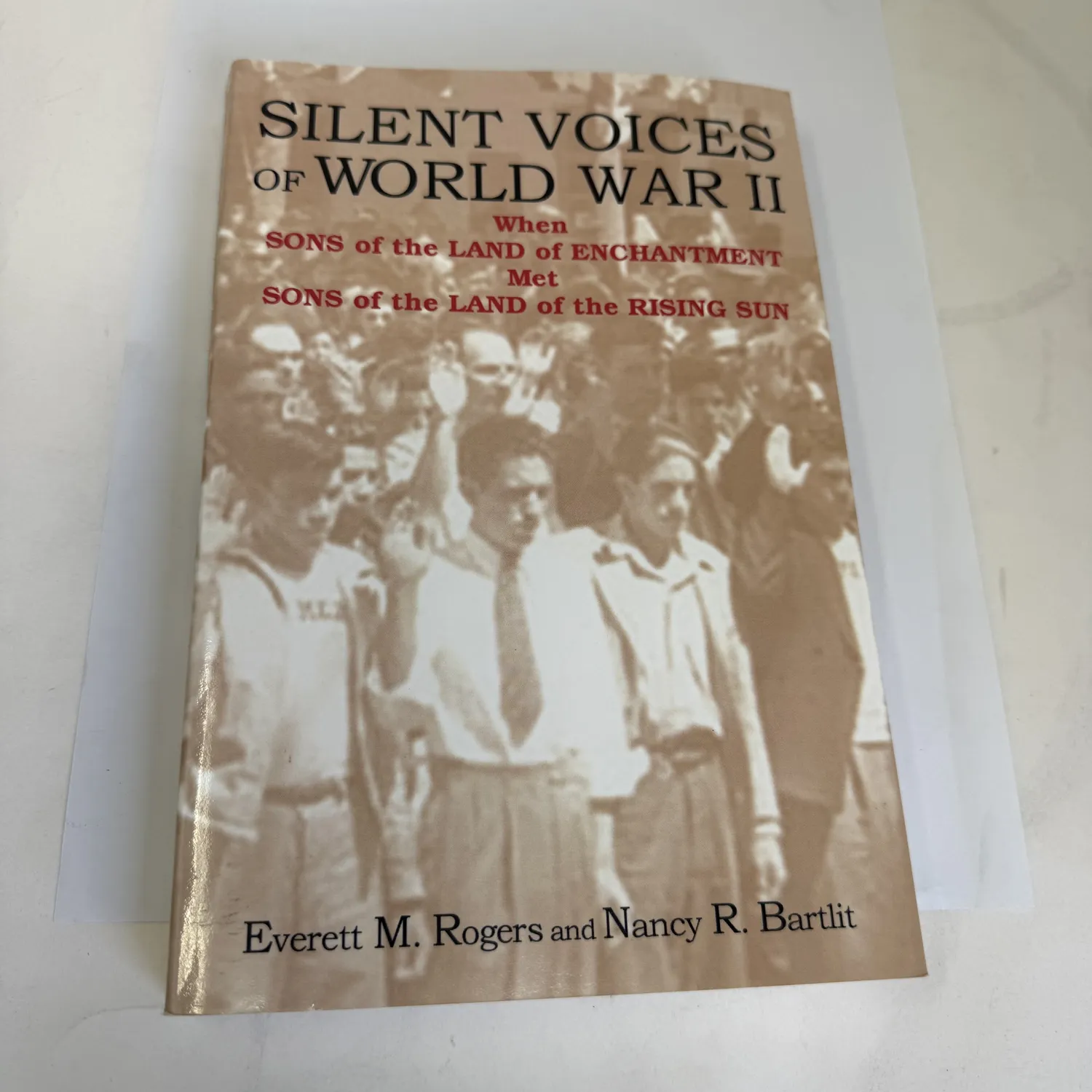
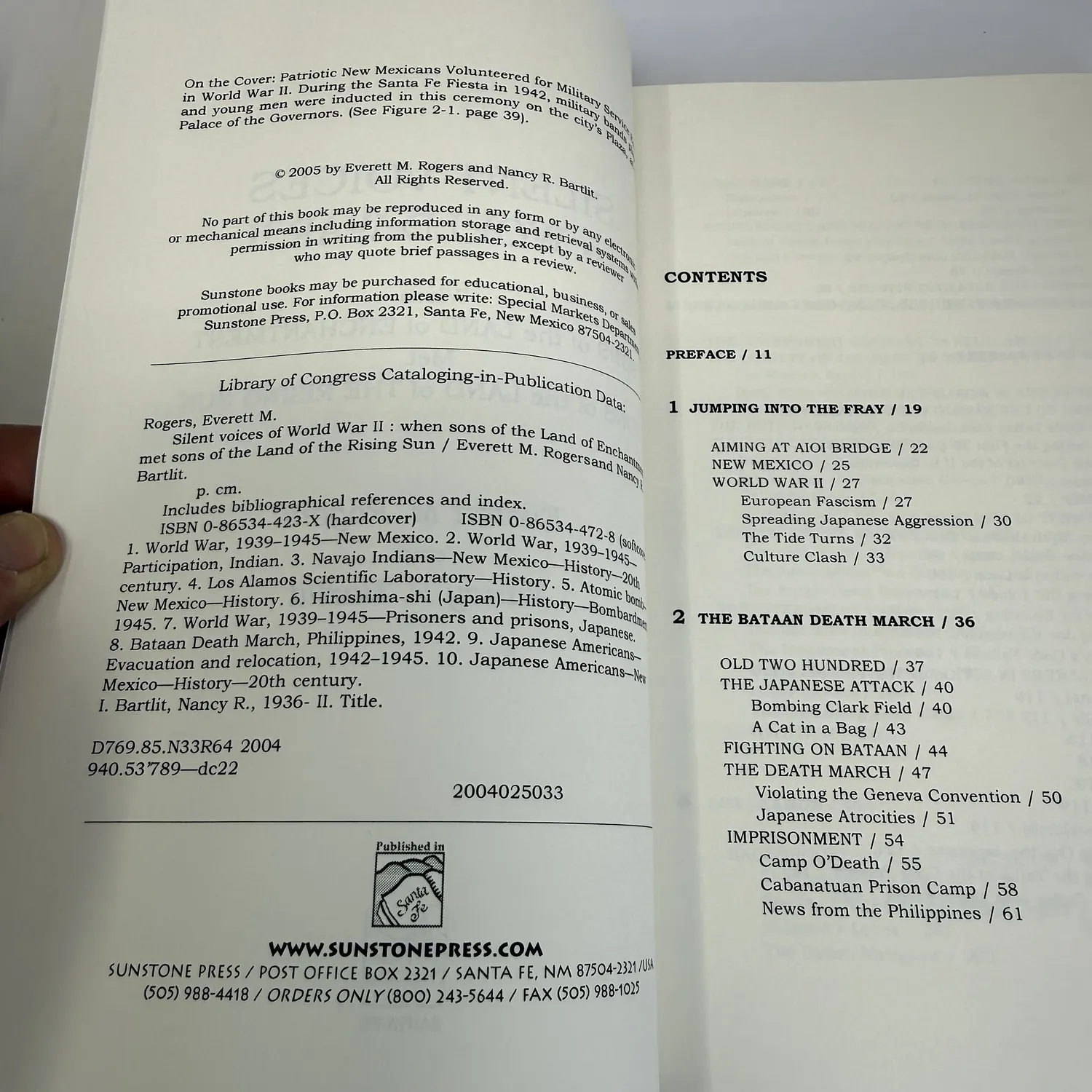
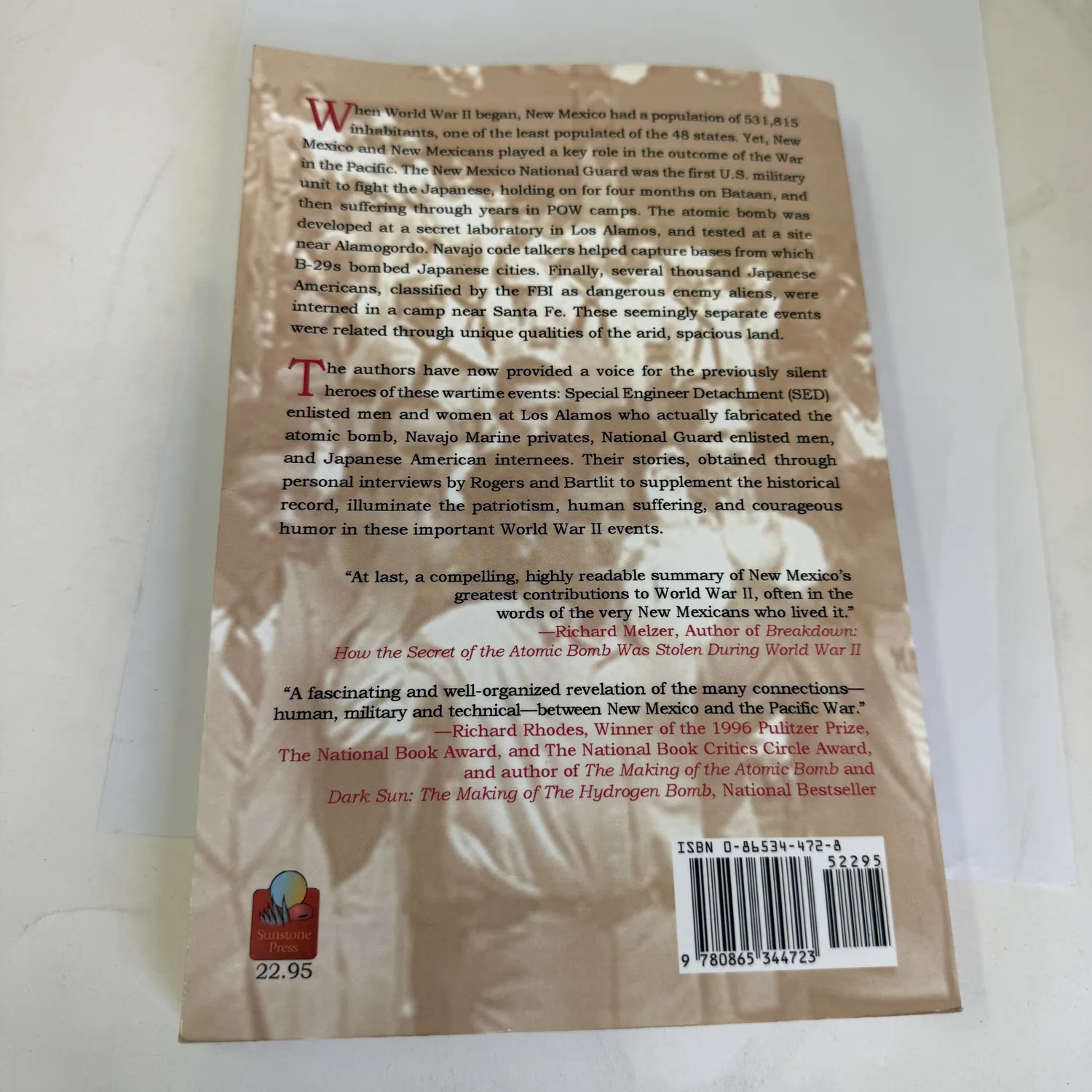
Points-of-issue: Rogers & Bartlit Silent Voices Sunstone Press 2005. Sunstone Press, Santa Fe, New Mexico imprint on title page. ISBN 0-86534-423-X (hardcover). The book’s synthesis of all five NM WWII streams makes it a useful companion volume for collectors building across the Code Talker, Bataan, and Manhattan Project categories simultaneously. A Tier 2–3 acquisition that adds context and connecting tissue to any NM WWII collection.
Stan Sager: Four Corners — Where the Holy Spirit Touches Navajo Hearts (2007)
Stan Sager's Four Corners: Where the Holy Spirit Touches Navajo Hearts — The Story of the Four Corners Native American Ministry of the United Methodist Church (Providence House Publishers, Franklin, Tennessee, 2007) is a regional religious history that documents the United Methodist Church's outreach to the Navajo Nation across the Four Corners region — the junction of New Mexico, Arizona, Utah, and Colorado that encompasses some of the most remote communities on the Navajo reservation. The foreword is by Rev. Fred W. Yazzie, and the back cover carries endorsements from New Mexico United Methodist Conference leaders including Bishop Alfred L. Norris (Dallas Area), Mark L. Dorff (Retired Albuquerque District Superintendent), Jim Hawk (Albuquerque District Superintendent), and Julia Kuhn Wallace (Director, Small Church and Shared Ministries). The cover design is inspired by a rug pattern by Alice Mary Yazzie, a Navajo weaver — a detail that connects this book to the Navajo weaving and textiles collecting tradition.
This copy is signed by the author: "For Jane, Blessings, joy. Stan Sager." Signed copies of regional religious histories are among the most reliable estate finds in New Mexico. Mission churches, reservation ministry programs, and faith-community outreach have been part of life in the Four Corners and greater Navajo Nation for over a century, and the books that document those efforts tend to circulate through church networks, district conferences, and personal libraries before eventually surfacing in estate donations. They are printed in modest runs by denominational or small regional publishers — Providence House, in this case — and distributed primarily through congregational channels rather than retail bookstores. The result is a category of book that is simultaneously common within its community of origin and genuinely scarce in the broader market. When I find a signed copy in an Albuquerque estate, it almost always traces back to someone who knew the author through church, conference, or mission-field connections.
The New Mexico connection here is direct and substantial. The Four Corners includes New Mexico's entire northwest corner — Navajo Nation territory encompassing Shiprock, Farmington, Gallup, Crownpoint, and dozens of smaller chapter communities. The endorsers on the back cover are Albuquerque-based United Methodist leaders from the New Mexico Annual Conference. This book documents the same Navajo communities whose sons served as Code Talkers in the Pacific, whose grandmothers wove the rugs that inspired the cover art, and whose families experienced the Long Walk to Bosque Redondo documented elsewhere on this page. It is a different lens on the same people and the same landscape — spiritual history rather than military history, but rooted in the same Four Corners geography and the same Navajo community networks.
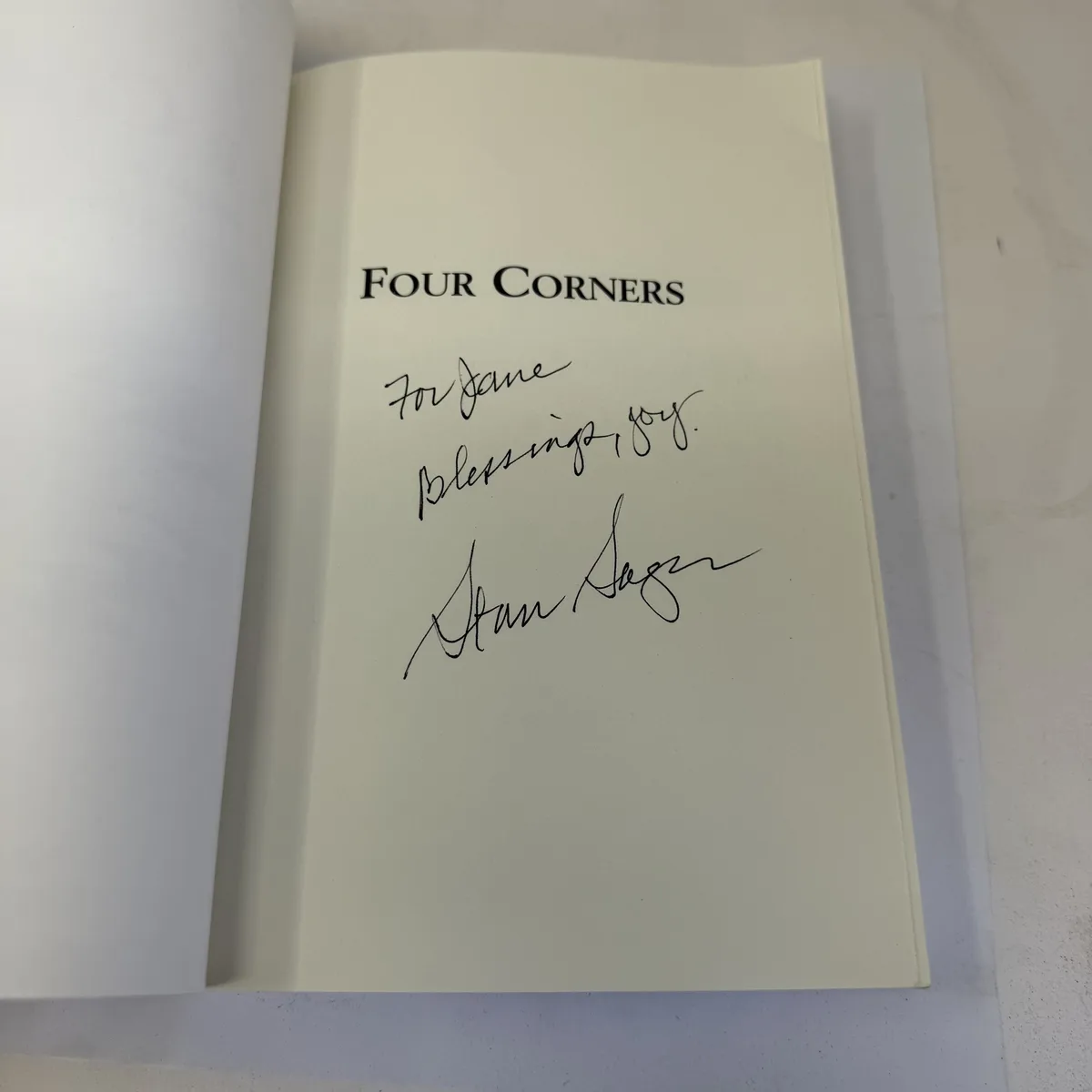
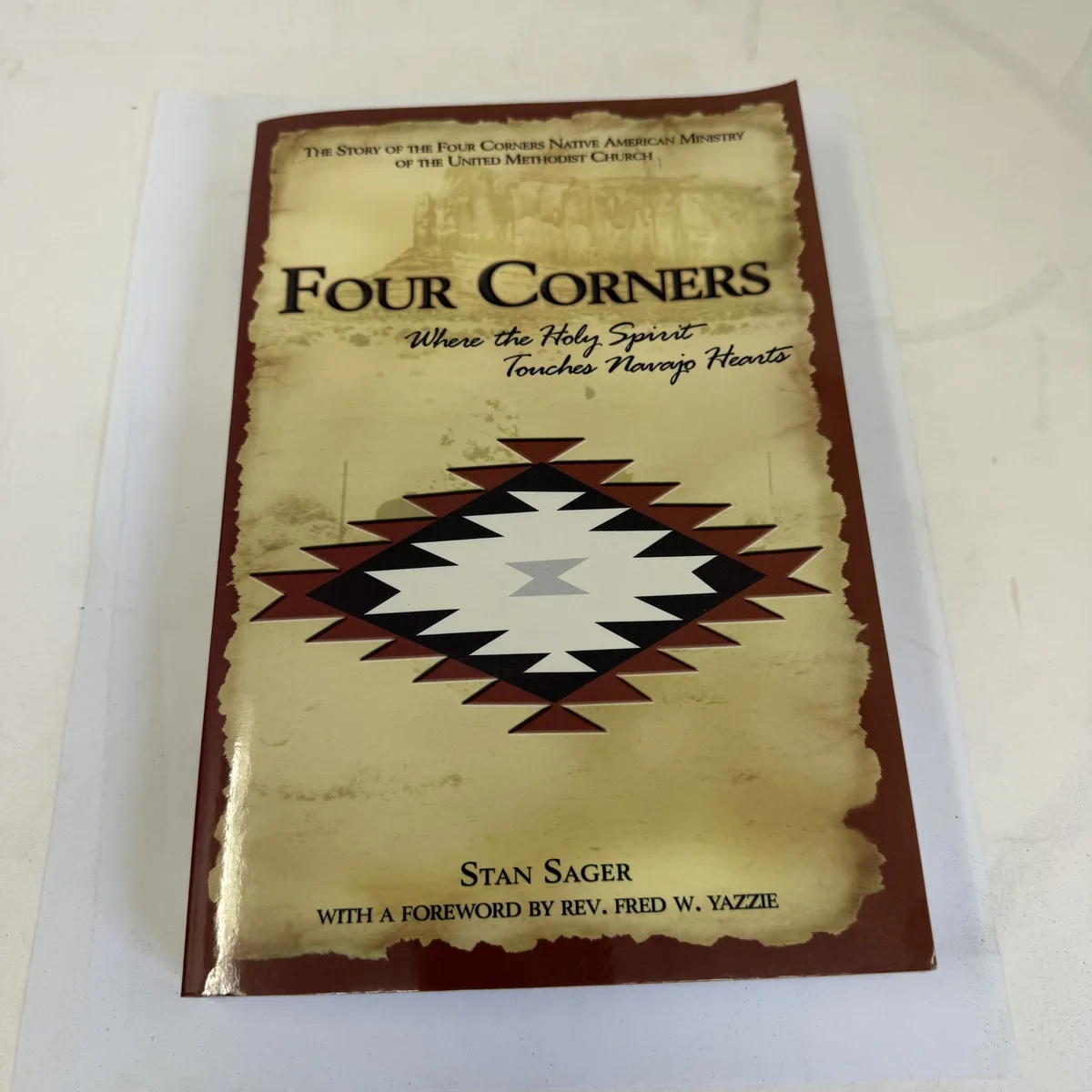
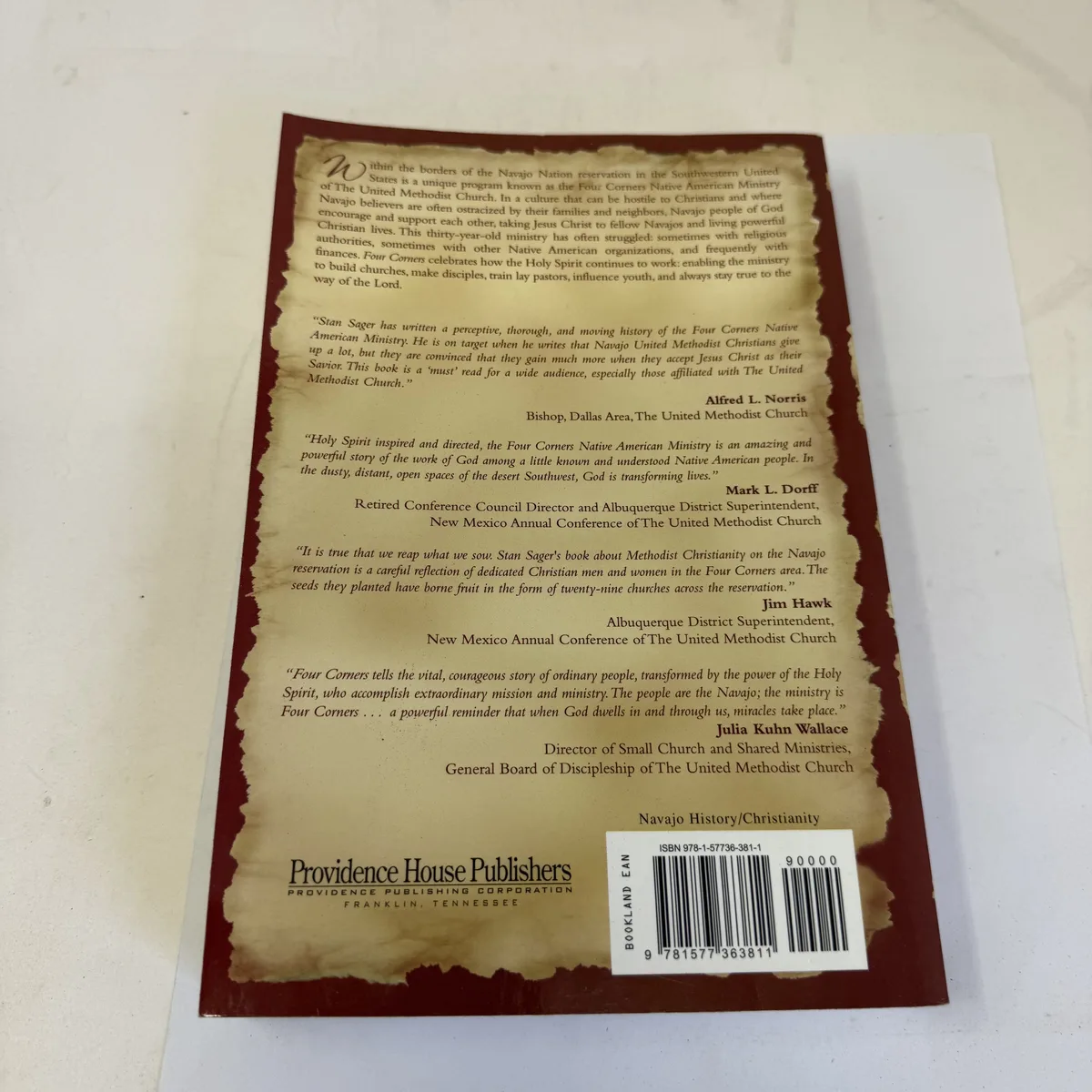
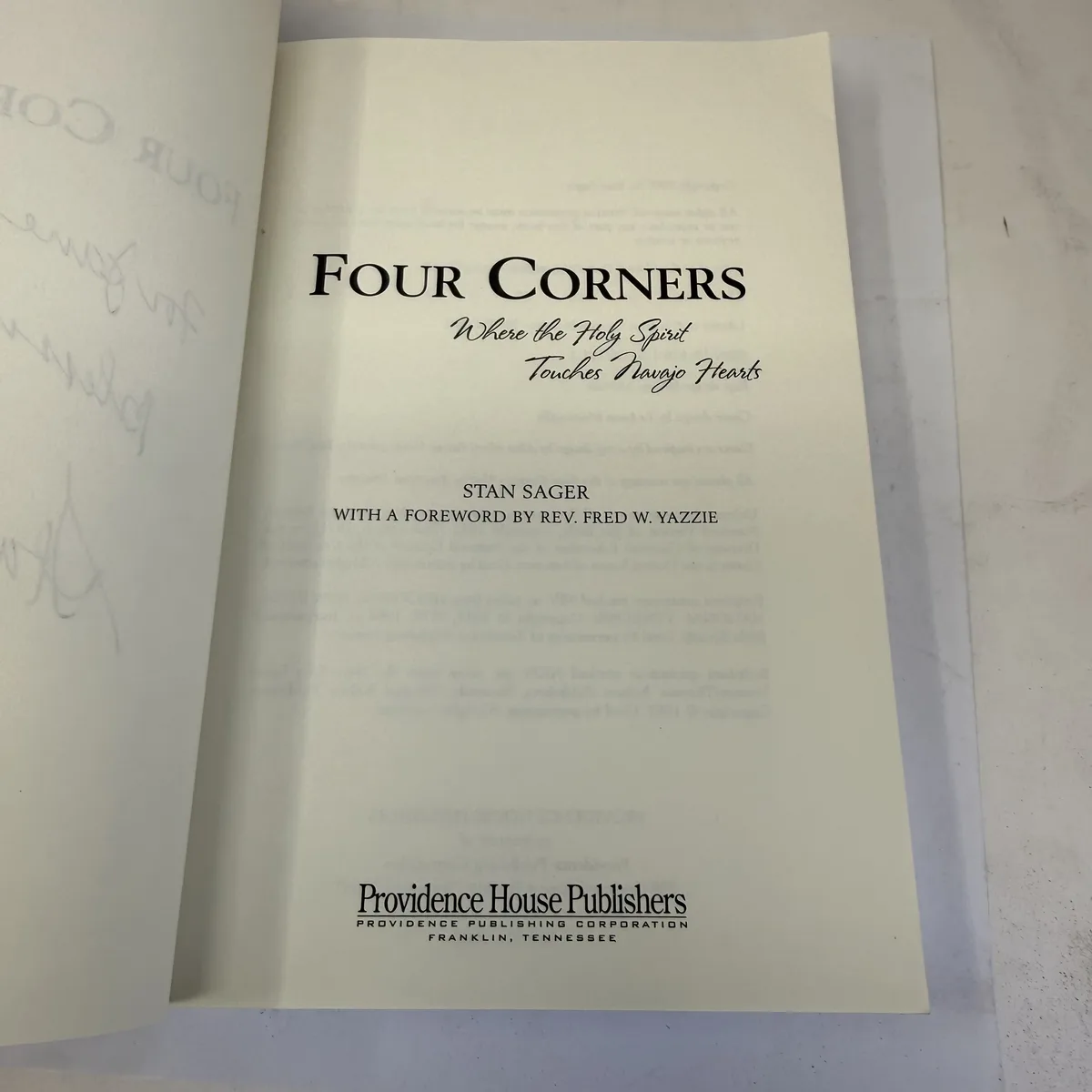
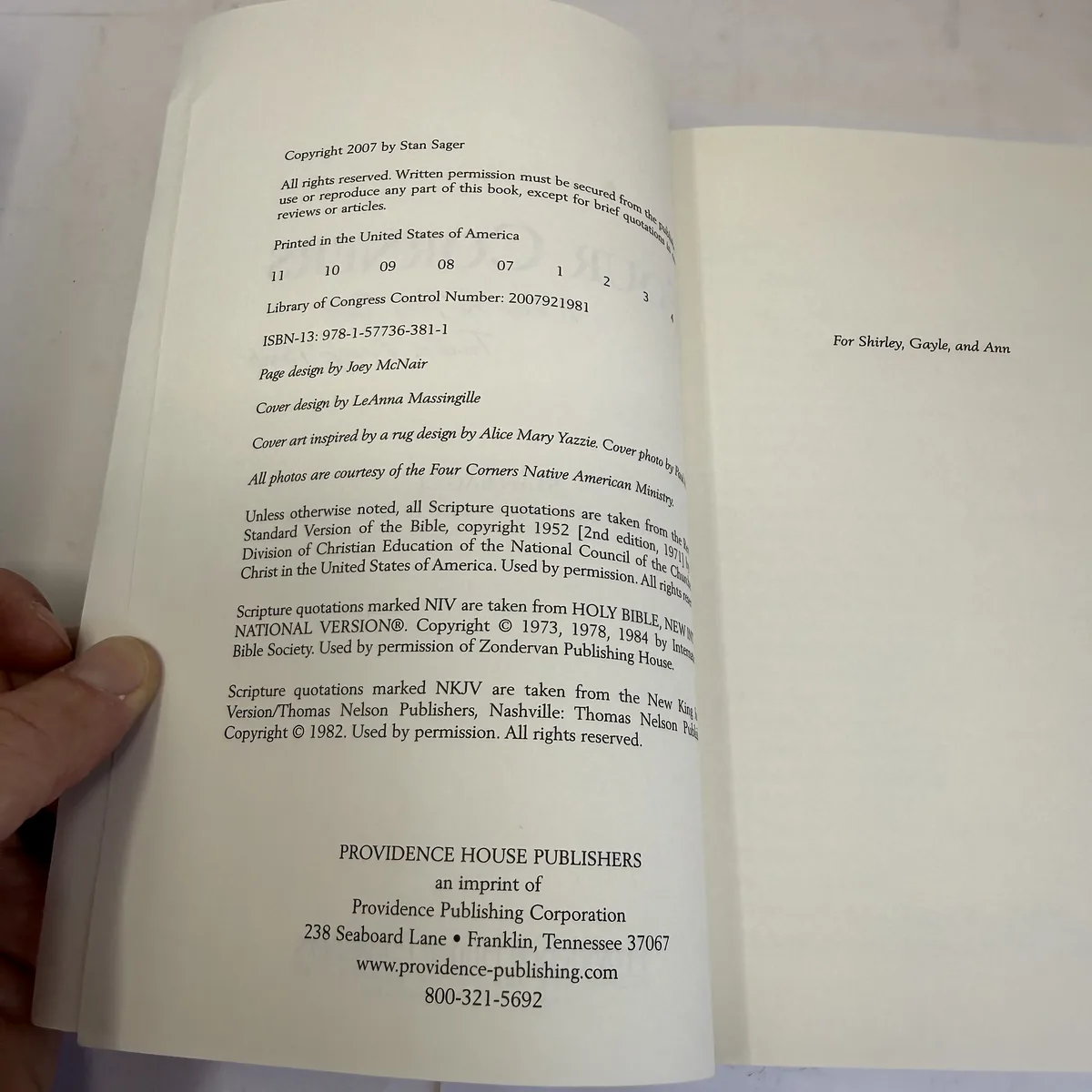
Points-of-issue: Sager Four Corners Providence House 2007. Providence House Publishers, Franklin, Tennessee imprint on title page. ISBN 978-1-57736-381-1. Copyright ©2007 by Stan Sager. Foreword by Rev. Fred W. Yazzie. Cover art credit: rug design by Alice Mary Yazzie (Navajo). All photos courtesy of Four Corners Native American Ministry. This signed copy inscribed “For Jane, Blessings, joy. Stan Sager.” A small-press regional religious history with limited retail distribution — most copies circulated through United Methodist congregational and conference channels in the Four Corners and Albuquerque districts. Signed copies with personal dedications confirm provenance within those church networks.
Three-Tier Collector Market
Tier 1 trophy acquisitions (mid-three-figure to low-four-figure or higher): Doris A. Paul The Navajo Code Talkers Dorrance 1973 first edition with original dust jacket (the first Code Talker book, subsidy-press limited print run, genuinely scarce after fifty-plus years — the foundational text of the entire Code Talker collecting field); Kenji Kawano Warriors: Navajo Code Talkers Northland Press 1990 first edition (the landmark photographic portraits, regional-press production, many subjects now deceased — an irreplaceable visual record); Sally McClain Navajo Weapon Books Beyond Borders 1994 first edition in fine condition with original dust jacket (the definitive comprehensive history, small New Mexico publisher, limited distribution); Chester Nez Code Talker Dutton 2011 first edition signed by Nez (Nez died June 4, 2014 — signature pool permanently closed, provenance documentation required, the only first-person memoir by one of the Original 29); Dorothy Cave Beyond Courage Yucca Tree Press 1992 first edition signed (the standard Bataan regimental history, small New Mexico press, limited distribution); Eva Jane Matson It Tolled for New Mexico 1945 first edition (wartime publication, extreme scarcity, the earliest published New Mexico Bataan account).
Tier 2 collector targets (low-to-mid three-figure): unsigned Chester Nez Code Talker Dutton 2011 first hardcover in fine condition; Samuel Holiday Under the Eagle University of Oklahoma Press 2013 first hardcover; Kawano Warriors expanded 2001 edition; Nathan Aaseng Navajo Code Talkers Walker 1992 first edition; Deanne Durrett Unsung Heroes 1998 first edition; Albert Smith Navajo Code Talker first edition; unsigned Cave Beyond Courage Yucca Tree Press 1992 first edition; unsigned McClain Navajo Weapon 1994 first edition in good-to-very-good condition; Code Talker Association commemorative publications and reunion programs from major events (1971 formation, 2001 Congressional Gold Medal ceremony).
Tier 3 working library (upper-two-figure to low-three-figure): subsequent printings of all above; Berkley trade paperback of Nez Code Talker; paperback reissues of McClain, Holiday, and Kawano; Joseph Bruchac Code Talker (Dial 2005 first — the young-adult novel); Navajo Nation Museum Code Talker exhibition catalogs and interpretive publications; National Museum of the Marine Corps Code Talker interpretive materials; Bataan Memorial publications and commemorative programs; New Mexico National Guard historical publications; Windtalkers film tie-in editions and novelization; Kirtland Air Force Base and Sandia National Laboratories historical publications; White Sands Missile Range historical publications; New Mexico Historical Review bound volumes containing Code Talker and Bataan articles; Smithsonian Institution Navajo Code Talker exhibition materials; Pentagon Navajo Code Talker exhibit publications.
Institutional Holdings
Four institutions anchor the Code Talker research landscape. The National Museum of the Marine Corps (Triangle, Virginia) holds the principal institutional collection of Code Talker military artifacts, documents, and memorabilia, including code-related materials and personal effects of Code Talker veterans. The Navajo Nation Museum (Window Rock, Arizona) maintains the cultural and community-centered collection of Code Talker materials, including oral-history recordings, photographs, personal papers, and the Code Talker Association archives. The National Archives (Washington, D.C.) holds the military records of the Code Talker program, including the original classification and declassification documents, the Marine Corps operational records, and the personnel files of the Code Talker Marines.
The New Mexico Military Institute (Roswell) and the New Mexico National Guard Museum (Santa Fe) hold the primary institutional collections for the Bataan and 200th Coast Artillery story, including regimental records, personal papers of veterans, and the documentary record of the POW experience. The Bataan Memorial Museum in Santa Fe preserves artifacts and documents related to the New Mexico Bataan experience. For the Manhattan Project dimension, Los Alamos Historical Museum and the Bradbury Science Museum at Los Alamos National Laboratory hold the essential interpretive collections, with primary documents at the National Archives and the Los Alamos National Laboratory archives.
NMLP Intake Position
Navajo Code Talker and New Mexico WWII books arrive in the NMLP donation stream with regularity given the deep personal connections between New Mexico families and the state's WWII history. The Code Talker story originates on the Navajo reservation that extends into northwestern New Mexico; the Bataan story devastated communities across the state; the Manhattan Project built Los Alamos and transformed Albuquerque; and the military installations created during the war became permanent employers and community anchors. Donor households in Albuquerque, Santa Fe, Gallup, Farmington, Las Cruces, Roswell, and communities across the state regularly contain WWII titles reflecting these connections.
Donor demographic concentration: Navajo Nation communities in New Mexico (Gallup, Farmington, Shiprock, Crownpoint, Tohatchi) with family connections to Code Talker veterans; families of 200th and 515th Coast Artillery veterans in Las Cruces, Deming, Carlsbad, Artesia, Santa Fe, and Albuquerque; Los Alamos and White Rock households with Manhattan Project and LANL connections; Kirtland AFB and Sandia Labs households in Albuquerque; retired military households across New Mexico; UNM and NMSU faculty and staff with military-history research libraries; New Mexico Historical Society members; American Legion and VFW post libraries being deaccessioned; estates of WWII veterans and their families.
NMLP routes Tier 1 trophy items (Paul Navajo Code Talkers 1973 Dorrance first, Kawano Warriors 1990 Northland first, McClain Navajo Weapon 1994 BBB first, signed Nez Code Talker Dutton first, Matson It Tolled 1945 first) through my sorting and resale process, where each one is researched individually before it's listed. Tier 2 trade firsts route through SellBooksABQ standard hand-sort with military-history and Native American-studies collector outreach. Tier 3 paperback reprints — funded through donor support — route to community literacy partners (New Mexico history and Native American history curriculum content), Little Free Library stocking around the Albuquerque metro, and adult literacy programs.
Have Navajo Code Talker or NM WWII Books to Donate?
Free Albuquerque-metro pickup — no minimum quantity, no condition limit. I accept everything from a signed Chester Nez first edition to a shelf of WWII paperbacks. Schedule online or call/text:
505-250-3804 (local)
External References
- Navajo Nation — tribal government, Window Rock AZ
- Navajo Nation Museum — Code Talker collections and cultural archive, Window Rock AZ
- National Museum of the Marine Corps — Code Talker military artifacts and exhibit, Triangle VA
- Wikipedia: Navajo Code Talkers
- Wikipedia: Chester Nez
- Wikipedia: Carl Gorman
- Wikipedia: Philip Johnston
- Wikipedia: Battle of Iwo Jima
- Wikipedia: Bataan Death March
- Wikipedia: 200th Coast Artillery Regiment
- Wikipedia: Manhattan Project
- Bataan Memorial Death March — annual commemorative march, White Sands Missile Range
Related on This Site
- Navajo Long Walk & Bosque Redondo — the 1864 forced removal and the Treaty of 1868; the deepest historical context for Navajo military service
- Trinity & the Atomic Age — Los Alamos, the Manhattan Project, and the atomic landscape of New Mexico
- Pueblo Sovereignty & Governance — the broader Native American political and cultural history of New Mexico
- Comanche & Apache History — the military history of the Southern Plains and the Southwest
- Navajo Weaving & Textiles — the Navajo material-culture tradition
- Tony Hillerman Canon — the literary Navajo Nation built on the post-WWII landscape
- Book Collecting Glossary — points-of-issue, edition terminology, condition grading