Archive entry · Inaugural exhibit, May 2026
New Mexico Colcha Embroidery — Susan H. Ellis
A specialty handbook on the traditional Hispanic embroidery technique of northern New Mexico. The kind of niche reference that never goes mass-market and never stops being needed.
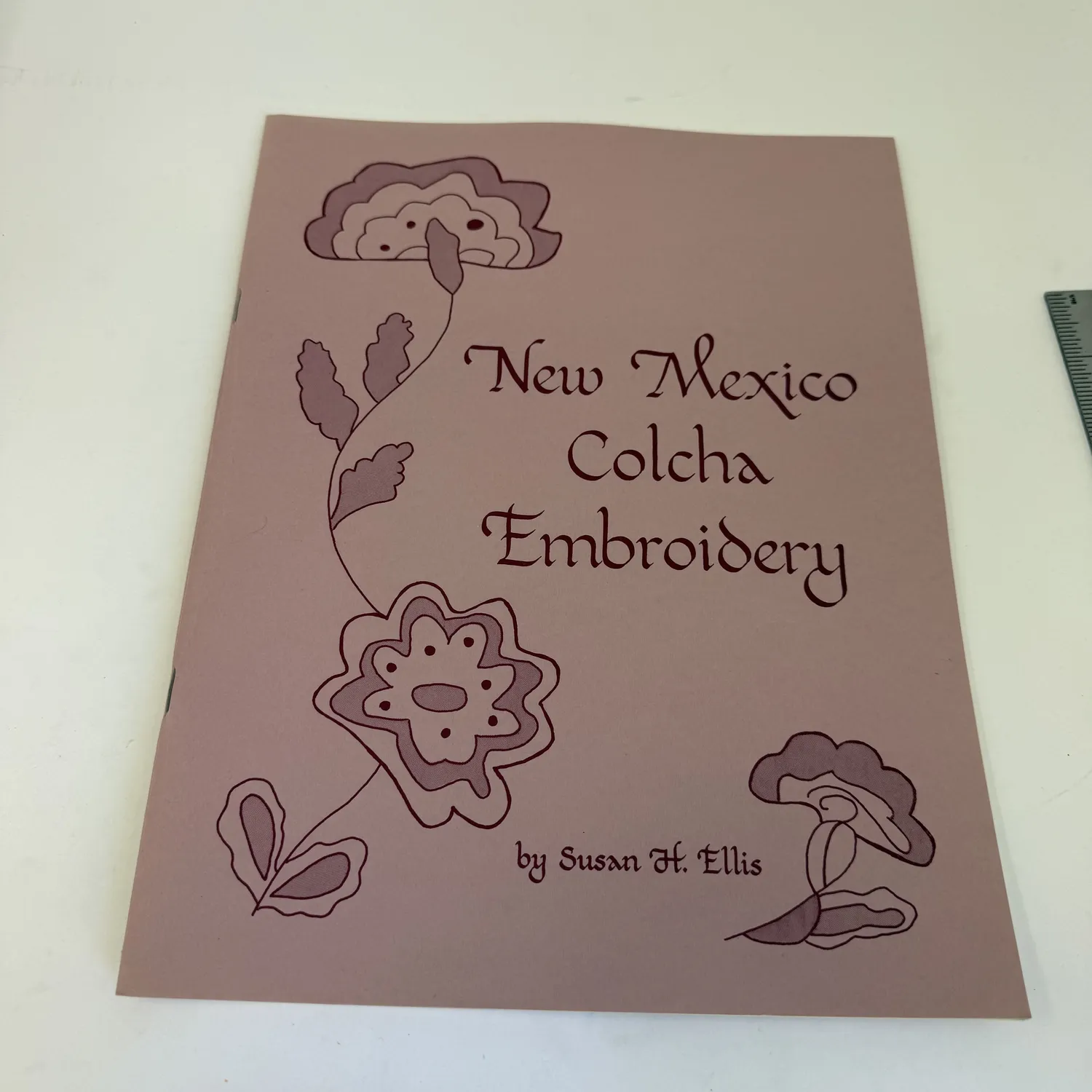
Catalog
What this book is
Colcha is the traditional Hispanic embroidery technique of northern New Mexico. It uses long couched stitches in dyed wool yarn, originally laid down on hand-loomed sabanilla — a coarse wool fabric woven on the same Spanish-colonial Río Grande loom traditions that produced the regional weavings still associated with northern NM villages like Truchas, Trampas, and Chimayó. The technique developed in northern New Mexico's relative isolation from European supply chains in the 18th and 19th centuries, when settlers couldn't get the silk floss used in Spanish embroidery and substituted local wool, and the resulting visual style became distinct enough that "colcha" today is a recognized regional folk-art category, with active practitioners and recognized masters.
Susan H. Ellis's handbook is one of a handful of in-print English-language references on the technique — alongside materials from the Spanish Colonial Arts Society, the Museum of International Folk Art, and a small specialty-craft press literature. The book is short, illustrated, and aimed at someone who actually wants to do colcha — not a coffee-table survey, but a working handbook with stitch diagrams, materials lists, and pattern sources.
Why it matters
This is the kind of book that does not exist in any quantity. Specialty craft handbooks have small print runs, get used in craft schools and folk-art programs, and disappear from the open market as fast as they enter it. Anyone who teaches colcha — and there are real teachers, on the Spanish Market circuit and at the Spanish Colonial Arts Society in Santa Fe — needs every copy that surfaces. So do textile artists working in the regional tradition who want a working reference, museum gift shops in Santa Fe and Taos that stock the title when copies come available, and the handful of cultural-heritage programs that train new colcha embroiderers.
From the donor's view of the room, the book is a nondescript pink paperback. From the perspective of the people who actually need it, it is in active circulation and any copy that surfaces is welcome. A library Friends sale would have moved this title fast, and a chain thrift would either misprice it dramatically high (if a knowledgeable sorter caught it) or pulp it in a few weeks (if not).
How it came in
Same Albuquerque donor pile as the rest of the inaugural exhibit. May 2026, library-said-sort-first scenario, donor didn't recognize the book.
Where it's going
This one routes to the specialty-craft channel. The most likely buyer is either a Santa Fe folk-art retailer who stocks NM regional craft references, a textile-arts teacher, or a private collector in the colcha tradition. Could also fit the Spanish Colonial Arts Society's reference shelf. I'll route to the most likely fit when I have time to make the call.
External references & authoritative sources
- WorldCat / OCLC: search.worldcat.org — NM Colcha Embroidery.
- Spanish Colonial Arts Society / Museum of Spanish Colonial Art: spanishcolonial.org (Santa Fe) — the principal NM cultural-heritage authority on colcha embroidery and Spanish-colonial textile traditions, host of the annual Spanish Market.
- International Folk Art Market: folkartmarket.org (Santa Fe).
- Museum of International Folk Art: internationalfolkart.org (Santa Fe).
- Tierra Wools / Los Ojos Handweavers: handweavers.com — northern NM weaving cooperative carrying on the regional tradition.
Citation (Chicago): Eldred, Josh. "New Mexico Colcha Embroidery — Susan H. Ellis." NMLP Donation Archive. Albuquerque: New Mexico Literacy Project, May 1, 2026. https://newmexicoliteracyproject.org/archive/nm-colcha-embroidery.
Sitting on a New Mexico library?
There may be more like this in your house than you realize. Free in-home pickup in metro Albuquerque. I'll handle the sorting.
Other entries in the inaugural exhibit
- Fiesta Fare — cover by Al Momaday, 1956
- The Memorial of Fray Alonso de Benavides, 1630
- Pueblo Indian Cookbook
- Irene Fisher — Bathtub and Silver Bullet
Related on this site
- Back to the archive index
- "The Library Wouldn't Take His Books Without Sorting" — the donor essay this entry came from.