Ancient City Press is the kind of publisher you learn to recognize by feel before you learn the ISBN prefix. The softcover books are modest in scale — typically five-and-a-half by eight-and-a-half inches, with card-stock covers featuring earth-toned photographs or line drawings of adobe walls, santos carvings, or petroglyph panels. You pull one from a shelf in an Albuquerque estate library and the spine reads "Ancient City Press, Santa Fe." The subject matter is Hispano village folklife, or Penitente Brotherhood history, or passive solar adobe design, or rock art along the upper Rio Grande. You are holding a product of one of the most distinctive small regional publishers in the American Southwest — a press that grew out of a bookshop on Santa Fe's plaza, documented the cultural traditions of New Mexico for forty-four years, and then quietly ceased operations when its founder died.
I handle Ancient City Press titles regularly through NMLP intake. They appear in estate libraries throughout the Albuquerque metro and northern New Mexico, often alongside books from Sunstone Press, the University of New Mexico Press, and the Museum of New Mexico Press. Ancient City Press books are not flashy. They were never meant for the national trade market. But they documented subjects — the Penitente Brotherhood, Hispano religious folk art, adobe building techniques, Kokopelli rock art imagery — that no major publisher was willing to cover in the depth these communities and scholars deserved. The press is now defunct. Every title is out of print. And that fixed-supply reality gives Ancient City Press first editions a collecting dynamic that differs fundamentally from titles by publishers that are still active. If you have Ancient City Press books to sell or donate, I handle any quantity through my free pickup service.
Last verified September 2026 · Original research by Josh Eldred
The Press and Its Origins
Ancient City Press first editions, including titles like La Casa Adobe, are increasingly collectible regional-press volumes sought by Southwest book collectors. Ancient City Press was founded by Robert F. Kadlec, a bookman originally from Chicago who operated the Ancient City Book Shop in Sena Plaza — a historic courtyard a block east of the Palace of the Governors on Santa Fe's main plaza. The bookshop specialized in out-of-print titles and Southwest paperbacks, and it became a gathering place for the scholars, writers, artists, and regional-history enthusiasts who formed the core of Santa Fe's intellectual community in the mid-twentieth century.
Kadlec launched his first publishing project in 1961 with architect William Lumpkins's La Casa Adobe, a pioneering work on adobe residential design that consisted primarily of thirty-three sketches and floor plans of adobe buildings with accompanying notes. That book established the two emphases that would define Ancient City Press for the next four decades: adobe architecture and the cultural traditions of Hispano New Mexico. The press's next titles grew directly out of the bookshop community — works on the Penitentes of the Southwest, Hispano village folklife, and the built landscape of northern New Mexico.
In the early 1980s, Mary Powell joined as co-owner and general manager, bringing administrative and design skills to the operation. Powell photographed items for several Ancient City Press titles and managed the business side of the press. Around the same time, folklorist and scholar Marta Weigle became closely associated with the press as both author and editorial influence, contributing seven books to the catalog and shaping its direction toward more rigorous scholarship on Hispano folklife, religious folk art, and the literary history of Santa Fe and Taos.
The press built steadily through the 1980s and 1990s, adding Native American cultural titles, Southwest rock art guides, children's books about Pueblo and Navajo life, and regional history to its catalog. Distribution centered on Santa Fe bookstores, museum gift shops (particularly the Museum of New Mexico shops on the plaza), and the tourist market that drove much of Santa Fe's book retail economy. Ancient City Press books were the titles visitors bought to take home from Santa Fe — accessible, well-produced introductions to the architecture, art, and cultural traditions they had come to see.
Robert F. Kadlec died in 2002. The press continued briefly but ceased operations around 2005, ending approximately forty-four years of continuous publishing. The catalog was not acquired by another publisher. The entire Ancient City Press backlist went out of print, and no titles have been reissued under the Ancient City Press imprint. This makes the press a closed system for collectors: the editions that exist are all there will ever be.
Subject Areas and Their Collecting Significance
Ancient City Press organized its catalog around five core subject areas, each with a distinct audience and a distinct collector profile. Understanding these categories helps when evaluating an Ancient City Press title's significance within the broader Southwest regional publishing world.
Adobe Architecture and Passive Solar Design
This was the founding emphasis of the press and remained one of its signature strengths throughout its existence. William Lumpkins's La Casa Adobe (1961) was the press's first book and remained continuously in print for decades. Lumpkins — a native New Mexican architect, artist, and early proponent of passive solar design who built his first passive solar house in Capitan, New Mexico, in 1935 — was a central figure in the Ancient City Press catalog. The press connected directly to the broader Southwest architecture collecting tradition, producing accessible guides to adobe construction and residential design that bridged the gap between academic architectural texts and coffee-table photography books.
Hispano Folklife and Religious Folk Art
This is the subject area where Ancient City Press made its most distinctive and enduring contribution. The press published foundational works on the Penitente Brotherhood of the Southwest, Hispano village traditions, santos (religious wood carvings), and the broader religious folk art of Hispanic New Mexico. Marta Weigle's Brothers of Light, Brothers of Blood: The Penitentes of the Southwest and Thomas J. Steele S.J.'s Santos and Saints: The Religious Folk Art of Hispanic New Mexico are landmark scholarly works that remain essential references for anyone studying the religious and cultural traditions of Hispano New Mexico. These titles connect to the broader Hispano literature collecting tradition.
Native American Culture and Rock Art
Ancient City Press built a notable list of titles on Southwest rock art and Native American cultural traditions. Dennis Slifer's work on Kokopelli imagery and rock art sites along the upper Rio Grande became one of the press's most widely distributed subject areas, appealing to both scholarly and popular audiences. The press also reprinted children's books by Ann Nolan Clark, the Newbery Medal-winning author who spent twenty-five years teaching Pueblo children near Santa Fe, including Sun Journey: A Story of Zuni Pueblo and other titles about Pueblo and Navajo life.
New Mexico Regional History
The press published works by Marc Simmons, the historian widely regarded as the dean of New Mexico history, including Taos to Tome: True Tales of Hispanic New Mexico and co-authored works on the Santa Fe Trail. These history titles sit alongside broader regional-interest works including Marian Meyer's Mary Donoho: New First Lady of the Santa Fe Trail (1991), which documented evidence that Mary Donoho had traveled the Santa Fe Trail thirteen years before Susan Magoffin, who had previously held the title. The Ancient City Press history catalog is smaller than that of UNM Press or Sunstone Press, but its titles tend toward the deeply regional and culturally specific.
Literary History and Cultural Guides
The press produced cultural guidebooks and literary histories that documented the creative communities of Santa Fe and Taos. Marta Weigle and Kyle Fiore's Santa Fe and Taos: The Writer's Era 1916–1941 (1982) examined the literary colony period when writers including Willa Cather, D.H. Lawrence, and Mary Austin were drawn to northern New Mexico. These cultural-history titles appeal to collectors interested in the intersection of Southwest literary history and the physical communities that produced it.
Key Titles in the Ancient City Press Catalog
The following titles represent the core of what collectors seek from the Ancient City Press catalog, organized by subject area. Not every Ancient City Press title is collected — the catalog includes dozens of regional-interest booklets and guides alongside the genuinely significant works. These are the titles that matter.
Hispano Folklife and Religious Art
- Brothers of Light, Brothers of Blood: The Penitentes of the Southwest by Marta Weigle (1976; revised edition 1988, ISBN 0-941270-58-0). The most complete and best-documented study of the Penitente Brotherhood, drawing on documentary sources and contemporary materials to trace the Brotherhood's contributions to community survival and spiritual life from their origins through the mid-twentieth century. This is the essential Ancient City Press scholarly title.
- Santos and Saints: The Religious Folk Art of Hispanic New Mexico by Thomas J. Steele S.J. (1982, ISBN 0-941270-12-2). A guide to New Mexican Spanish religious folk art that illustrates the santero's art and describes the traditional roles of santos in both religious and secular life. Steele, a Jesuit scholar at Regis University, published extensively on the religious art and culture of the American Southwest.
- Hispanic Arts and Ethnohistory in the Southwest: New Papers Inspired by the Work of E. Boyd edited by Marta Weigle with Claudia Larcombe and Samuel Larcombe (1983, ISBN 0-941270-13-0). Published as a Spanish Colonial Arts Society book, this collection features twenty-three contributors discussing E. Boyd's foundational work on traditional Hispanic arts and their preservation. Issued in both hardcover (ISBN 0-941270-14-9) and paperback.
- Weaving & Colcha from the Hispanic Southwest: Authentic Designs edited by William Wroth (1985, ISBN 0-941270-27-0). Over eighty drawings of New Mexican colonial embroidery and Hispanic weaving designs, plus plans for two looms, a spinning wheel, a warp roller, and a wool winder. Renderings were made by Carmen Espinosa, Nellie Dunton, Gisella Lacher, and others during the 1930s from authentic pieces in museums, private collections, and homes still in use. The drawings were retraced from mimeographed Trade and Industrial Bulletins distributed by the New Mexico State Department of Vocational Education to vocational schools in northern New Mexico. Also includes "Santos, A Brief History" by Charles Carrillo, the major New Mexico santero and scholar. Wroth, formerly of the Taylor Museum at the Colorado Springs Fine Arts Center, assembled three bulletins for reproduction: New Mexico Colonial Embroidery Bulletin (ca. rev. 1943), Vegetable Dyes Bulletin (ca. rev. 1935), and Weaving Bulletin (1937). First edition stated on copyright page. Cover design by Stephen Tongier, interior by Mary Powell. A key title bridging Ancient City Press's Hispano folklife and Hispano weaving collecting categories. See the photo gallery below for first-edition identification images from the NMLP collection.
- Echoes of the Flute by Lorenzo de Cordova, illustrated by Eliseo Rodriguez, with notes by Marta Weigle (1972, ISBN 0-941270-02-5). Reminiscences of the Penitentes from a Hispano community member, including revisions of pieces originally written under the New Mexico Writers Project. A sixty-two-page paperback that is one of the press's earliest titles.
- The Penitentes of the Southwest by Marta Weigle (1970, ISBN 0-941270-00-9). The press's earliest Weigle title and one of its foundational publications, establishing the Penitente subject area that would become Ancient City Press's most distinctive scholarly contribution.
Adobe Architecture
- La Casa Adobe by William Lumpkins (1961; reprinted 1986, ISBN 0-941270-34-3). The press's first book — thirty-three sketches and floor plans of adobe buildings with notes on how adobe plans were laid out. Continuously in print for decades. The 1961 first edition predates the ISBN system; later printings carry the 0-941270 prefix. First editions are identified by the 1961 copyright date, the absence of any reprint notation, and the physical characteristics of the original printing.
- The Essence of Santa Fe: From a Way of Life to a Style by Jerilou Hammett, Kingsley Hammett, and Peter Scholz. A cultural and architectural exploration of what makes Santa Fe's built environment distinctive, bridging architecture, history, and lifestyle.
Rock Art and Native American Culture
- Kokopelli: Fluteplayer Images in Rock Art by Dennis Slifer and James Duffield (1994, ISBN 0-941270-80-7). Describes more than three hundred rock art portraits of Kokopelli at sites throughout the Southwest, with a sampling of Native American stories about the mythical humpbacked fluteplayer. One of the press's most widely distributed titles.
- Sun Journey: A Story of Zuni Pueblo by Ann Nolan Clark, illustrated by Percy Tsisete Sandy (Ancient City Press reprint, ISBN 0-941270-49-1). The story of a young Zuni boy's return from boarding school and his preparations for the Shaloko ceremony. Clark won the 1953 Newbery Medal and spent decades teaching Pueblo children near Santa Fe.
Regional History
- Taos to Tome: True Tales of Hispanic New Mexico by Marc Simmons (Ancient City Press edition 1986, ISBN 0-941270-26-2). A collection of vignettes describing lesser-known incidents in Hispanic New Mexico. Originally published by Adobe Press in 1978; the Ancient City Press edition is a later printing.
- Following the Santa Fe Trail: A Guide for Modern Travelers by Marc Simmons and Hal Jackson (2001, ISBN 1-58096-011-1). A practical guide to the Trail by the acknowledged expert on the Santa Fe Trail, updated with Hal Jackson. Note that this title carries the ISBN prefix 1-58096 rather than the standard Ancient City Press 0-941270 prefix.
- Mary Donoho: New First Lady of the Santa Fe Trail by Marian Meyer (1991, ISBN 0-941270-69-6). Meyer's meticulous research documented that Mary Donoho traveled the Santa Fe Trail thirteen years before Susan Magoffin. Foreword by Marc Simmons.
- Santa Fe and Taos: The Writer's Era 1916–1941 by Marta Weigle and Kyle Fiore (1982, ISBN 0-941270-08-4). A study of the literary colony period in northern New Mexico. Powell photographed items for this volume.
- El Santuario de Chimayo by Stephen F. de Borhegyi (1970s, ISBN 0-941270-09-2). A historical account of the healing shrine north of Santa Fe, describing the chapel built in 1816, its healing earth, folk art, and associated legends. Published for the Spanish Colonial Arts Society.
First Edition Identification
Identifying Ancient City Press first editions requires attention to five elements: the copyright page statement, the ISBN prefix, the publisher name and address, the binding characteristics, and the physical production quality. Ancient City Press was a small regional publisher that did not adopt the elaborate number-line systems used by major trade houses. The identification conventions are straightforward but require knowing what to look for.
1. Copyright Page Conventions
Ancient City Press copyright pages typically carry the publisher name, a Santa Fe, New Mexico address, and a standard copyright notice. For first editions, look for either a direct "First edition" or "First printing" statement, or the absence of any indication of subsequent printings. Many Ancient City Press titles simply state the copyright year and publisher without an explicit edition statement — in these cases, the absence of "Second printing," "Revised edition," "Reprint," or any later printing notation is the key indicator. When a title went through multiple printings, later printings were sometimes noted on the copyright page, and the presence of such a notation immediately rules out a first edition. Some titles list a printing history on the copyright page showing successive printing dates — the first date in such a sequence corresponds to the first printing.
2. ISBN Prefix Identification
Ancient City Press used a single ISBN prefix throughout the ISBN era: 0-941270 (ISBN-13: 978-0-941270). This prefix appears on titles from the early 1970s onward. The press's earliest publications — including the original 1961 edition of La Casa Adobe and other titles from the 1960s — predate the adoption of the ISBN system in the United States and carry no ISBN at all. For these pre-ISBN titles, identification relies on the publisher name, copyright date, and physical characteristics. The 0-941270 prefix is the single fastest way to confirm an Ancient City Press title from the 1970s through the 2000s. Cross-reference the prefix against the authentication methodology to verify consistency between the ISBN, stated date, and physical book.
3. Publisher Name and Address
The copyright page and title page carry the publisher name as "Ancient City Press" with a Santa Fe, New Mexico address. The consistency of this address across the press's forty-four-year history is an advantage for identification: there is no series of address changes to track. The title page typically includes the publisher name below the title and author information. On some titles published in association with other organizations — such as the Spanish Colonial Arts Society — both the organizational affiliation and the Ancient City Press imprint appear.
4. Binding Types and Format
Ancient City Press published primarily in trade paperback format, with softcover wraps using card stock in the typical five-and-a-half-by-eight-and-a-half-inch format common to regional-interest publishers. A smaller number of titles were issued in hardcover with dust jackets, particularly the more substantial scholarly works and the titles with higher production values. When both formats exist for the same title — as with Hispanic Arts and Ethnohistory in the Southwest, which appeared in both hardcover and paperback — the hardcover first edition with original dust jacket is the more collected state. The softcover editions are far more common and represent the primary format for most Ancient City Press collecting.
5. Paper, Printing, and Production Quality
Ancient City Press books from the 1960s through the early 2000s were produced using conventional offset printing on standard trade-book paper stock. The text pages have the characteristic feel and cream-to-white color of offset book paper. Photographic illustrations — common in the architecture and rock art titles — range from serviceable to good quality, with black-and-white photographs predominating and occasional use of color plates in later titles. Line drawings and sketches appear frequently, particularly in the Lumpkins architecture titles and the Slifer rock art guides. The production values are consistent with a small regional press operating on modest budgets: the content is the strength, not the production.
Distinguishing Ancient City Press Originals from Reprints
Because Ancient City Press both originated titles and brought previously published works back into print, collectors need to understand three categories. First: Ancient City Press originals — titles first published by the press, where the Ancient City Press first edition is the true first edition. The Weigle Penitente works, the Steele santos study, and the Slifer rock art books are originals. Second: Ancient City Press reprints of titles from other publishers — titles that originally appeared elsewhere and were republished by Ancient City Press. Marc Simmons's Taos to Tome was originally published by Adobe Press in 1978 before the Ancient City Press edition appeared in 1986. Ann Nolan Clark's children's books were originally published by Viking and other major houses before Ancient City Press reprinted them. In these cases, the Ancient City Press edition is a reprint, not a true first edition in the bibliographic sense. Third: titles with complex printing histories — works like La Casa Adobe that went through multiple printings over decades. The 1961 first printing is the true first edition; the 1986 reprint with an ISBN is a later printing regardless of how the copyright page reads. The ISBN prefix is the fastest way to sort these distinctions: if the book carries a 0-941270 ISBN, it is an Ancient City Press edition. Cross-reference against the copyright date and the original publisher for titles that moved between houses.
The Most Collected Ancient City Press Titles
The collecting market for Ancient City Press titles is shaped by a fundamental reality: the press is defunct, and every title is permanently out of print. No new copies will be produced under this imprint. This fixed-supply dynamic means that the collector tiers described here are likely to remain stable or shift upward as copies enter institutional collections and leave private circulation.
Top Tier: The Essential Titles
- Signed copies by authors from closed signature pools. Marc Simmons (d. September 14, 2023) published several titles with Ancient City Press, and signed copies from his now-closed pool carry the strongest collector interest. These are documented in the closed signature pools reference. Marta Weigle (d. 2018), the press's most prolific author, is also a closed pool.
- Marta Weigle's Penitente scholarship. Brothers of Light, Brothers of Blood and The Penitentes of the Southwest are the foundational scholarly works on a subject that no other publisher covered with comparable depth.
- Thomas J. Steele S.J.'s Santos and Saints. The essential reference for New Mexican Spanish religious folk art collecting.
- La Casa Adobe (1961 first edition). The press's first book and a genuinely scarce pre-ISBN title. Condition is the determining factor for copies that surface.
Strong Collector Interest
- Dennis Slifer's rock art titles. Kokopelli: Fluteplayer Images in Rock Art is the most widely known Ancient City Press title in this category.
- Hispanic Arts and Ethnohistory in the Southwest — particularly the hardcover edition, which is significantly scarcer than the paperback.
- Santa Fe and Taos: The Writer's Era 1916–1941 — sought by collectors of Southwest literary history.
- Mary Donoho: New First Lady of the Santa Fe Trail — sought by Santa Fe Trail historians and collectors of New Mexico women's history.
Broader Catalog
The third tier encompasses the general-interest regional titles, the tourist-oriented guidebooks, and the children's book reprints. These have reading and reference value but limited individual collector significance. The exception is association copies with provenance linking them to the Santa Fe scholarly or artistic community, which can elevate any Ancient City Press title from the third tier to the first regardless of the title itself.
Condition and Grading Considerations
Ancient City Press books present condition challenges specific to their subject matter, format, and the environments in which they were used.
Architecture and design titles were working references for builders, architects, and homeowners engaged in adobe construction and renovation projects. Copies of La Casa Adobe and related architecture titles frequently show the signs of active use: dog-eared pages, pencil annotations on floor plans, and construction-site wear including dust, staining, and spine stress from being opened flat on a workbench. These condition issues reduce collector value but also constitute a form of provenance — an annotated copy used by a working adobe builder carries a different kind of interest than a pristine shelf copy.
Hispano folklife and religious art titles tend to survive in better condition because they were used as reference works by scholars, students, and collectors who treated them as library materials rather than field guides. Copies in institutional or academic settings may have library stamps, call-number labels, or other institutional markings that reduce collector value.
Southwest sun exposure is a consistent condition factor for any book that spent time on a shelf in New Mexico. Ancient City Press softcovers with pastel or earth-toned covers are particularly susceptible to sun fading along the spine. A faded spine on an otherwise clean copy is extremely common and should be expected rather than treated as a surprise. Covers that retain their original color depth are the exception in the New Mexico secondary market, and such copies carry a meaningful condition premium.
Because Ancient City Press books were primarily softcovers, spine creasing and cover wear are the most common condition issues across the catalog. The card-stock covers used by the press are durable but not immune to the flexing, rolling, and stacking that paperback books endure over decades. Clean, uncreased copies with flat, unworn covers are genuinely scarce for titles that entered the tourist-market distribution pipeline.
The Collecting Market for Ancient City Press
The market for Ancient City Press titles operates within three concentric circles. The innermost circle is scholars and collectors specifically interested in the subject areas the press covered — Penitente history, Hispano religious folk art, Southwest rock art, and adobe architecture. These buyers know the specific titles they want and evaluate copies based on edition, condition, and whether the copy is signed or carries meaningful provenance. The middle circle is collectors of Southwest regional publishing broadly, who seek Ancient City Press titles as part of comprehensive collections that include titles from Sunstone Press, UNM Press, Clear Light Publishers, and the other regional houses. The outer circle is the general used-book market, where Ancient City Press titles circulate as modestly priced regional-interest paperbacks without specific collector attention.
The defunct status of the press is the single most important market factor. Active publishers can reissue titles, print new editions, and flood the market with fresh supply. Ancient City Press cannot. The supply of first editions is fixed and shrinking as copies enter institutional collections, deteriorate, or are discarded by owners who do not recognize their significance. This dynamic is particularly pronounced for the pre-ISBN titles from the 1960s and the hardcover editions, which had smaller print runs to begin with.
Santa Fe remains the geographic center of the Ancient City Press secondary market. The surviving independent bookshops, the museum shops on and near the plaza, and the estate sales of longtime Santa Fe residents are the primary sources for copies entering the market. ABAA dealers specializing in Western Americana carry the more significant titles. Online platforms have expanded access to the catalog but have also made condition grading and edition verification more important, since photographs in online listings do not always reveal the difference between a first printing and a later reprint of the same title.
Ancient City Press in the Southwest Publishing Ecosystem
Ancient City Press occupied a specific and unreplicated position in the Southwest publishing world. It was not a university press with institutional funding and academic peer review. It was not a museum press publishing in connection with exhibition programs. It was not a fine press producing limited editions for the collector market. It was a small, commercially operated, founder-led regional publisher that emerged from a bookshop and built its catalog around the cultural traditions and built environment of New Mexico.
Its closest analogs in the Southwest publishing world were Sunstone Press (Santa Fe, founded 1971) and Clear Light Publishers (Santa Fe, founded 1981), both of which operated in overlapping territory. What distinguished Ancient City Press was its depth in Hispano folklife scholarship and its deep roots in the Sena Plaza bookshop community that produced its earliest titles. The press was more narrowly focused than Sunstone and more scholarly in its core catalog than Clear Light. That narrow focus is precisely what gives Ancient City Press titles their enduring value to specialists — the Weigle Penitente studies, the Steele santos reference, and the early rock art guides documented subjects that no other publisher addressed with comparable depth and access.
For collectors sorting through an estate library that contains titles from multiple Southwest publishers, the ISBN prefix is the fastest identification tool. A 0-941270 prefix is Ancient City Press. Cross-reference against the glossary and the edition-identification points covered above, and you can make an accurate assessment quickly. For authentication questions involving specific copies, the authentication methodology provides the systematic framework.
Photo Gallery: Weaving & Colcha from the Hispanic Southwest (1985 First Edition)
These photographs are from a first edition of Weaving & Colcha from the Hispanic Southwest: Authentic Designs, edited by William Wroth and published by Ancient City Press in 1985. I photographed this copy at my workspace. The images document the first-edition identification points — the copyright page with "First Edition" stated, the ISBN 0-941270-27-0, the Ancient City Press Santa Fe address — and the interior content that makes this title significant for collectors of Hispano weaving literature and santos scholarship. The book's inclusion of Charles Carrillo's "Santos, A Brief History" essay connects it directly to the santero folk art collecting tradition as well.
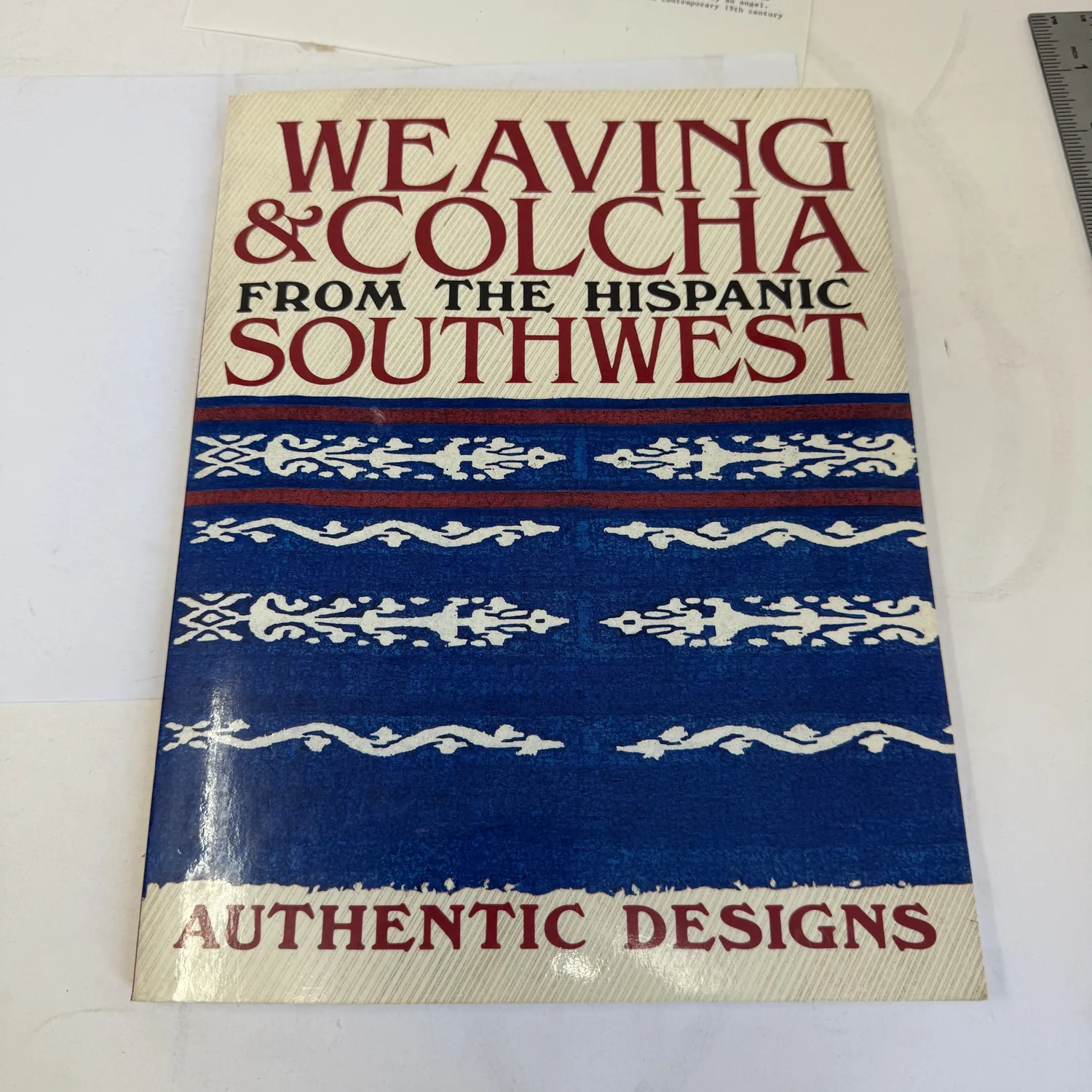
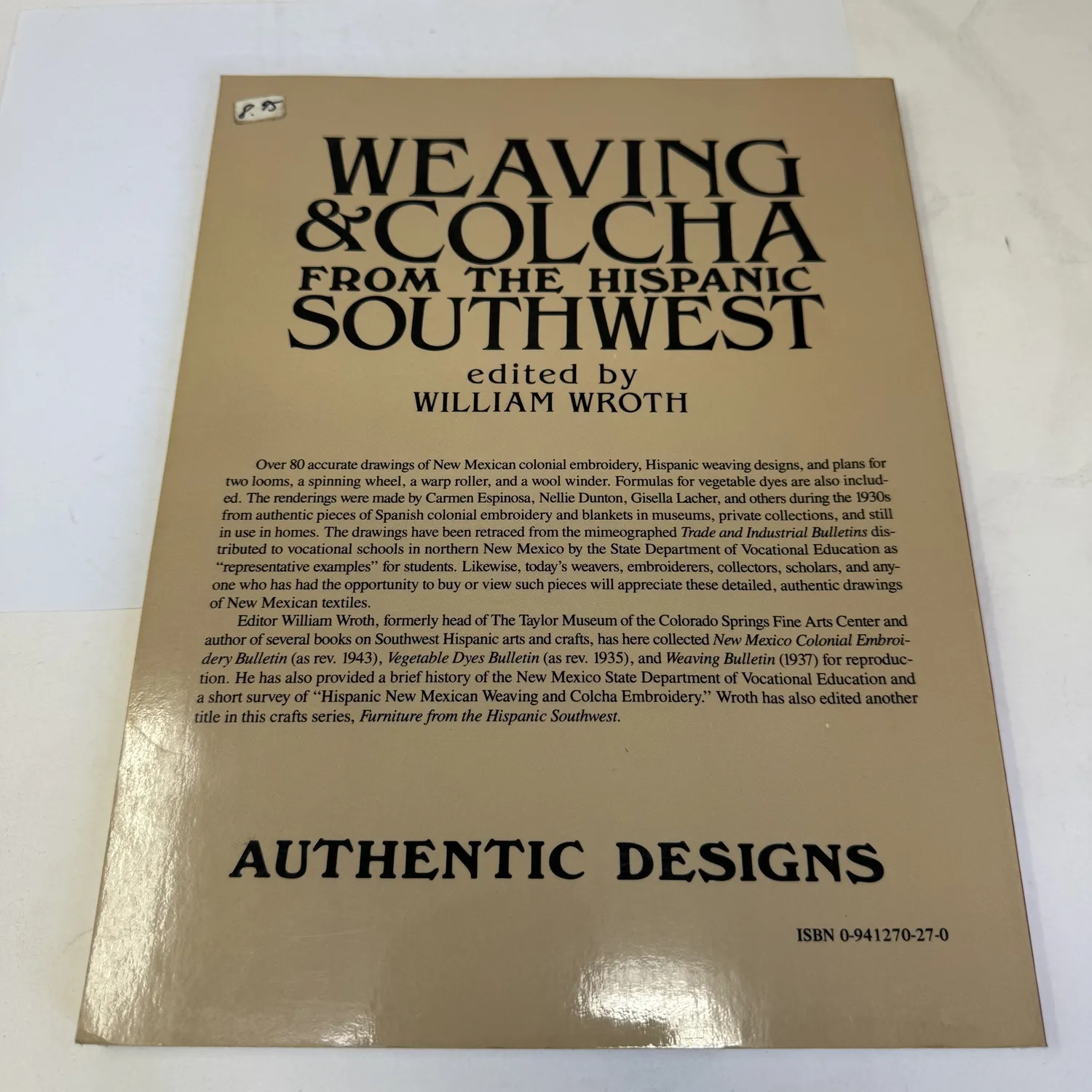
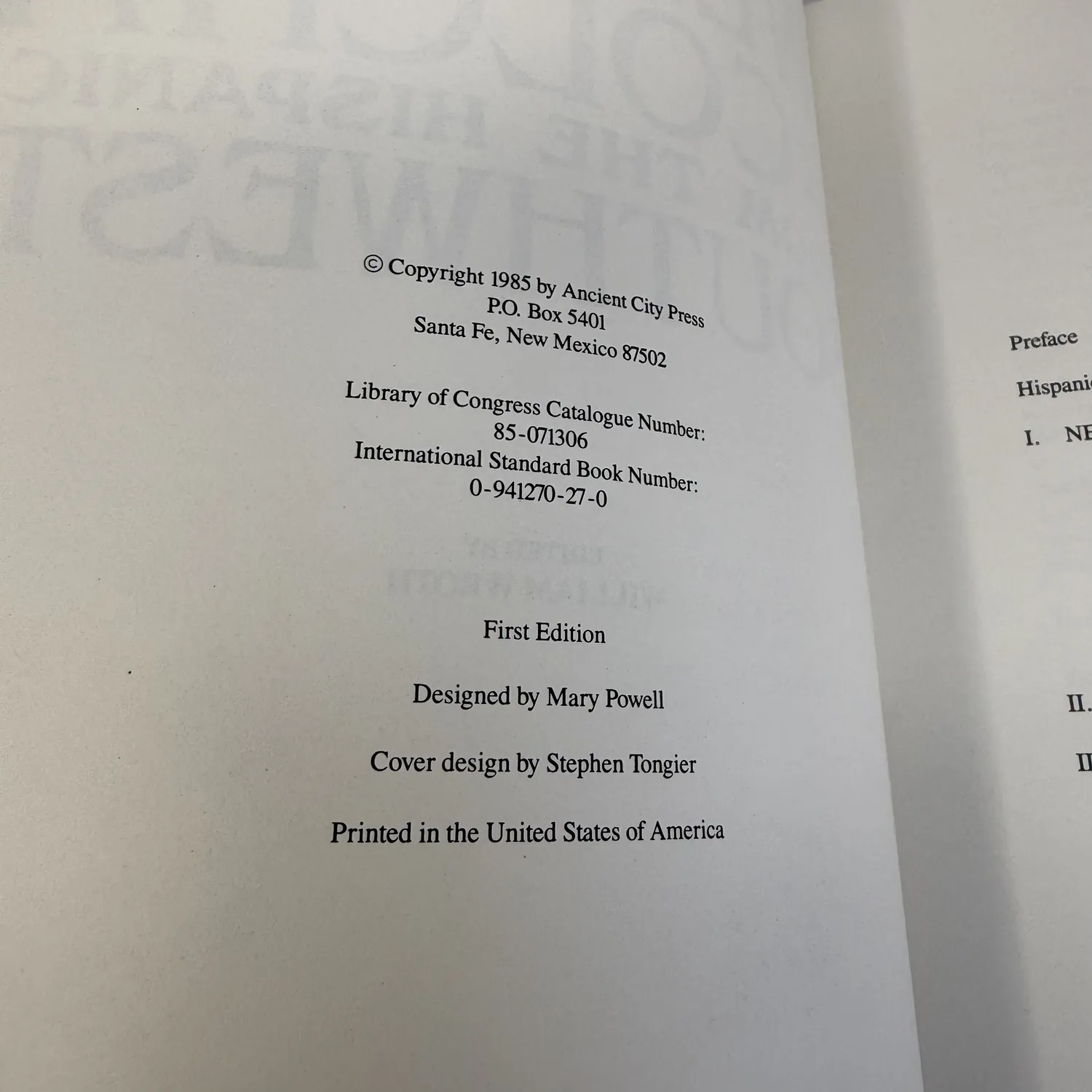
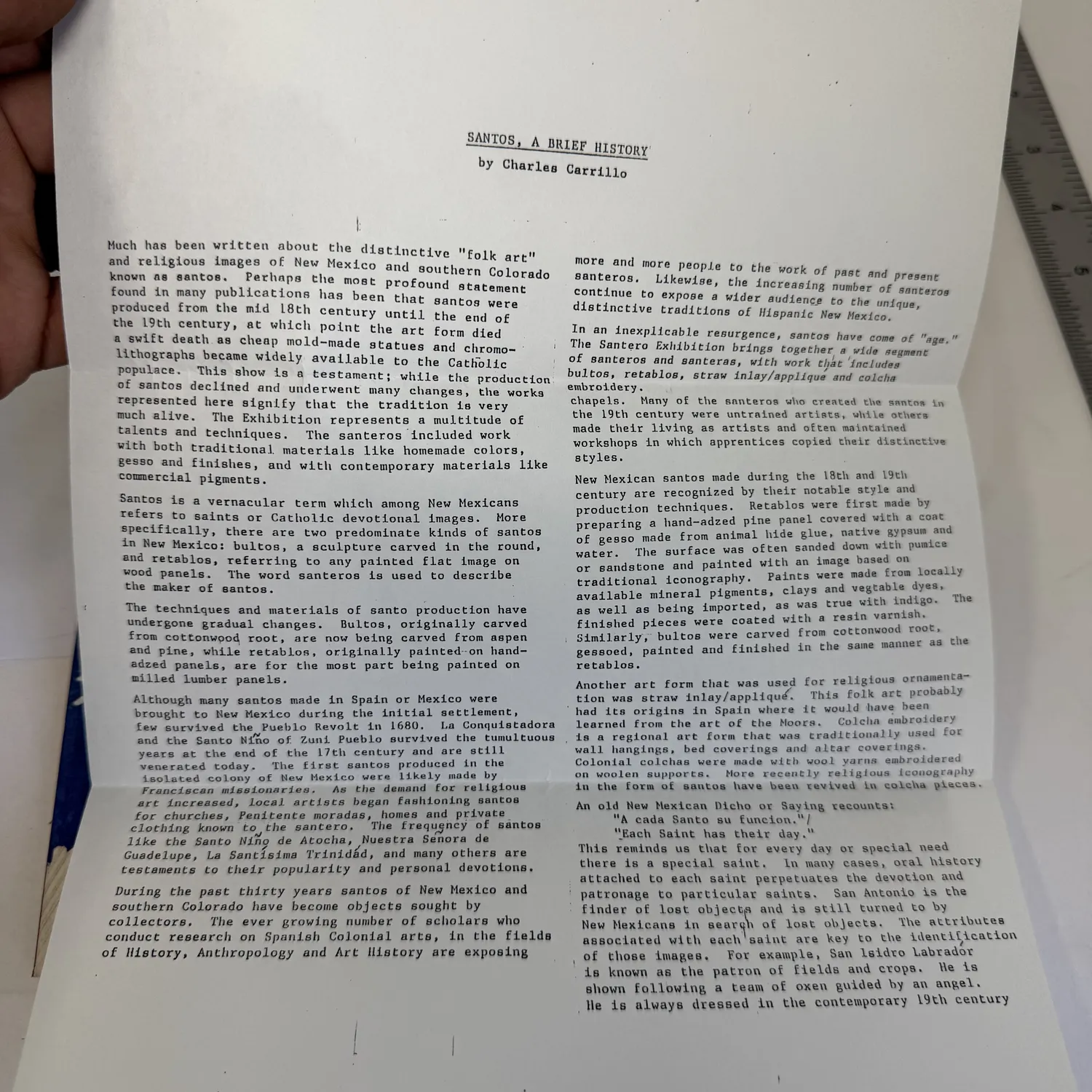
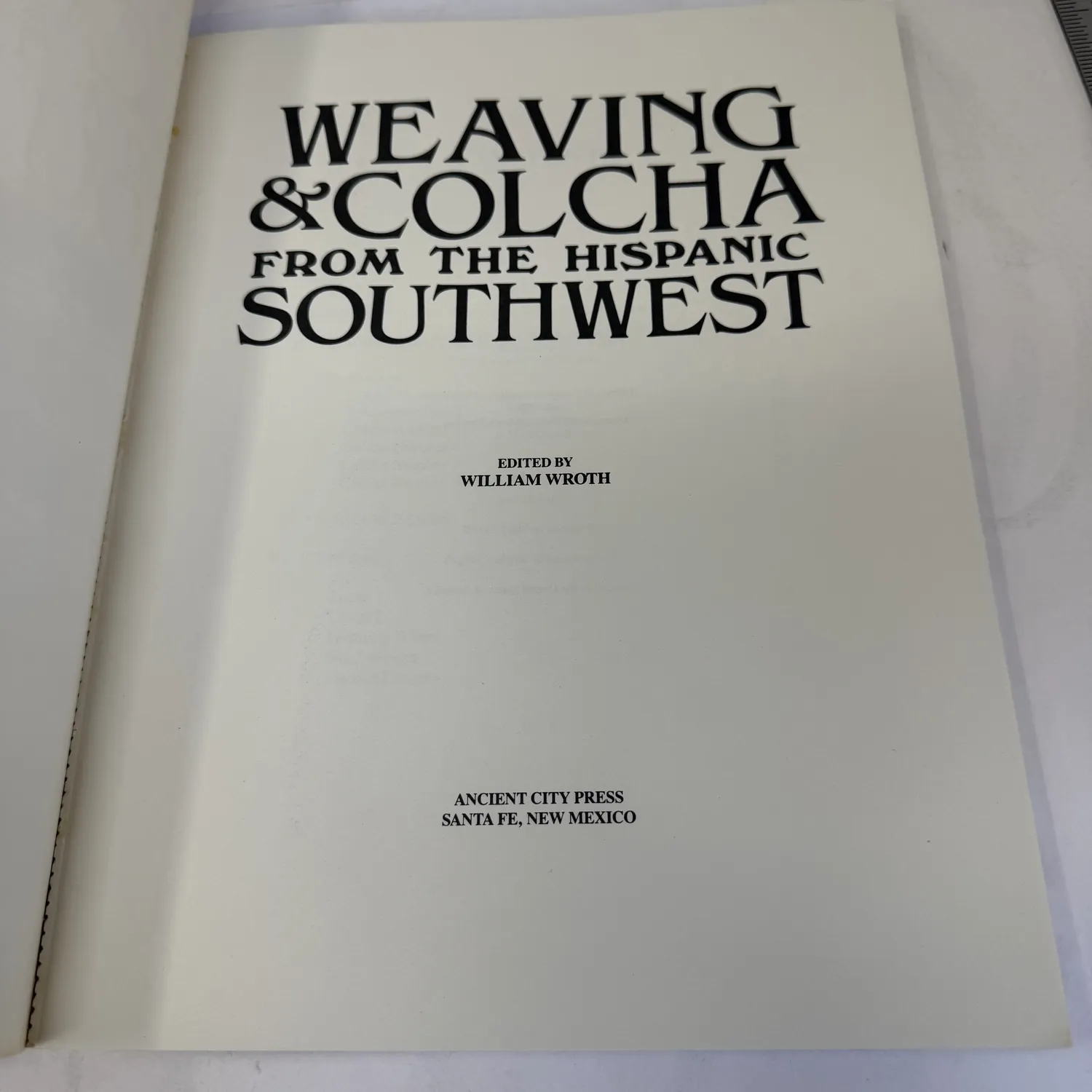
This title exemplifies what makes Ancient City Press significant to collectors of Hispano cultural material. The 1930s-era drawings preserved in this volume — retraced from mimeographed bulletins that were distributed to vocational schools in northern New Mexico and would otherwise have been lost — document colonial embroidery and weaving patterns that are primary-source material for textile scholars and Hispano arts collectors. The book sits at the intersection of three collecting categories on this site: the Hispano weaving literature, the santero folk art tradition through the Carrillo essay, and the Ancient City Press publisher catalog itself. First editions with the explicit "First Edition" statement on the copyright page and clean, uncreased covers are the collector target.
Cite This Guide
Eldred, J. (May 2026). Ancient City Press First Editions — The Definitive Collector's Identification Guide. New Mexico Literacy Project.
https://newmexicoliteracyproject.org/ancient-city-press-first-editions-collecting
Content is original research by Josh Eldred. Licensed under CC BY 4.0. Cite with attribution.