A donor story · Albuquerque, May 2026
The library wouldn’t take his books without sorting first. Look what he donated.
An Albuquerque man tried to give his books to the library. They told him they only wanted “the good ones” — and that he’d have to sort first. He didn’t know which were good. He brought the whole pile to me.
Free · Any condition · No sorting · I do the loading
He told me the story sitting on the bumper of his car while I loaded boxes. He’d called the library, called a Friends-of-the-Library book sale, called somebody else — the details didn’t matter to him anymore. Somewhere in the chain, a real person had told him a reasonable, accurate sentence: I can take some of these. The good ones. Could you sort them first and bring those?
He didn’t know which were good.
That’s the part he kept coming back to. He wasn’t mad at the library. He understood — vaguely — that they had limited shelf space, volunteers, a sale every few months, and a need to keep what would actually move. He just couldn’t do the curation work. He’d already done curation work. He’d already gone through the house, the garage, the hall closet. He’d already decided the books had to leave. The last thing he had energy for was a second triage: which of these books are worthy of the library, and which ones aren’t.
He didn’t know which were good. He just wanted them gone, and he wanted them to go somewhere they’d be read.
So he called me, and I came over, and I took the whole pile without asking him a single sorting question. He thanked me — not for the lift, not for the time saved, but for the relief of not being asked to be a curator on a Tuesday afternoon.
Then I got the boxes back to the warehouse and started going through them. Here’s what was in there.
Last verified May 2026 · Original research by Josh Eldred
What he handed me
I’m showing these because every one of them is the kind of book a library Friends sale would have been thrilled to put on a table. They are also the exact kind of books a non-collector would not know to flag. They look unassuming. Some are paperback. One has gold script on a black cover that says 1630 and not much else. They were sitting in the same boxes as gardening paperbacks and a beat-up dictionary.
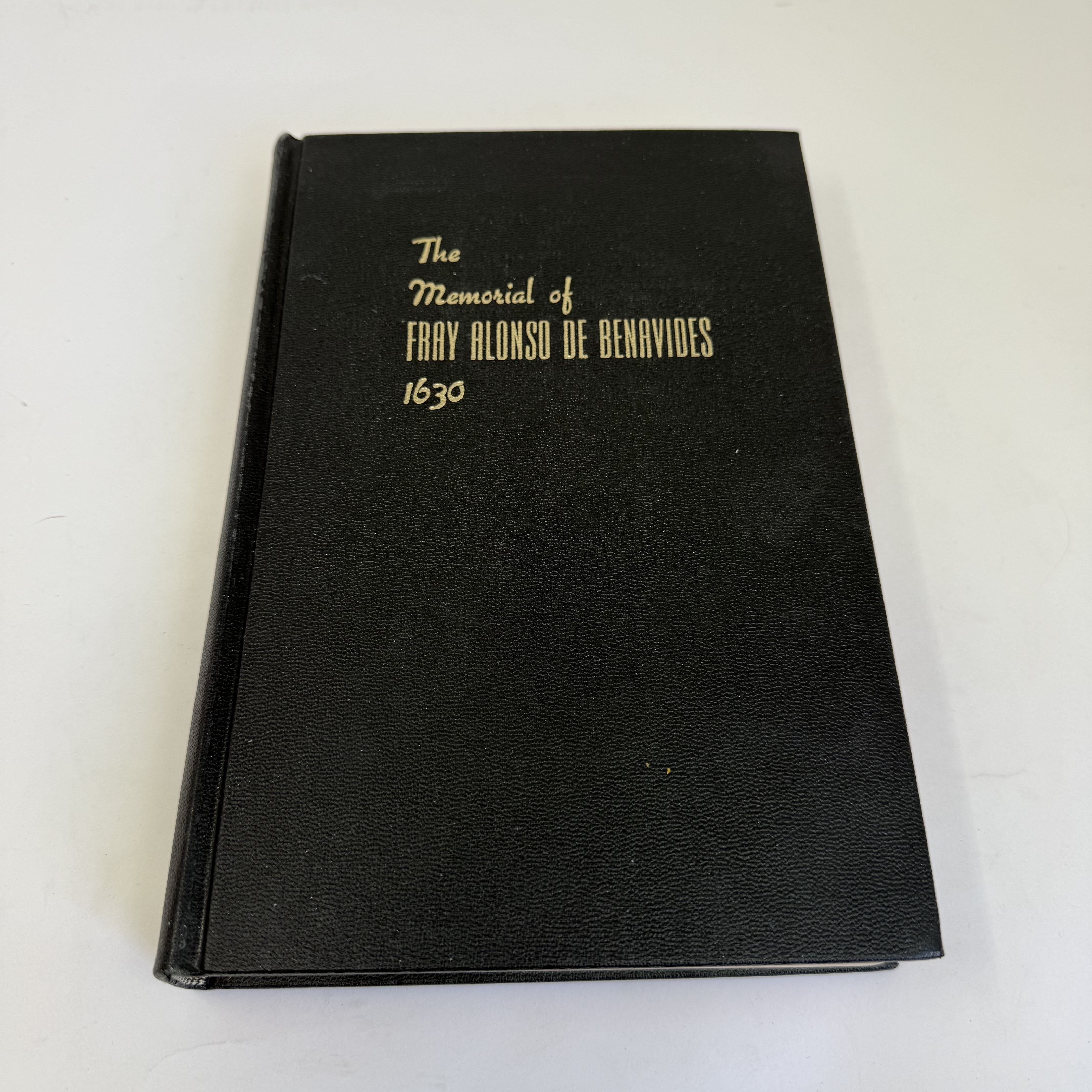
The Memorial of Fray Alonso de Benavides, 1630
A scholarly reprint of one of the foundational documents of early-colonial New Mexico. Benavides was the Franciscan custodio of New Mexico in the 1620s, and his 1630 Memorial to King Philip IV is the source historians still cite when they describe the Pueblo missions, the demographics of the province, and the spiritual claims being made about it back to the Spanish crown. If you teach a 200-level New Mexico history course, this is on the syllabus. The reading public mostly doesn’t know it exists. A library Friends sale would have moved it to a UNM history grad student in fifteen minutes.
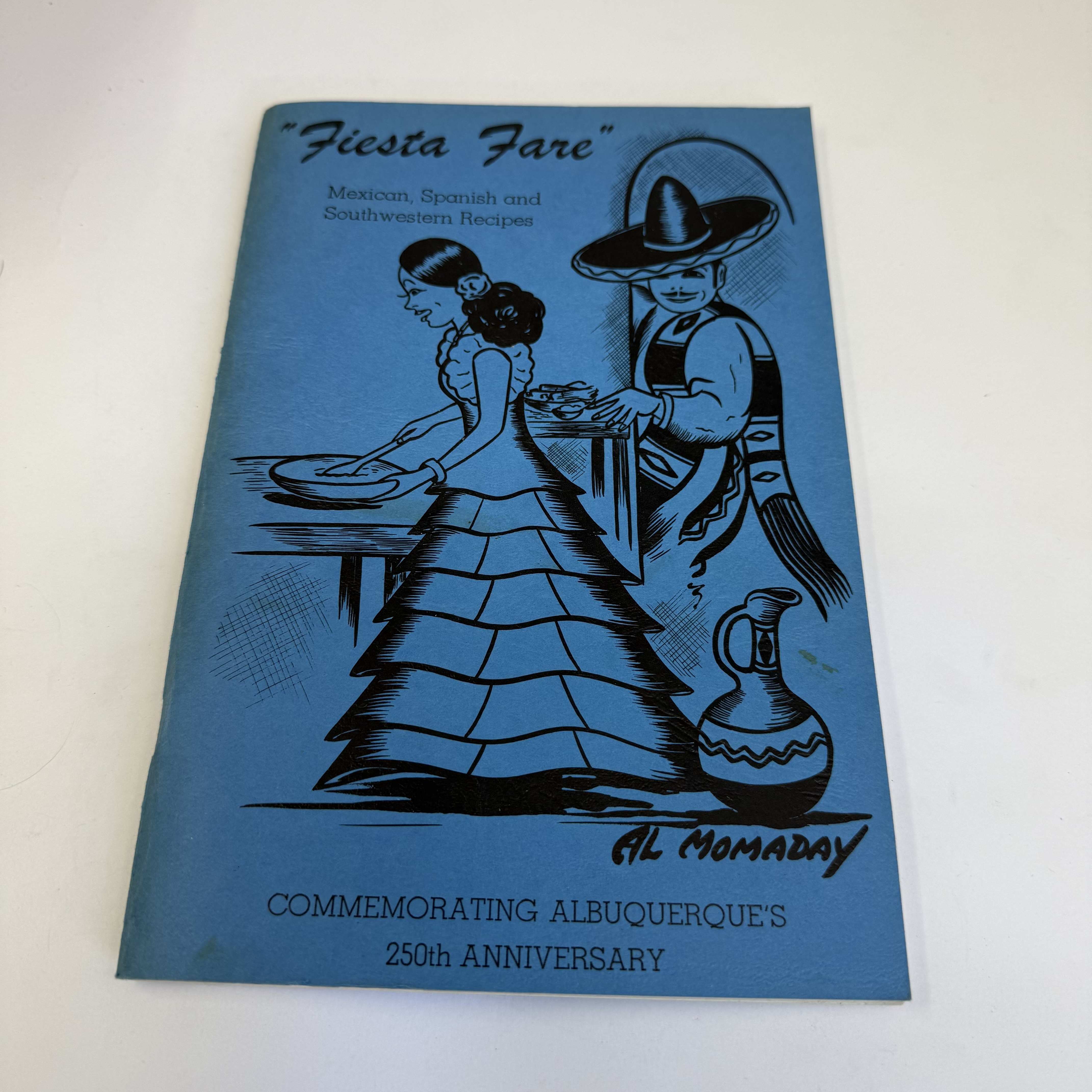
Fiesta Fare — cover by Al Momaday, 1956
This one stopped me. It’s a small commemorative cookbook published for Albuquerque’s 250th anniversary — the city was founded in 1706, so the date is 1956. The cover art is signed Al Momaday. That’s Alfred Morris Momaday, Kiowa artist, and the father of N. Scott Momaday, who in 1969 won the Pulitzer Prize for House Made of Dawn and is one of the most consequential Native American writers of the 20th century. I have a whole pillar guide on N. Scott Momaday first editions. His father’s art on the cover of a 1956 Albuquerque civic cookbook is a triple-collectible: regional ephemera, Native American art history, and Momaday-family provenance. This is exactly the kind of thing university special-collections librarians flag when they see it.
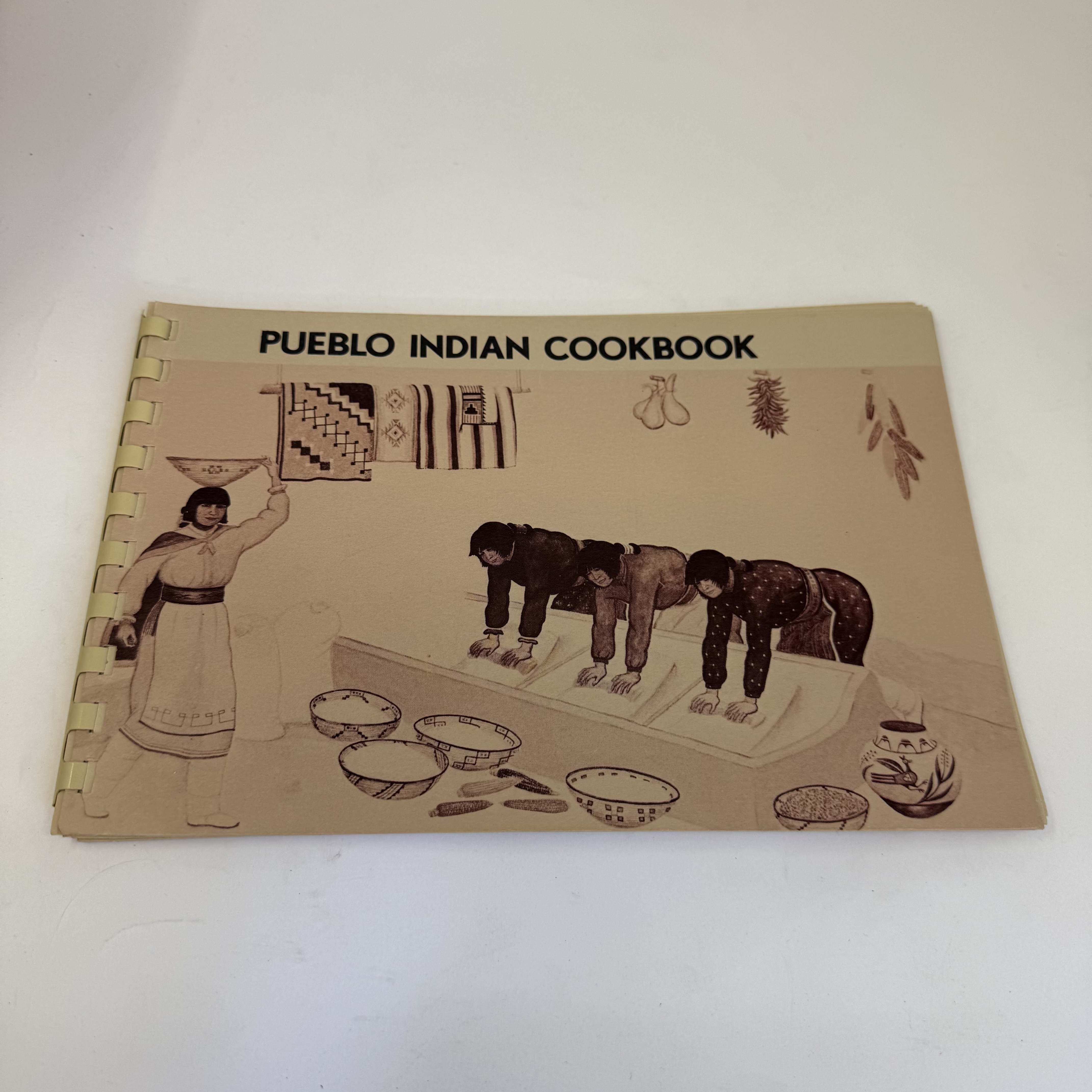
Pueblo Indian Cookbook
A perennial regional title, originally compiled by Phyllis Hughes and published by the Museum of New Mexico Press. It has been in print for more than fifty years and is still bought every week in Santa Fe and Old Town gift shops. There is no version of this book the library would not have wanted on a sale table. It moves on day one.
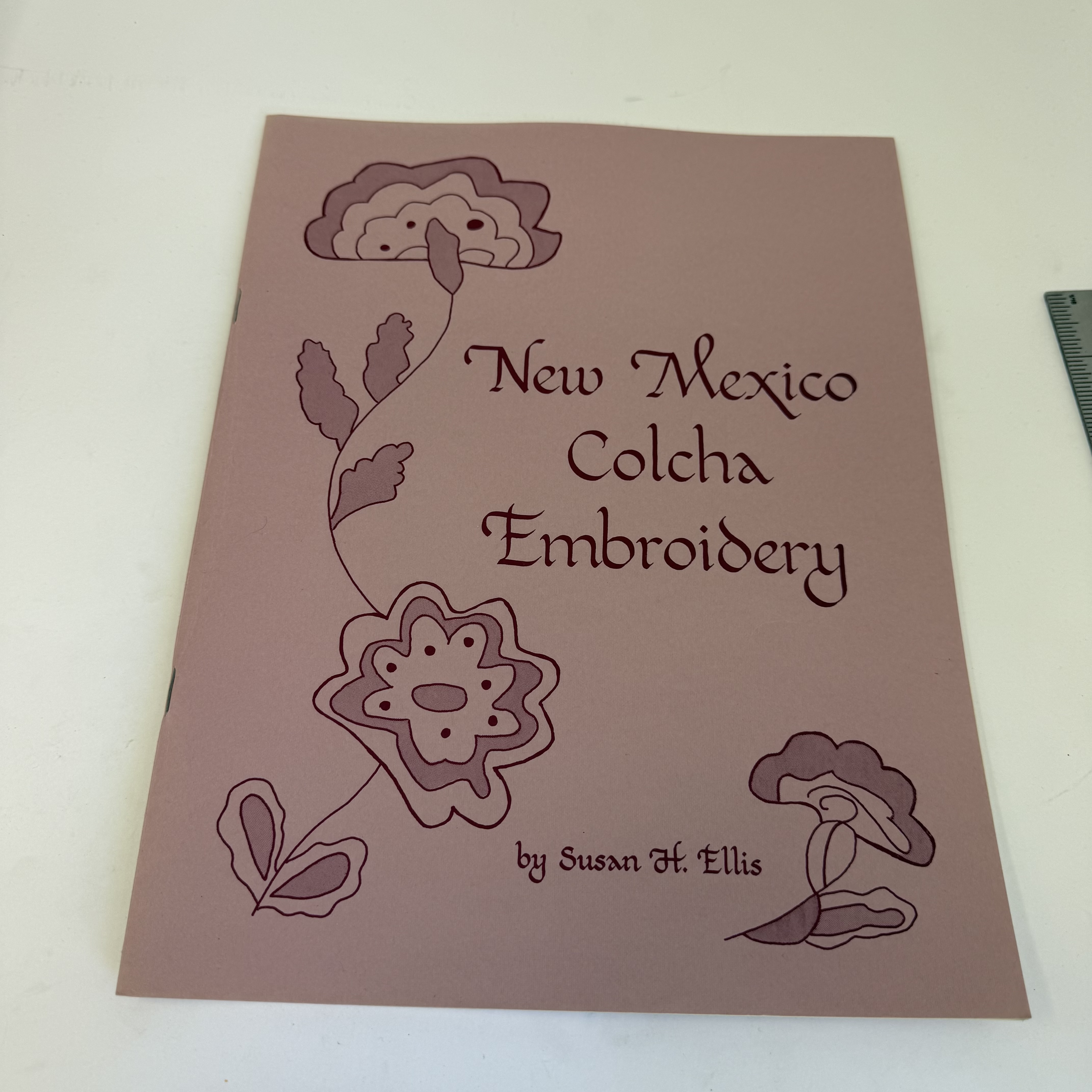
New Mexico Colcha Embroidery, Susan H. Ellis
Colcha is the traditional Hispanic embroidery technique of northern New Mexico — long couched stitches in wool, originally on hand-loomed sabanilla. There are not many in-print English-language references on it. This little book is one. Niche, yes — but textile artists, museum gift shops, and historic-trades schools buy every copy that surfaces. It’s the kind of book that disappears off a Friends sale table inside an hour.
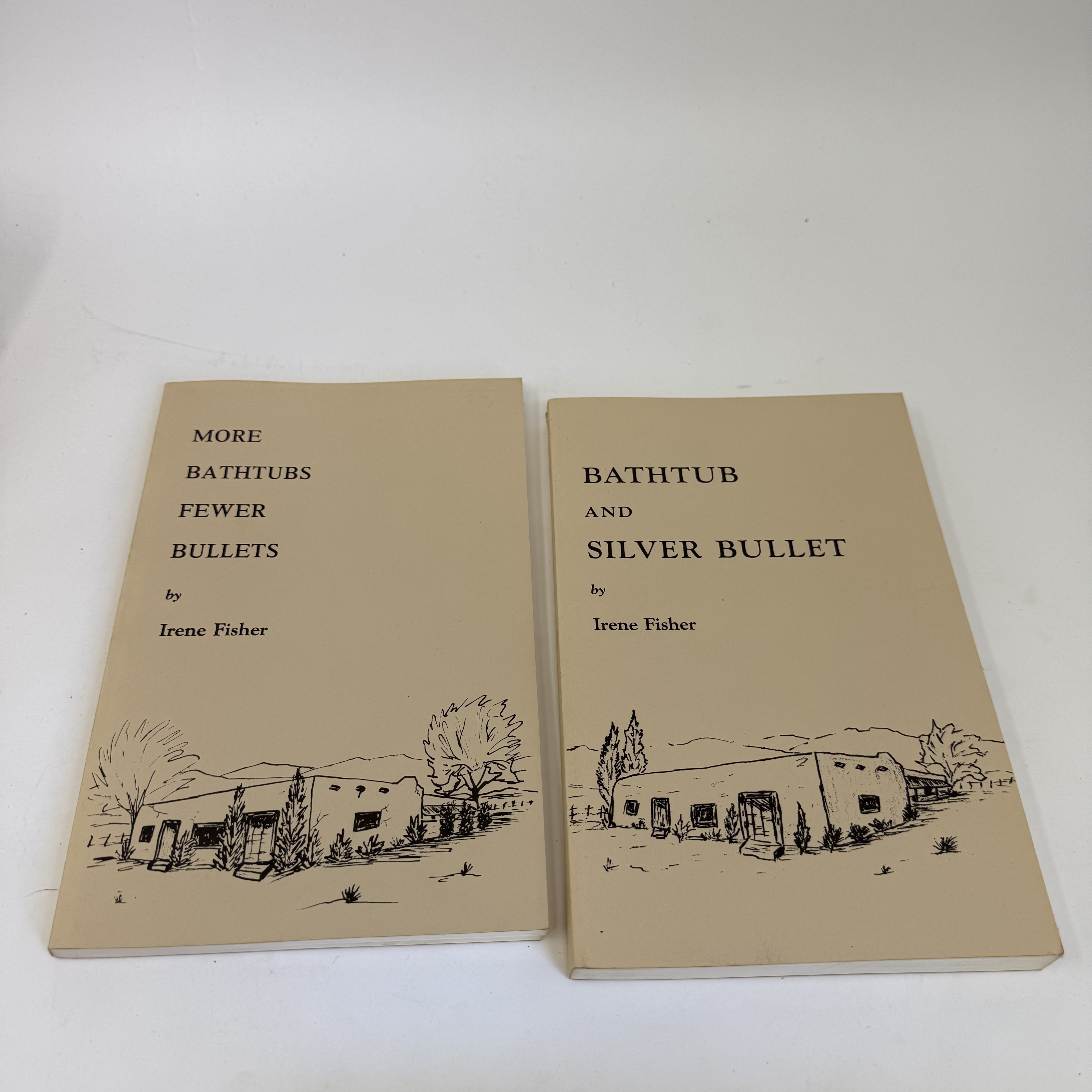
Irene Fisher — Bathtub and Silver Bullet + More Bathtubs Fewer Bullets
A pair of NM frontier-era memoir / regional history paperbacks. Local interest, small-press, the kind of title that doesn’t break out nationally but is read carefully by people who care about how this place actually got built. Friends sales love them because every NM history collector knows the cover. The donor had no reason to recognize them. They look like generic paperbacks from across the room.
Five books, sitting in the same box as paperbacks of The Da Vinci Code and a 1990 Triple-A road atlas. From the donor’s side of the room, indistinguishable. From mine, four hundred years of New Mexico cultural history.
The “good ones” problem
Here is the part I want to be careful about, because the library staff who told this man to sort were not wrong, and they weren’t being unkind. The Friends-of-the-Albuquerque-Public-Library book sales are a real and useful operation. They raise money for the library system. They pay for programming. The volunteers who run them are doing real work, and they have real constraints — finite shelf space, finite hours, a sale every few months, no warehouse to absorb a four-hundred-book overflow on a random Tuesday.
So when they ask a donor to sort first, that is a rational operational request. Bring us the curated 30%. Recycle or donate the rest somewhere else.
The trouble with that request — the part nobody on the library side fully sees — is that it pushes the curation cost back onto a donor who, by the time they’re calling, has already done all the curation they have left in them. The 80-year-old going through a husband’s study has already triaged. The middle-aged son standing in his late mother’s living room has already triaged. The woman moving who told me she just wanted the books to go to someone who would read them has already triaged. The man on the bumper of the car has already triaged.
Now I am asking him to triage again, to a finer level of granularity, against a rubric only the staff understands. Which 1956 cookbook is collectible, and which is not. Which Spanish colonial document is foundational, and which is throwaway. Which hardcover is the original printing, and which is a 1990s book-club edition.
That is not knowable from the donor’s side of the room. So they do one of three things: they sort by whether the cover looks “nice” (which throws away the Benavides Memorial because the cover is plain), they sort by what they’ve heard of (which throws away the Colcha embroidery handbook because nobody’s heard of it), or they don’t sort and they don’t bring the books at all. They put them by the curb. They take them to the dump. They tell themselves nobody wants these.
And in some non-trivial percentage of those cases, the books that ended up by the curb were the good ones.
Why I take everything
I’m one person with a warehouse on Edith Boulevard and a van. That’s the whole operation. I don’t have a sale every few months — I have a continuous outbound flow, every day, into used-book channels, regional collectors, my own retail shelves, school programs that take certain categories in bulk, and, for books that genuinely won’t find a reader anywhere, a regional pulp facility that takes paper as a load and recycles it back into paper. Books to paper. No landfill.
That continuous outflow means I don’t need a donor to sort. I don’t need a donor to know the difference between a 1956 Albuquerque commemorative cookbook with cover art by Al Momaday and a 1990 Triple-A road atlas. I don’t need a donor to recognize that The Memorial of Fray Alonso de Benavides is a 200-level New Mexico history syllabus item and not just a black book with gold script on it.
I just need the box. I’ll do the rest.
I just need the box. I’ll do the rest.
That’s the actual operational difference. It is not that the library is bad and I am good. The library does important work and the Friends sales are real. The difference is structural: their model requires donor-side curation because they don’t have the throughput to absorb everything. My model is throughput. That’s the whole job.
What happens to the books
For the curious. Here is roughly where the man’s books are going.
The Benavides Memorial will go through my channels and end up in the hands of either a UNM Spanish-colonial-history grad student, a small-press collector, or a Catholic mission archive. The Pueblo Indian Cookbook will be on a shelf in my retail space within a week and sold within a month, almost certainly to a visitor in Old Town. The Colcha embroidery handbook will go to a textile artist or to a folk-art store that consigns regional craft references. The Fiesta Fare cookbook with the Al Momaday cover I’ll keep aside for proper research and proper photography — that is a Momaday-family provenance object and deserves a careful next home. The Irene Fisher paperbacks will go to a NM-history-collector channel where they consistently move.
And the books from that pile that won’t move — the dictionary, the Da Vinci Code paperback, the road atlas — those go to my free-take shelves and Little Free Library partners until they find readers, and what doesn’t find readers gets recycled into paper at a regional pulp facility I haul to. Not landfill. Paper. Books that never made it into hands become books that someone else will write someday.
If you have books and someone has asked you to sort
Don’t sort. Don’t curate. Don’t make decisions about books you don’t have a way to make decisions about. The cognitive load is real and it is unfair to ask of a donor who has already done the harder emotional work of deciding the books have to leave.
Call me. Or text. 702-496-4214. I will come to your house in metro Albuquerque, free, and I will take the whole pile without asking you to be a curator. Hardback, paperback, water-stained, mildewed, missing covers, Spanish, English, religious, secular, textbooks, encyclopedias, the dictionary, the cookbook your grandmother annotated in pencil, the foundational document of New Mexico colonial history that nobody told you was foundational. I take them all.
The library will get its share — I move books their way regularly, including categories they prioritize like children’s books and current bestsellers — but the library doesn’t have to be the front door. I’m the front door. I sort. I distribute. You get your house back.
— Josh Eldred, New Mexico Literacy Project, Albuquerque, May 1, 2026
No sorting required. I take them all.
Free in-home book pickup in metro Albuquerque. One person, one warehouse, one phone number. I show up with a van and the boxes leave with me.
Related donor stories & references
- Books Are Heavy — the man with nine boxes of his mother’s library
- Where the Books Find Readers — the woman moving, who couldn’t bear the landfill
- Albuquerque Public Library vs NMLP — Side-by-Side — what the library system, the Friends Bookshop at 501 Copper NW, and NMLP each accept; 16-row comparison table; sourced from each institution’s own published policies
- Where to Donate Books in Albuquerque — Complete Comparison Guide — honest comparison of all 18 NM book-disposal channels including Friends-of-APL sales
- Goodwill Alternative for Books — why books and chain thrifts don’t mix the way clothes do
- Closed Signature Pools — New Mexico Authors — reference table including N. Scott Momaday
- N. Scott Momaday: First Editions & Signed Books — pillar on the Pulitzer-winner whose father drew the Fiesta Fare cover
- Is NMLP Legit? Verification Page — address, photos, public records